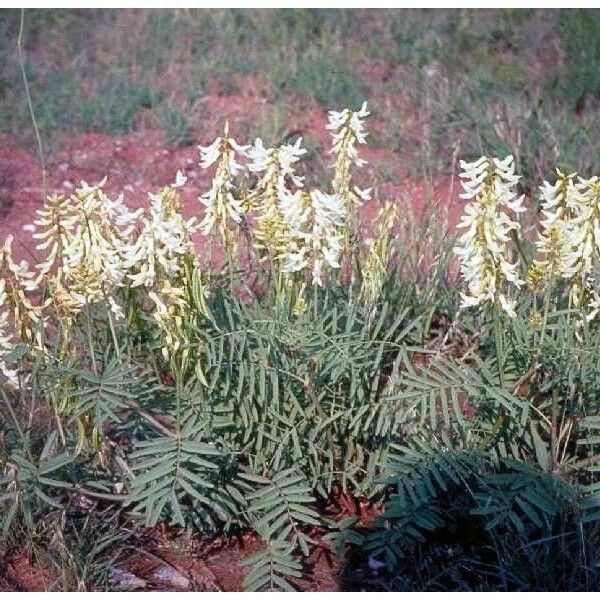
Plant Overview
Commonly known as the Creamy Poisonvetch, this hardy perennial is a striking but notorious member of the pea family. Native to the Great Plains of North America, it serves as a biological "indicator," revealing secrets about the chemistry of the soil beneath it. While its cascading clusters of cream-colored flowers are undeniably beautiful, it carries a reputation that keeps most ranchers and pet owners on high alert.
🔍 How to Identify
- 🌼 The Blooms: Features long, drooping racemes (flower spikes) crowded with pea-like blossoms that range from creamy white to a pale, greenish-yellow.
- 🌿 The Foliage: Boasts compound, pinnate leaves consisting of many narrow, grayish-green leaflets that give the plant a delicate, feathery appearance.
- 🎋 The Stems: Often displays distinctive reddish or purplish stems that grow in bushy, upright clumps, reaching up to 2 feet in height.
🏡 In Your Garden
- 🧪 Soil Specialist: This plant is a "selenium accumulator." It thrives in heavy, alkaline clay soils where other plants struggle, specifically seeking out areas high in selenium.
- 🌵 Drought Warrior: Because it possesses a long, stubborn taproot, it is incredibly drought-tolerant. However, this root system makes it nearly impossible to transplant; if you decide to grow it, choose its permanent home carefully.
- 🌬️ The Scent: Unlike many sweet-smelling wildflowers, the Creamy Poisonvetch often emits a faint, garlicky, or "mousy" odor, which is a byproduct of the minerals it absorbs from the earth.
⚠️ Safety & Toxicity
- 🚫 Status: TOXIC. This plant is dangerous to livestock, pets, and humans.
- 🐎 The Danger: It causes "Alkali Disease" or "Blind Staggers" in horses and cattle. Because it concentrates selenium to toxic levels, even a small amount of ingestion can lead to hoof deformities, hair loss, or respiratory failure. It should never be planted in areas where grazing animals or curious pets roam.
✨ Fun Fact
Early geologists and prospectors used Astragalus racemosus as a "prospecting tool." Because the plant only grows in selenium-rich soil—and selenium is often found alongside uranium—finding a patch of these flowers was sometimes the first clue that valuable ore was buried nearby!

Detailed Care Instructions
To grow Astragalus racemosus, also known as milkvetch, you can follow these steps:
- Choose the right location: Milkvetch prefers full sun but can tolerate partial shade. Ensure that the soil is well-drained and has good organic content.
- Select suitable seeds: Obtain seeds from a reliable source. Make sure they are fresh and not expired.
- Germinate the seeds: Soak the seeds in water overnight to improve germination rates. The next day, sow the seeds in small pots or seed trays containing a well-draining potting mix. Cover the seeds lightly with a thin layer of soil.
- Maintain appropriate moisture: Moisten the soil with a water spray bottle, keeping it consistently moist until germination occurs, which usually takes about 10-14 days.
- Transplant the seedlings: Once the seedlings have grown to a suitable size and developed a few sets of true leaves, transplant them into individual pots or directly into the garden if the weather conditions are suitable. Space them about 12-18 inches apart in the garden.
- Provide proper care: Keep the plants well-watered, especially during dry periods. Provide support such as stakes or trellises as Astragalus racemosus may develop a climbing habit. Mulch around the base of the plants to retain moisture and suppress weed growth.
- Fertilize: Apply a balanced organic fertilizer once or twice a year to provide essential nutrients to the plants.
- Prune and train: As the plants grow, you may need to prune and train them to ensure they maintain an upright growth habit. Regularly remove any dead or damaged stems.
- Protect from pests and diseases: Monitor the plants for common pests like aphids or fungal diseases. Treat any issues promptly with an appropriate organic treatment.
- Harvesting: Astragalus racemosus is often grown for its medicinal properties, so you may want to harvest the roots when they have matured (typically after 2-3 years). Harvesting should be done carefully to avoid damaging the plant.
Always consult with local gardening experts or your nearest agricultural extension service for specific recommendations tailored to your climate and conditions.

Place in a bright room that is sun drenched almost all day. Or directly in a south-facing window.

To properly care for the plant, ensure to expose it to adequate sunlight and water it cautiously, ensuring not to over-water or water too frequently. It is important to allow the soil to dry out slightly in between watering, as over-watering can lead to root rot. Regularly inspect the soil's moisture level by inserting your finger approximately one inch deep into the soil. If the soil feels dry, it is time to water the plant. When watering, pour enough water so that it drains out of the bottom of the pot, but avoid leaving standing water in the drip tray. Finally, adjust the frequency of watering depending on the season and environmental conditions such as temperature, humidity, and light intensity.
To fertilize this plant, use a well-balanced fertilizer with equal amounts of nitrogen, phosphorus, and potassium. Apply the fertilizer at the beginning of the growing season, and again halfway through. Avoid using too much fertilizer, as it can damage the roots of the plant. Always water the plant well after fertilizing.
The optimal soil for cultivating the Astragalus Racemosus plant is one that is well-draining, has a slightly acidic to neutral pH level, and is rich in organic matter such as compost or aged manure. It is important to ensure that the soil is not too heavy and contains a good balance of sand, silt, and clay. The plant thrives in soil that is moist but not waterlogged, and it is recommended to add a layer of mulch around the base of the plant to help retain moisture in the soil. Additionally, the soil should be fertile and nutrient-rich, with a good supply of nitrogen, phosphorus, and potassium to support the growth and health of the plant. Overall, the soil should be well-prepared and ideally suited to the specific needs of the Astragalus Racemosus plant to ensure optimal growth and yield.
To propagate this plant, you first need to identify mature and healthy stems that can be cut. Use a sharp, sterile blade and cut a section of stem that is around 4-6 inches long. Remove any leaves from the bottom third of the stem.
Prepare a well-draining soil mix and moisten it lightly. Make a hole in the soil and place the stem cutting inside, burying at least the bottom third of the stem. Firmly press the soil around the stem to ensure good contact.
Water the cutting well and place a plastic bag over it to create a mini greenhouse. Keep the soil moist but not waterlogged, and place the cutting in bright, indirect light.
In about 4-6 weeks, you should start to see new growth emerging from the stem cutting. At this point, you can remove the plastic bag and continue to care for the young plant as you would any other Astragalus Racemosus plant.








