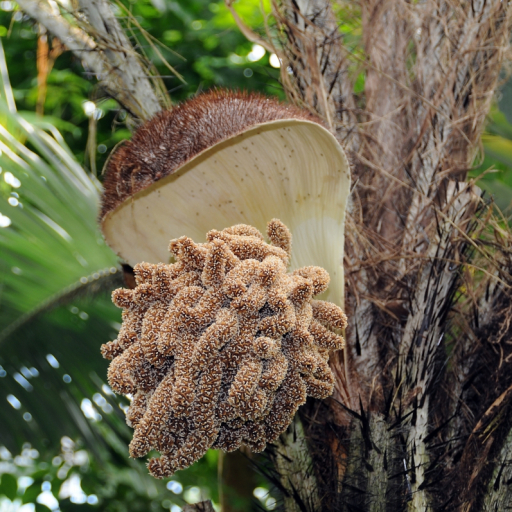
Plant Overview
Known as the Chocón or Mexican Star Palm, this plant is the rainforest's version of a "keep out" sign. Native to the humid jungles of Southern Mexico and Central America, it is famous for its impressive armor of long, dark spines that cover almost every inch of its surface. Despite its prickly exterior, it is a vital part of the tropical ecosystem, providing shelter and food for forest creatures.
🔍 How to Identify
- 🖤 The Spines: The most striking feature is the trunk, which is densely covered in long, flat, black, needle-like spines that usually point downward to discourage climbing animals.
- 🌿 Dual-Tone Fronds: The feather-like (pinnate) leaves are a glossy deep green on the upper surface but reveal a surprising, beautiful silvery-grey underside.
- 🥜 Spiny Fruit: It produces clusters of brownish, oval fruits that are—true to form—also covered in tiny, irritating bristles and stiff hairs.
🏡 In Your Garden
- ☁️ Shadow Dweller: Because it naturally grows beneath giant rainforest canopies, this palm thrives in deep to partial shade. Direct midday sun is its enemy and will quickly scorch the delicate fronds.
- 💧 Thirsty & Humid: This palm craves consistent moisture and high humidity. It is a slow-growing species that doesn't like to be moved once established, as its root system is sensitive to disturbance.
- 🛡️ Strategic Placement: This is a "look but don't touch" plant. It should never be placed near a walkway, patio, or anywhere people might accidentally brush against it.
⚠️ Safety & Toxicity
- 🚫 Mechanical Hazard: While the plant is not known to be chemically toxic to humans or pets, its spines are a significant physical danger.
- 🩹 Puncture Risk: The spines are needle-sharp and can easily pierce skin or clothing. If a spine breaks off under the skin, it can cause localized inflammation or infection, so use heavy-duty leather gloves if you ever need to prune it.
✨ Fun Fact
In parts of Veracruz, Mexico, the unopened flower buds—known locally as manitas—are harvested before they bloom and cooked as a traditional delicacy, often prepared in stews or with eggs!

Detailed Care Instructions

Place in a dark room with little light, like a dark bedroom or a spot far away from a window or directly in a north-facing window.

Astrocaryum Mexicanum plant requires a specific watering regime to thrive. It is important to ensure that the soil remains consistently moist without becoming waterlogged. To achieve this, it is recommended to water the plant deeply once a week, allowing the soil to absorb the water fully. The amount of water required will vary depending on the size of the plant and the level of humidity present in its environment. It is important to avoid allowing the soil to dry out completely, as this can damage the roots and cause the plant to wither and die. Additionally, it is important to avoid getting water directly on the leaves or stem, as this can increase the risk of fungal infections and other diseases. Instead, aim to water the soil directly and allow the water to soak in gradually over time.
Astrocaryum Mexicanum plant requires well-draining soil that is rich in organic matter, with a pH between 5.5 and 7.5. It is important to avoid using heavy soils that retain too much moisture, as this can cause root rot and other problems for the plant. A good soil mix for this plant might include a combination of sand, perlite or vermiculite, peat moss or coconut coir, and compost or aged manure. It is also important to make sure the soil is kept consistently moist, but not soggy, and to fertilize the plant regularly with a balanced, slow-release fertilizer.








