Plant Overview
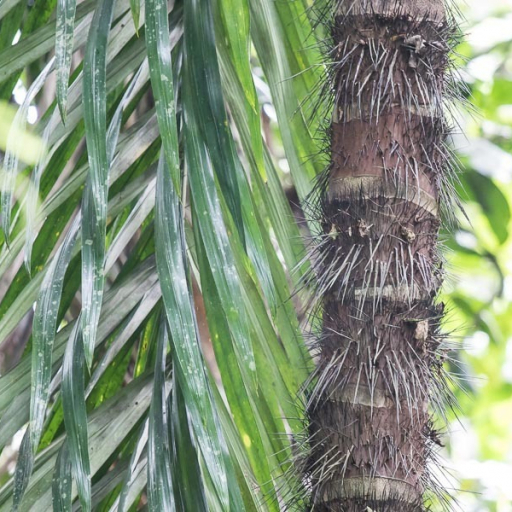
Often called the Black Palm or Mocora, this striking tropical giant is as beautiful as it is intimidating. Native to the rainforests of Central and South America, it is famous for its trunk, which is armed with long, jet-black spines that look like something out of a medieval armory. Despite its prickly exterior, it is a vital resource for local artisans who transform its rock-hard seeds into intricate, polished carvings.
🔍 How to Identify
- 🦔 The Trunk: The most defining feature is a solitary trunk densely covered in flat, black, needle-like spines that can grow up to 8 inches long.
- 🌿 The Foliage: Large, pinnate (feathery) leaves that can reach over 12 feet in length, featuring a distinct silvery or grayish-white sheen on the undersides.
- 🟠 The Fruit: It produces heavy, drooping clusters of ovoid fruits that turn a vibrant orange-yellow when fully ripe.
🏡 In Your Garden
- 🏝️ Space Requirements: This is a "look but don't touch" specimen. Because of its defensive spines, it should never be planted near walkways, patios, or entryways. It needs a wide berth where its beauty can be admired from a safe distance.
- 💧 Environmental Needs: As a tropical native, it demands high humidity and deep, fertile soil. It is surprisingly resilient once established but hates "wet feet," requiring excellent drainage to prevent root rot.
⚠️ Safety & Toxicity
- ⚔️ Physical Hazard: The primary danger is mechanical. The spines are incredibly sharp and can easily pierce thick clothing or leather gloves, often causing deep puncture wounds that are prone to infection.
- 🐾 Pets & Kids: Highly discouraged for households with curious pets or young children. A simple stumble near the trunk can result in a serious emergency room visit.
✨ Fun Fact
The extremely hard, dark inner nut of the Astrocaryum standleyanum is a favorite among master carvers in Panama and Ecuador. When polished, it looks like black ivory or high-end ebony, and it is often used to create exquisite miniature sculptures of rainforest animals.

Detailed Care Instructions
To grow Astrocaryum standleyanum, also known as Standley's palm or the ivory nut palm, you will need to follow these steps:
- Seeds: Obtain fresh seeds from a reliable source. Ensure that the seeds are mature and have not been dried excessively.
- Germination: Soak the seeds in warm water for 24 hours to help soften the hard outer shell. Change the water every few hours to prevent the development of mold. Alternatively, you can scarify the seeds by gently filing or nicking the outer shell to help with germination.
- Seedling preparation: Fill a pot or seed tray with a well-draining soil mixture, such as a blend of equal parts peat moss, perlite, and vermiculite. Plant the seeds about 2 inches deep in the soil, making sure to keep them evenly spaced.
- Warm environment: Place the pot or tray in a warm and humid environment. Astrocaryum standleyanum requires a consistently warm temperature of around 80°F (27°C) for optimal germination. You can use a heat mat or place the container on top of a refrigerator or water heater for gentle bottom heat.
- Moisture: Keep the soil evenly moist, but not waterlogged, throughout the germination process. You can cover the container with plastic wrap or use a seedling tray with a clear plastic dome to maintain humidity.
- Light: Once the seedlings start emerging, provide them with bright but indirect light. A sunny windowsill or a fluorescent grow light placed 6-12 inches above the seedlings can offer sufficient illumination.
- Transplanting: Once the seedlings have grown a few sets of true leaves and are sturdy enough, carefully transplant them into individual pots filled with a well-draining potting mix. Ensure that the pots have adequate drainage holes.
- Growth maintenance: Continue to provide bright, indirect light and maintain a warm and humid environment for the seedlings. Proper watering is essential, allowing the soil to dry partially between each watering to prevent overwatering.
- Outdoor planting: After the last frost date in your area, typically in spring, you can gradually acclimate the seedlings to the outdoors by exposing them to increasing amounts of sunlight and outdoor conditions over a period of about one to two weeks. Choose a location with partial shade or filtered sunlight for Astrocaryum standleyanum.
- Soil and watering: Astrocaryum standleyanum prefers fertile, well-draining soil. Amend the planting area with organic matter like compost or leaf mulch to improve soil quality. Water the palm regularly, especially during dry periods, but ensure the soil does not become waterlogged.
- Maintenance: Prune any brown or damaged fronds as necessary and protect the plant from extreme cold and strong winds. Fertilize the palm with a balanced palm-specific fertilizer according to the manufacturer's instructions.
Remember, growing Astrocaryum standleyanum requires patience, as it can take several years for the plant to reach maturity and bear its characteristic ivory nuts.

Place in a window with dappled sun or a spot in the middle of a room. Or directly in a window facing west or east.

Astrocaryum Standleyanum is a tropical plant that requires regular watering to thrive. It is important to water it deeply but not too frequently in order to avoid overwatering and root rot. The best way to water this plant is to wait until the top inch of soil is dry to the touch, then water it slowly and deeply to allow the water to reach the roots. Avoid getting water on the leaves and stem as this can lead to fungal infections. It is also important to use well-draining soil and a pot with good drainage to prevent water from accumulating in the soil. During the winter months, reduce watering to allow the plant to enter dormancy.
To fertilize this plant, use a balanced fertilizer with a ratio of 10-10-10 or 20-20-20. Apply the fertilizer every three months during the growing season, from spring to fall. Follow the instructions on the fertilizer package for application rates. Avoid over-fertilizing as it can damage the plant. Finally, water the plant thoroughly after fertilizing to help the roots absorb the nutrients.
Astrocaryum Standleyanum is a plant species that prefers well-draining soil with good moisture retention. The soil should also be rich in organic matter and have a slightly acidic to neutral pH level between 5.0 to 7.0. Sandy loam soil with good drainage is the best option for growing this plant. It is important to ensure proper drainage as waterlogged soil can cause root rot and damage to the plant. Using a good quality potting mix with added perlite or sand for drainage can also provide a suitable growing medium for Astrocaryum Standleyanum. Additionally, it is recommended to supplement the soil with slow-release fertilizer or organic compost to promote healthy growth.
Astrocaryum Standleyanum plant can be propagated through seed germination. The seeds should be soaked in warm water for several days until they start to sprout before planting in a well-draining soil mix. Keep the soil moist throughout the germination process. Once the seeds have germinated and grown to a suitable size, they can be transplanted into individual pots or directly into the ground. It is important to provide the plants with adequate sunlight and water during the growth phase. Propagation through division is another method that can be used once the plant has matured. This involves dividing the root ball into smaller sections and repotting them. It is essential to ensure that each section has enough roots to support growth. Overall, propagating Astrocaryum Standleyanum plant requires patience and attention to detail to ensure successful growth and development.








