Plant Overview
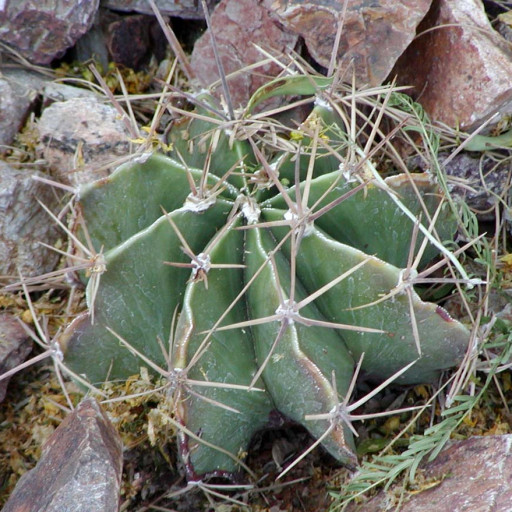
Known as the "Monk’s Hood" or the "Star Cactus," Astrophytum ornatum is the elder statesman of its genus. Native to the rocky canyons of Mexico, it is the tallest and fastest-growing of the Astrophytum family, eventually trading its cute, globular youth for a majestic, spiraling columnar shape. It is a favorite among collectors for its symmetrical beauty and the intricate "frosting" of white scales that decorate its skin.
🔍 How to Identify
- 🌵 Geometric Body: It typically features 8 deep ribs that often spiral slightly as the plant matures, giving it a star-like appearance from above.
- ❄️ Silver Flocking: The dark green skin is peppered with tiny, white tufts of hair (trichomes) that look like fallen snowflakes or intricate embroidery.
- ⚔️ Golden Spines: Unlike its spineless cousins (like the Bishop’s Cap), this species sports stiff, amber-to-yellow spines that radiate from the edges of its ribs.
- 🌼 Silky Blooms: Mature plants produce large, canary-yellow flowers at the very top (the apex) during the summer months, which have a delicate, satiny texture.
🏡 In Your Garden
- ☀️ Light Seeker: This cactus craves intense light to maintain its compact shape and vibrant flocking. However, it can "sunscald" if moved from a dark corner to direct afternoon sun too quickly; transition it slowly to its permanent sunny spot.
- 🪨 The Grittier, The Better: In its natural habitat, it grows in limestone crevices. It hates "wet feet" and will quickly rot in standard potting soil. Use a mix heavy in pumice, perlite, or lava rock to ensure the roots stay dry and airy.
- ⏳ A Lesson in Patience: While it is the "fastest" grower in its family, it still moves at a glacial pace compared to most house plants. It is a long-term companion that can live for over a century if cared for properly.
⚠️ Safety & Toxicity
- 🛡️ Non-Toxic: Good news for pet owners and parents—the Astrophytum ornatum is considered non-toxic to cats, dogs, and humans.
- 🌵 Sharp Defense: While not chemically dangerous, its spines are very sharp and sturdy. Keep it on a high shelf or away from high-traffic areas where curious paws or toddler hands might reach out to touch the "pretty star."
✨ Fun Fact
The white scales on the cactus aren't just for decoration; they act as a natural sunscreen! These tiny tufts help reflect intense UV rays and help the plant absorb moisture from mountain mists in its native Mexican desert.

Detailed Care Instructions
| Color | Yellow, Orange, Red |
| Soil Ph | Alkaline |
| Humidity | Normal |
| Lighting | Full Sun |
| Soil Type | Sandy, Well-Drained |
| Bloom Time | Summer, Fall |
| Difficulty | Easy |
| Plant Type | Cactus, Perennial, Succulent |
| Hibernation | Cold Period |
| Mature Size | 2-72 In. Tall, 2-12 In. Wide |
| Native Area | North America |
| Temperature | 20°C - 30°C |
| Sun Exposure | Full Sun |
| Hardiness Zones | 9-11 |
To successfully grow Astrophytum Ornatum plants, also known as star cacti or sea urchin cacti, follow these steps:
- Choose a suitable container: Select a pot with drainage holes and fill it with a well-draining cactus or succulent soil mix. Ensure the container is slightly larger than the current root system of the plant.
- Sunlight conditions: Place the plant in an area that receives bright, indirect sunlight for at least 6 hours a day. Astrophytum Ornatum plants thrive in warm conditions but should be protected from direct sunlight, especially during the hottest parts of the day.
- Watering: Allow the soil to dry out between waterings to prevent overwatering, as too much moisture can lead to root rot. Gradually increase watering during the growing season (spring and summer) and reduce it during the dormant period (fall and winter). Water sparingly in winter, only when the soil is completely dry.
- Temperature and humidity: These plants prefer average room temperatures between 65-80°F (18-27°C). They can tolerate slightly cooler temperatures during the dormant period. Maintain a humidity level of around 40-50%, which can be achieved by placing a humidifier or a tray filled with water near the plant.
- Fertilizer: Feed the Astrophytum Ornatum plant with a diluted, balanced cactus or succulent fertilizer once a month during the growing season. Avoid fertilizing during winter or when the plant is dormant.
- Pruning and grooming: Regularly remove dead or decaying parts of the plant to promote healthy growth. Use sterilized pruning shears to avoid cross-contamination.
- Propagation: Astrophytum Ornatum plants can be propagated by collecting seeds that develop after pollination or by taking stem cuttings. When propagating from seeds, ensure they are sown in a well-draining soil mix and kept warm (around 75°F/24°C) until germination. Cuttings should be left to dry for a few days to form calluses before being added to well-draining soil.
- Pests and diseases: Keep an eye out for common cactus pests like spider mites, mealybugs, and scale insects. Promptly treat any infestations with suitable organic or chemical methods.
By following these care guidelines, you can successfully grow and maintain an Astrophytum Ornatum plant.

Place in a bright room that is sun drenched almost all day. Or directly in a south-facing window.

Astrophytum Ornatum is a type of cactus plant that requires special attention when it comes to watering. To water this plant, you should first make sure that the soil is completely dry before watering. This means that you should wait for the soil to feel completely dry to the touch before watering.
When watering your Astrophytum Ornatum, you should use a watering can with a narrow spout. This will allow you to water the soil directly without getting water on the leaves or stem, which can cause damage to the plant.
When watering, you should pour the water slowly and evenly over the soil, allowing it to soak in completely. You should avoid getting water on the stem or leaves, as this can cause damage to the plant.
After watering, allow the soil to drain completely before replacing the plant in its pot. You should also make sure to empty any excess water that may have collected in the saucer or tray beneath the pot, as this can cause root rot.
You should water your Astrophytum Ornatum sparingly, only when the soil is completely dry. Overwatering can cause the plant to rot, so it is important to be careful and only water when necessary.
To fertilize the Astrophytum Ornatum plant, mix a balanced fertilizer at half strength and apply it to the soil around the plant once a month during the growing season. Avoid fertilizing during the plant's dormant period. Be sure to moisten the soil beforehand and dilute the fertilizer mixture to prevent burning the roots.
Astrophytum Ornatum is a species of cactus that requires well-draining soil that is moderately fertile. The soil should be slightly acidic with a pH range of 5.5 to 7.5. A mix of coarse sand, perlite, and peat moss is an appropriate soil blend for this plant. It is important to ensure that the soil is not too compact and allows for proper aeration and drainage. This plant is also sensitive to overwatering, so it is advisable to water it sparingly and only when the soil has completely dried out.
Propagating this specific type of cactus can be done through various methods, including seed propagation and cutting propagation.
To propagate through seed propagation, you will need to collect fresh seeds from a mature and healthy plant. The seeds should be thoroughly washed and then left to dry before planting. You can plant the seeds in a well-draining soil mix and keep them in a warm, sunny location. Keep the soil moist and ensure that the seeds receive plenty of light to encourage germination.
To propagate through cutting propagation, you will need to select a healthy and mature stem from the parent plant. Use a sharp, sterilized knife to remove a section of the stem that is approximately 3-4 inches long. Make sure that the cutting has no signs of disease or damage on it. Leave the cutting to dry for a few days in a shaded location to allow the cut wound to callus over before potting it in a well-draining soil mix. Keep the soil moist and place the cutting in a warm, bright location.
Both propagation methods should be done during the growing season to ensure the best chance of success. It is important to provide proper care and maintenance to the new plants to ensure that they continue to thrive.
Common pests of the monk's-hood include Scale insect, mealybugs, spider mites. Make a habit of checking your monk's-hood frequently for pests so that any infestations can be caught and managed early.








