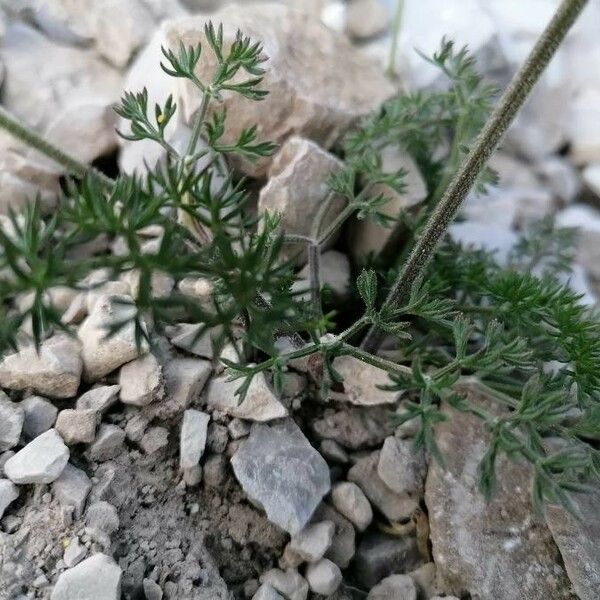
Plant Overview
Often called the Cretan Spignel or Candy-carrot, this delicate-looking perennial is a mountain dweller at heart. Despite its name suggesting a strictly Greek origin, it is most at home clinging to the limestone cliffs and rocky slopes of the European Alps and Apennines. Its feathery, silver-green foliage gives it a ghostly, elegant appearance that captures the essence of wild, high-altitude beauty.
🔍 How to Identify
- 🌿 The Foliage: The leaves are finely divided, almost fern-like, and covered in soft, grayish hairs that give the plant a velvety, "frosted" texture.
- ☁️ The Blooms: It produces flat-topped clusters (umbels) of tiny, snowy white flowers that seem to float above the leaves on sturdy, upright stalks during the mid-summer months.
- 🥕 The Growth Habit: It grows in a compact, mounded shape, rarely exceeding 12-18 inches in height, making it look like a domesticated wildflower.
🏡 In Your Garden
- 🪨 The Perfect Spot: This plant is a rock garden superstar. It craves "lean" soil—avoid rich, heavy compost. It prefers alkaline, well-draining limestone grit to mimic its natural mountain home.
- 🚫 Settling Down: Once you plant it, try not to move it! Because of its long, carrot-like taproot, it finds transplanting very stressful and may fail to thrive if its roots are disturbed.
- ☀️ Sun & Air: It loves a sunny, open spot with plenty of air circulation. Its hairy leaves are designed to trap moisture, but in humid, stagnant gardens, this can lead to rot issues.
⚠️ Safety & Toxicity
- 🟢 General Status: Athamanta cretensis is generally considered non-toxic, but it belongs to the Apiaceae (carrot) family, which contains many look-alikes.
- 🧴 Skin Sensitivity: Like many of its relatives, the sap of the plant can cause mild skin irritation or photosensitivity (sun-induced rashes) in sensitive individuals. It is a good idea to wear gloves when pruning.
- 🐾 Pets & Children: While not high-risk, it is best to discourage pets from munching on it, as the fibrous stems can be difficult to digest.
✨ Fun Fact
- 🏔️ A Misleading Name: Even though Cretensis implies it comes from the island of Crete, this plant is actually much more common in the high mountains of Italy and Switzerland! Early botanists often used the term "Cretensis" for plants that looked similar to those found in the Mediterranean, even if they were harvested in the Alps.

Detailed Care Instructions
To grow Athamanta cretensis, also known as Cretan rock-parsley, you can follow these steps:
- Obtain seeds or seedlings: Obtain seeds or seedlings from a reputable garden center or online nursery. Choose healthy, disease-free specimens.
- Timing: Sow the seeds or plant the seedlings in early spring or early fall when the temperatures are cool. This plant prefers cooler conditions.
- Location: Choose a sunny location for your Athamanta cretensis with well-draining soil. This plant can tolerate a variety of soil types, including sandy or loamy soil.
- Preparation: Prepare the planting area by removing any weeds or grass and loosening the soil. Mix in organic matter like compost or well-rotted manure to improve fertility and drainage.
- Planting seeds: If using seeds, sow them directly into the prepared soil. Sprinkle the seeds lightly and cover them with a thin layer of soil. Keep the soil consistently moist until germination occurs.
- Planting seedlings: If using seedlings, dig a hole that is slightly larger than the root ball of the seedling. Place the seedling in the hole, backfill with soil, and gently firm the soil around the plant.
- Watering: Water the newly planted Athamanta cretensis deeply and then keep the soil evenly moist but not waterlogged. Avoid letting the soil completely dry out, especially during hot spells.
- Mulching: Mulch around the base of the plant with a layer of organic mulch, such as wood chips or straw. This will help retain moisture, suppress weeds, and provide winter protection.
- Maintenance: Regularly check for pests and diseases. Remove any weeds that may compete with the plant for resources. Prune back any dead or damaged foliage as needed.
- Propagation: Athamanta cretensis can also be propagated through division. Divide mature plants in spring or fall by carefully separating the root clumps and replanting them in prepared soil.
- Winter care: In areas with harsh winters, consider providing some winter protection by mulching heavily around the base of the plant and covering it with a layer of straw or evergreen boughs.
Remember to research any specific care requirements for your particular region, as different climates may have slightly different needs for this plant.

Place in a bright room that is sun drenched almost all day. Or directly in a south-facing window.

1. Determine the watering needs: Before watering the Athamanta Cretensis plant, it is essential to understand its watering requirements. This can be done by researching or consulting reliable plant care sources, such as botanical websites or gardening manuals.
2. Observe the soil moisture level: Check the soil moisture level before watering the plant. Insert your finger about an inch deep into the soil to assess its moisture content. If the soil feels dry, it is an indication that the plant requires watering.
3. Choose the watering method: Select an appropriate watering method based on the plant's needs and the growing environment. Athamanta Cretensis plants generally benefit from a gentle watering technique, such as using a watering can or a drip irrigation system, to avoid overwatering.
4. Watering frequency: Athamanta Cretensis plants prefer a slightly moist but well-drained soil. They should be watered whenever the soil starts to dry out. However, it is crucial not to overwater the plant, as excessive moisture can lead to root rot and other problems. The watering frequency may also depend on factors such as temperature, humidity, and the season of the year.
5. Water thoroughly: When watering Athamanta Cretensis, ensure that the water reaches the root zone. Give the plant a thorough watering, allowing the excess water to drain out of the pot or the planting area.
6. Avoid waterlogging: Athamanta Cretensis plants dislike standing water. It is essential to create a well-draining soil mix or choose a well-draining planting spot to prevent waterlogging. If the water is not draining well, consider amending the soil with organic matter or using a raised bed.
7. Monitor plant response: After watering, observe how the plant responds to determine if it is receiving adequate moisture. If the leaves appear firm and healthy, it indicates that the watering is sufficient. However, if the leaves are becoming yellow or drooping, it might indicate overwatering or underwatering.
8. Adjust watering based on environmental changes: Environmental conditions such as temperature, humidity, and light intensity can affect the watering needs of Athamanta Cretensis. During periods of higher temperatures or lower humidity, the plant may require more frequent watering to compensate for increased moisture evaporation.
Remember, these watering guidelines serve as general recommendations, and individual plant care requirements may vary. It is always beneficial to closely monitor the plant's response and adjust the watering regimen accordingly for optimal growth and health.
To fertilize Athamanta Cretensis, use a balanced water-soluble fertilizer with an N-P-K ratio of 10-10-10 or similar. Dilute the fertilizer according to the package instructions. Apply the fertilizer once every two weeks during the growing season, which typically occurs in spring and summer. Make sure to water the plant before applying the fertilizer to prevent root burn. Apply the diluted fertilizer to the soil around the base of the plant, avoiding direct contact with the foliage. Afterward, water the plant thoroughly to help the nutrients penetrate the soil. Monitor the plant's response to the fertilizer, making adjustments to the frequency or strength of application if necessary.
The ideal soil for Athamanta Cretensis should have certain characteristics to promote optimal growth and development. It is important to create a suitable planting environment to maximize the plant's potential. Here are the details about the recommended soil composition:
- Well-draining: Athamanta Cretensis prefers soil that has good drainage capacity to prevent waterlogging and root rot. Excess moisture can be detrimental to the plant's health.
- Loamy texture: The soil should have a loamy texture, which means it should contain a balanced mix of sand, silt, and clay. This texture ensures that the soil retains adequate moisture while allowing excess water to drain away.
- pH level: Athamanta Cretensis tends to thrive in slightly acidic to neutral soil. The optimal pH range for this plant is usually between 6.0 and 7.5. It is advisable to test the soil pH and adjust if necessary to provide the best growing conditions.
- Nutrient-rich: The soil should be fertile and rich in organic matter. Adding compost, well-rotted manure, or other organic amendments to the soil will enrich it with essential nutrients, improving the overall health and vigor of the plant.
- Moisture retention: While good drainage is crucial, the soil should still retain adequate moisture for the plant's roots. This can be achieved by incorporating organic matter into the soil, which helps improve its water-holding capacity.
- Sunlight exposure: Athamanta Cretensis typically thrives in areas with full sun to partial shade. Planting it in a well-draining soil helps regulate moisture levels, allowing the roots to access water more effectively even under direct sunlight.
It is essential to ensure that the soil is appropriately prepared before planting Athamanta Cretensis. Adequate soil conditions will provide the necessary support for the plant's growth, ensuring it receives essential nutrients, moisture, and drainage to foster healthy development and overall vitality.
To propagate Athamanta Cretensis plants, you can follow these steps:
- Start by selecting a healthy and mature plant for propagation. Look for a plant that has robust foliage and is free from any diseases or pests.
- Choose a suitable time for propagation. It is best to propagate Athamanta Cretensis during the spring or early summer when the plant is actively growing.
- Prepare a propagation container or tray with a well-draining potting mix. You can use a mix of equal parts perlite, peat moss, and vermiculite. Ensure that the container has drainage holes to prevent waterlogging.
- Take stem cuttings from the parent plant. Look for non-flowering stems that are about 4-6 inches long. Use clean and sharp pruning shears to make a clean cut just below a leaf node.
- Remove any lower leaves from the stem cuttings, leaving only a few leaves at the top. This helps to reduce moisture loss and encourages root development.
- Optional: You can dip the bottom end of the stem cuttings in a rooting hormone powder or gel to promote root growth. This step is not essential but can improve the success rate of propagation.
- Make holes in the prepared potting mix using a pencil or stick. Insert the stem cuttings into the holes, ensuring that at least two nodes are below the soil surface.
- Gently firm the potting mix around the cuttings to provide stability and good soil-to-stem contact.
- Water the cuttings thoroughly to settle the soil and remove any air pockets. Ensure that the potting mix remains evenly moist but not waterlogged, as excessive moisture can lead to rotting.
- Place the propagation container in a warm and bright location, away from direct sunlight. A temperature of around 70-75°F (21-24°C) is ideal for root development.
- Mist the cuttings regularly to maintain high humidity levels around them. You can cover the container with a clear plastic bag or use a mini greenhouse to create a humid environment.
- Check the cuttings regularly for signs of root development. This can take several weeks or even a couple of months. Once roots are established, you will notice new growth and increased vigor in the cuttings.
- Once the cuttings have developed a healthy root system, you can transplant them into individual pots or directly into the garden, depending on your preference.
Remember to provide proper care to the newly propagated Athamanta Cretensis plants, including regular watering, adequate sunlight, and protection from extreme temperatures or harsh weather conditions.








