Plant Overview
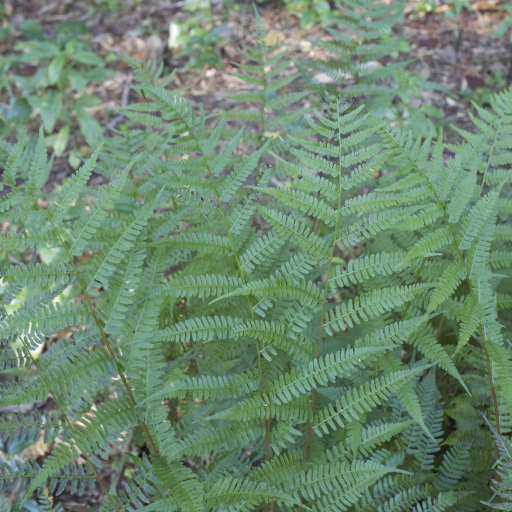
Often called the Southern Lady Fern, this plant is the epitome of woodland elegance. With its fine-textured, arching fronds, it looks like a delicate lace doily resting on the forest floor. It is a staple of the Eastern United States, prized for adding a soft, ethereal touch to shady corners where more "aggressive" plants might fail to thrive.
🔍 How to Identify
- 🌿 Frond Structure: The leaves (fronds) are lance-shaped and "bipinnate," meaning they have a complex, feathery look that is both light and airy.
- 🍷 The Stalk: Look closely at the central stem (stipe); it often displays a beautiful reddish-purple or brownish tint, especially near the base, which provides a lovely contrast to the lime-green foliage.
- 🌙 Comma-Shaped Sori: On the underside of mature fronds, you will find "sori" (spore clusters). In this species, they are uniquely shaped like small crescents or commas.
🏡 In Your Garden
- 💧 Moisture Consistency: Unlike some ferns that can handle a dry spell, the Southern Lady Fern prefers "consistently moist" feet. If the soil dries out completely, the delicate fronds will quickly turn crispy and brown.
- 🌳 The Shelter Effect: This fern is a true shade-lover. It thrives best in dappled light or full shade, mimicking its natural home under the canopy of large hardwood trees. It also benefits from being tucked away from high winds, which can tatter its fragile leaves.
⚠️ Safety & Toxicity
- 🐾 Pet Friendly: This species is generally considered non-toxic to cats, dogs, and horses, making it an excellent choice for a "worry-free" backyard or indoor space.
- 🚫 Not for Foraging: While not "poisonous," this is not the variety used for culinary "fiddleheads." Ingesting raw fern fronds can cause mild stomach upset and is not recommended for humans or pets.
✨ Fun Fact
During the Victorian era's "Pteridomania" (a period of intense fern obsession), this plant was dubbed the "Lady Fern" because of its graceful, swaying appearance, which collectors at the time contrasted against the sturdier, more "masculine" look of the Male Fern (Dryopteris).

Detailed Care Instructions
To grow Athyrium asplenioides (also known as Southern Lady Fern or Leyden Fern), you can follow these steps:
- Choose a suitable location: Plant the fern in an area that receives partial to full shade. It prefers moist, well-draining soil rich in organic matter.
- Prepare the soil: Amend the soil with compost or peat moss to improve moisture retention and fertility. Remove any weeds, rocks, or debris from the planting area.
- Planting: Dig a hole slightly larger than the root ball of the fern. Place the fern in the hole, making sure the top of the root ball is level with or slightly above the soil surface. Backfill the hole with soil, gently firming it around the roots.
- Watering: Keep the soil consistently moist but not waterlogged. Water deeply when the top inch of soil feels dry. Mulch around the base of the plant to help retain moisture.
- Fertilization: Apply a balanced slow-release fertilizer in spring and mid-summer to promote healthy growth. Follow the instructions on the fertilizer packaging for proper dosage.
- Pruning: Remove any damaged or dead fronds as needed to maintain a neat appearance. Pruning can be done in early spring before new growth emerges.
- Protection: Protect the fern from extreme temperatures, as it is more sensitive to cold than some other ferns. In colder regions, apply a layer of mulch around the base of the plant in late fall to protect the roots from freezing.
- Propagation: Athyrium asplenioides can be propagated by division. Once established, the fern can be divided in early spring by carefully separating the root clump into smaller sections and replanting them in suitable locations.
Remember to monitor the fern for pests like aphids, slugs, or snails, and take appropriate measures if necessary. With proper care, your Athyrium asplenioides plant should thrive and provide a beautiful addition to your garden.

Place in a window with dappled sun or a spot in the middle of a room. Or directly in a window facing west or east.

To properly water this plant, it is important to consider its natural habitat and water requirements. Athyrium asplenioides is a type of fern that thrives in moist soil with good drainage. When watering, ensure that the soil is evenly moist but not saturated or waterlogged. Overwatering can lead to root rot and other issues.
One effective way to water this plant is to use a watering can with a fine, narrow spout to pour water directly onto the soil. Avoid watering the leaves as this can encourage fungal growth and damage delicate fronds. Watering should be done regularly but not excessively, depending on factors such as temperature, humidity, and the size of the pot.
Another method is to place the plant in a tray or saucer filled with water and allow it to absorb moisture through the drainage holes in the bottom of the pot. However, this should be done cautiously as allowing the plant to sit in water for too long can lead to root rot or other issues.
It is also important to monitor the soil moisture level regularly. Stick a finger or a moisture meter into the soil to determine if it needs watering. If the soil feels dry to the touch, it is time to water. Conversely, if the soil feels very wet or saturated, hold off on watering until it has had a chance to dry out a bit.
Overall, careful attention to watering and soil conditions can help ensure the health and vitality of Athyrium asplenioides.
To properly fertilize this fern plant, apply a balanced water-soluble fertilizer every two to three weeks during the growing season. Mix the fertilizer according to the manufacturer's instructions and apply it to the soil around the plant. Be careful not to get any fertilizer on the leaves or the roots as it may cause damage. If the plant is in a container, make sure to water thoroughly after fertilizing to avoid salt buildup.
The soil that is best suited for the plant in question should be light, well-draining, and rich in organic matter. It should have a slightly acidic pH between 5.5 to 6.5. The soil should also be able to retain moisture while allowing excess water to drain away to avoid waterlogging. A mixture of peat moss, perlite, and coarse sand or vermiculite can be an ideal growing medium for this plant. The combination of organic matter and inorganic materials provides a good balance of nutrients, aeration, and moisture retention, making it well-suited for the plant's growth and development.
To propagate this plant, you will need to locate the rhizome. A rhizome is an underground stem that produces roots and shoots. Once you have located the rhizome, you can divide it into sections with a sharp, sterilized knife. Each section should have a portion of the rhizome and several fronds (leaves).
Plant each section in a pot filled with well-draining soil and keep it moist. Place the pot in a shady area with indirect sunlight. It may take several weeks to see new growth, but once the new fronds appear, the plant is established.
It is important to note that this plant prefers moist soil and will not tolerate dry conditions. Therefore, it is important to keep the soil consistently moist but not waterlogged.








