Plant Overview
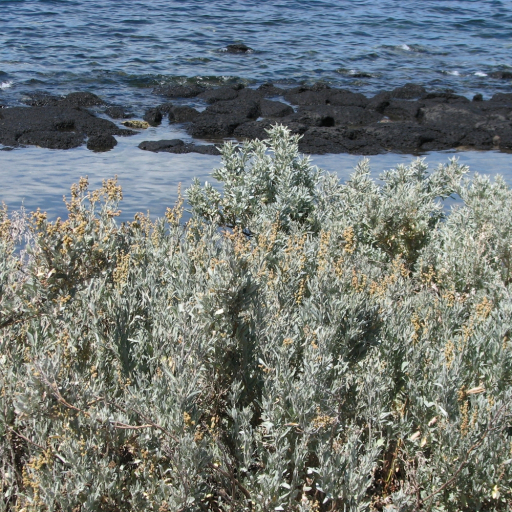
Known as the Grey Saltbush, this Australian coastal native is a shimmering silver survivor. Often found hugging the windswept dunes of the southern coastline, it acts as a natural guardian against erosion while providing a striking metallic contrast to traditional green garden foliage. It is the ultimate "tough-as-nails" shrub for those living near the ocean.
🔍 How to Identify
- 🍃 Scurfy Foliage: The leaves are its most striking feature—thick, lance-shaped, and covered in tiny, bladder-like hairs that give the plant a dusty, silvery-grey sheen.
- 🌳 Growth Habit: It forms a dense, spreading mound that can reach up to 1.5 meters in height and several meters in width, often appearing like a soft, silver cloud.
- 🌾 Distinct Flowers: This species is "dioecious," meaning male and female flowers grow on separate plants. Males produce small, brownish-yellow clusters, while females produce subtle green fruiting bracts.
🏡 In Your Garden
- 🌊 Coastal Specialist: This plant thrives where most others fail; it is highly resistant to salt spray and harsh sea winds, making it the perfect choice for a seaside hedge or windbreak.
- 🏜️ Drainage is Key: While it is incredibly drought-tolerant, it hates "wet feet." It performs best in sandy or loamy soils where water can move away quickly from the roots.
- ✂️ Pruning Nuance: Without occasional trimming, the Grey Saltbush can become "leggy" and woody at the base. Light, regular tip-pruning helps maintain its dense, ornamental shape and prevents it from looking messy.
⚠️ Safety & Toxicity
- ✅ Status: Non-toxic to humans and generally safe for pets. It is often used in ecological restoration because it is a "friendly" pioneer species.
- 🍲 Edible History: The leaves are a traditional "bush tucker" food and are often used by chefs today as a salty garnish. However, because the plant absorbs minerals from the soil, avoid eating leaves from plants grown near polluted roadsides or heavily chemically treated gardens.
✨ Fun Fact
The Grey Saltbush literally "sweats" salt! The plant survives high-salinity environments by pumping excess salt into the tiny hairs on its leaves. When the hairs become too full, they burst, releasing the salt back into the wind and keeping the plant’s internal systems clean.

Detailed Care Instructions
Here are some steps to help you grow Atriplex cinerea (also known as gray saltbush):
- Select a suitable location: Atriplex cinerea is a hardy plant that can tolerate various soil types. However, it prefers well-draining soil with minimal organic matter. Choose a sunny or partially shaded spot in your garden.
- Prepare the soil: Loosen the soil to a depth of about 8 inches and remove any weeds or debris. If the soil is heavy clay, add sand or perlite to improve drainage. Avoid adding too much compost or fertilizer, as Atriplex cinerea prefers poorer soil conditions.
- Sow the seeds: Atriplex cinerea can be easily grown from seeds. Scatter the seeds over the prepared soil and lightly press them into the surface. Alternatively, you can start the seeds indoors 6-8 weeks before the last frost date and transplant them outdoors later.
- Watering: After sowing the seeds or transplanting seedlings, keep the soil moist but not overly wet. Atriplex cinerea is drought-tolerant once established, so avoid overwatering to prevent root rot.
- Mulch and weed control: Apply a thin layer of organic mulch around the base of the plants to help retain moisture and suppress weed growth. Regularly remove any weeds that may compete with the plant for nutrients and water.
- Pruning and maintenance: Atriplex cinerea has a bushy growth habit, but it does not require much pruning. However, you can trim any dead or damaged branches to maintain a neat appearance.
- Pests and diseases: Atriplex cinerea is generally resistant to pests and diseases. However, occasionally, aphids or spider mites may infest the plant. Use organic insecticides or try washing the leaves with a strong spray of water to control these pests.
- Harvesting: Atriplex cinerea produces edible leaves, which are high in nutrients. You can harvest the leaves when young and tender. Avoid overharvesting to allow the plant to continue growing.
By following these steps, you can successfully grow Atriplex cinerea in your garden. Remember to provide adequate sunlight, well-draining soil, and minimal water for this drought-tolerant plant.

Place in a bright room that is sun drenched almost all day. Or directly in a south-facing window.

The best way to water this plant is to check the moisture level in the soil regularly. This can be done by inserting a finger about an inch deep into the soil to see if it is dry or moist. If the soil is dry, it is time to water the plant. When watering, it is important to give the plant a deep soaking to encourage healthy root growth. This can be done by watering slowly and allowing the water to soak into the soil deeply. It is important to avoid over-watering as this can cause root rot and other issues. Finally, it is recommended to water this plant in the morning or evening when the temperatures are cooler to reduce the risk of evaporation and to ensure the water reaches the roots.
To fertilize Atriplex Cinerea, use a balanced fertilizer with equal amounts of nitrogen, phosphorus, and potassium. Apply the fertilizer in early spring before new growth begins and again in the mid-summer. Use a slow-release fertilizer for best results. Avoid over-fertilizing, as it can cause excessive growth and weak stems. Water the plant well after fertilizing to help distribute the nutrients throughout the soil.
The ideal soil for Atriplex cinerea plants is a well-draining soil that is not too heavy or compacted. The soil should have a slightly alkaline pH and be rich in minerals and nutrients. A sandy or loamy soil with good drainage properties is preferred, as this will prevent the roots from becoming waterlogged. It is also important that the soil is not excessively dry, as Atriplex cinerea plants prefer moderate moisture levels. The addition of organic matter such as compost or well-rotted manure can be beneficial for improving soil structure and fertility. Additionally, it may be helpful to mulch around the plant to help retain moisture and suppress weeds.
The propagation of this plant can be done through the use of stem cuttings. Suitable cuttings must be selected from the main plant, which should be healthy and mature. The selected cutting should be at least 6 to 8 inches long and should be taken from a woody part of the plant. The leaves should then be removed from the lower one-third of the stem, and the cutting should be allowed to dry for a few hours in a shaded area.
After the cutting has dried, it should be planted in moist soil, ensuring that the stem is at least 2 inches deep. The soil around the cutting should be firmly pressed down to keep it in place. The cutting should be kept moist but not saturated, and should not be exposed to direct sunlight until it begins to sprout new growth.
Propagation can also be accomplished through seed collection from the plant. The seeds should be harvested when they are fully mature and dry, which usually occurs in the late autumn season. Once harvested, the seeds can be planted directly into the soil or started indoors in trays. It is important to keep the soil consistently moist and provide adequate sunlight for the seedlings to thrive.








