Plant Overview
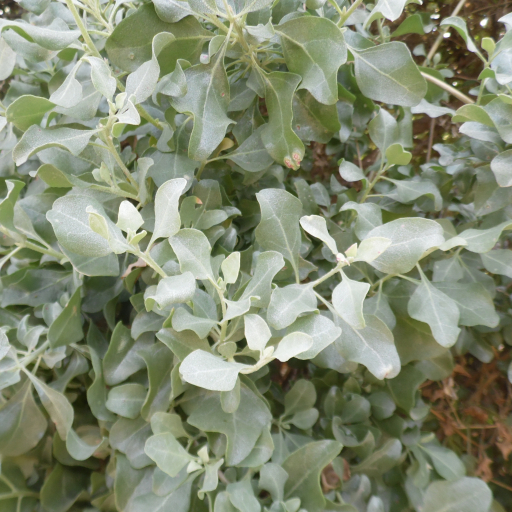
Known as the Mediterranean Saltbush or Sea Orache, this shimmering, silver-grey shrub is a true survivor of the coast. It is celebrated for its incredible ability to thrive in harsh, salty winds and parched soils where most other plants would wither. Historically, it has served as everything from a rugged livestock fodder to a survival food for desert travelers.
🔍 How to Identify
- 🥈 The Foliage: The leaves are its most striking feature—small, oval to diamond-shaped, and coated in a silvery-grey "scurf" that gives the entire plant a metallic, frosted appearance.
- 🌿 Growth Habit: It forms a dense, bushy evergreen mound that can reach up to 6 feet (2 meters) high, often becoming woody at the base as it matures.
- 🌾 The Flowers: In late summer, it produces tiny, inconspicuous greenish-yellow flower clusters. They aren't showy, but they eventually turn into small, winged fruits that catch the wind.
🏡 In Your Garden
- 🌊 Coastal Warrior: This is the ultimate "frontline" plant for seaside gardens. It acts as a natural windbreak, filtering salt spray and protecting more delicate plants behind it.
- 🏜️ Drought & Soil: It prefers "lean" living. It hates rich, heavy, or waterlogged soil, which can cause root rot. Instead, plant it in sandy or rocky spots where drainage is perfect, and it will rarely ask for a drop of extra water once established.
⚠️ Safety & Toxicity
- ✅ Safe for Most: Atriplex halimus is generally non-toxic to humans, cats, and dogs. In many Mediterranean cultures, the leaves are actually boiled or fried as a salty snack.
- 🧂 Oxalate Alert: Like its cousin spinach, the leaves contain oxalates. While harmless in small amounts, it should be consumed in moderation by anyone prone to kidney stones, and it's best not to let pets graze on it excessively.
✨ Fun Fact
Because this plant is a "halophyte" (salt-lover), it actually breathes out salt! It stores excess salt in tiny hairs on its leaves; when the hairs burst, the salt is released, which is why the leaves have a natural, savory seasoning if tasted.

Detailed Care Instructions
| Humidity | Normal |
| Lighting | Part Sun |
| Toxicity | Poisonous |
| Difficulty | Medium |
| Hibernation | Cold Period |
| Hardiness Zones | 7 - 10 |
To grow Atriplex Halimus, commonly known as Sea Orache or Saltbush, follow these steps:
- Obtain seeds or young plants: You can purchase Atriplex Halimus seeds or young plants from a local nursery, garden center, or online.
- Choose a suitable location: Atriplex Halimus prefers full sun exposure and well-draining soil. It can tolerate poor soil conditions, high salinity levels, and coastal conditions, making it ideal for coastal gardens or areas with high salt content.
- Prepare the soil: Prior to planting, loosen the soil by removing any weeds, rocks, or debris. Incorporate organic matter or compost to enhance soil fertility and drainage if necessary.
- Plant the seeds or young plants: If using seeds, sow them into prepared soil at the recommended depth (usually around 1/8 inch or 3mm). If using young plants, dig a hole slightly wider and deeper than the root ball and place the plant in the hole, ensuring the top of the root ball is level with or slightly above the soil surface. Space multiple plants 2-3 feet (0.6-0.9 meters) apart.
- Water regularly: Keep the soil consistently moist, but avoid overwatering as Atriplex Halimus is a drought-tolerant plant. Once established, it requires minimal watering.
- Mulch the plant: Apply a layer of organic mulch around the base of the plant to conserve moisture, control weeds, and protect the roots. Avoid placing mulch too close to the stem.
- Prune as needed: Atriplex Halimus generally does not require extensive pruning. However, you can trim back any dead or damaged branches to maintain the plant's shape and health. Pruning can be done in early spring.
- Fertilize sparingly: Atriplex Halimus is adapted to poor soil conditions and does not require regular fertilization. However, if the plant appears weak or lacks vigor, you can apply a balanced, slow-release fertilizer once a year, preferably in spring.
- Monitor for pests and diseases: Atriplex Halimus is relatively resistant to pests and diseases. However, you should periodically check for common issues such as aphids, whiteflies, powdery mildew, or fungal leaf spots. Treat any problems promptly and accordingly.
- Harvest if desired: Atriplex Halimus produces edible leaves that can be harvested and eaten. However, be sure to properly identify the plant and research safe harvesting methods before consuming any parts.
Following these steps should help you successfully grow Atriplex Halimus, a resilient and attractive plant that is native to coastal and arid regions.

Place in a bright room that is sun drenched almost all day. Or directly in a south-facing window.

Atriplex Halimus is a plant species that is often cultivated as an ornamental plant. It is a drought-tolerant plant that mostly grows in arid or semi-arid regions. When it comes to watering this plant, it is important to consider the soil type, temperature, and general environmental conditions.
To water Atriplex Halimus, first, check the soil moisture level. If the soil feels dry to the touch, it is time to water. However, avoid watering if the soil is still moist. The frequency of watering will vary depending on the location, but generally, Atriplex Halimus requires watering every few weeks in drier climates.
When watering, aim to provide deep watering, ensuring that the roots are getting the necessary moisture. Slow, deep watering is ideal to allow water to reach the roots of the plant. This can be done using a hose or watering can, and water should be allowed to soak into the soil instead of running off the surface. Avoid overwatering as this plant does not need to be watered frequently.
Watering Atriplex Halimus early in the morning is also recommended as it helps to establish the roots and make nutrients available for the plant throughout the day. Additionally, during hot weather, consider increasing the frequency of watering to prevent the plant from drying out too quickly.
In summary, watering Atriplex Halimus plant requires monitoring the soil moisture level, providing deep watering, avoiding overwatering, watering early in the morning, and increasing watering frequency during hot weather.
To fertilize this plant, apply a balanced fertilizer with equal nitrogen, phosphorus, and potassium twice a year. The first application should be in the spring before new growth appears, and the second application should be in the fall. Use a slow-release fertilizer and water the plant after fertilizing. Avoid over-fertilizing, as this can lead to excessive growth and weaken the plant.
When it comes to growing the specific plant species mentioned, it is important to choose the right type of soil in order to maximize its growth potential. This particular plant species requires a well-draining soil that has a pH level of 7.0 to 8.5. It is recommended to use a soil that is sandy or loamy in texture, and it should have a moderate level of fertility. Additionally, it is important to avoid using soils that are heavy or compacted, as well as those that have a high level of salinity or alkalinity. It may be beneficial to amend the soil with organic matter such as compost or peat moss to improve its texture and fertility. Overall, by providing the correct soil conditions and ensuring proper drainage, the Atriplex Halimus plant should thrive and produce healthy growth.
To propagate this plant, take a stem cutting of about 4-6 inches long. Remove the lower leaves and dip the cut end into rooting hormone. Plant the cutting in well-draining soil and keep the soil moist, but not waterlogged. Place the cutting in indirect sunlight and provide it with warmth, either through a heat mat or by keeping it in a warm room. Rooting should occur within 4-6 weeks. Once the roots are established, the plant can be transplanted into a larger pot or into the ground.








