Plant Overview
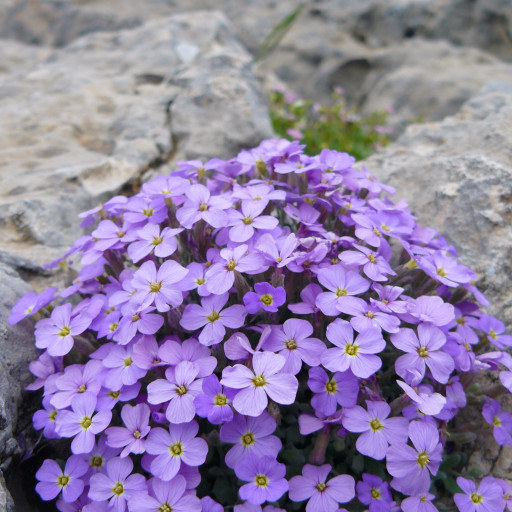
Often referred to as the "Purple Rockcress" or "False Rockcress," Aubrieta deltoidea is the undisputed crown jewel of rock gardens and stone walls. Originating from the rugged, mountainous slopes of the Mediterranean, this resilient evergreen creates stunning "cascades" of vibrant color that spill over stone like a purple waterfall. It is a favorite among gardeners for its ability to turn a dull grey ledge into a living, blooming tapestry every spring.
🔍 How to Identify
- 🌸 Four-Petal Blooms: The tiny flowers are cruciform (cross-shaped), featuring four distinct petals usually in shades of violet, lilac, or deep magenta.
- 🍃 Fuzzy Foliage: The small, grey-green leaves are spoon-shaped and covered in fine hairs, giving the mat a soft, velvety appearance.
- 🧱 Creeping Habit: It grows in dense, low-lying cushions that hug the ground or drape over edges, rarely reaching more than 6 inches in height.
🏡 In Your Garden
- 🪨 The Rock Star: True to its name, this plant thrives in poor, alkaline, or sandy soil. It actually performs poorly in overly rich or "mushy" garden beds; it requires sharp drainage to keep its roots dry and happy.
- ✂️ The Post-Bloom Trim: To keep the mat dense and prevent the center from becoming "woody" or sparse, give the plant a light haircut immediately after the flowers fade. This encourages fresh, silver-green growth for the rest of the season.
⚠️ Safety & Toxicity
- 🐾 Non-Toxic: Aubrieta deltoidea is generally considered safe and non-toxic for cats, dogs, and horses.
- 🌿 Gentle Texture: Unlike some rock-dwelling plants that have sharp spines or irritating sap, the Rockcress is soft to the touch, making it an excellent choice for planting along pathways where children or pets might brush against it.
✨ Fun Fact
The genus is named after Claude Aubriet, a famous 18th-century French botanical illustrator who served the French royalty. He was renowned for his ability to capture the intricate details of plants during scientific expeditions to the Middle East.

Detailed Care Instructions
| Lighting | Full Sun |
| Hardiness Zones | Max 8B |
To grow Aubrieta deltoidea (commonly known as rock cress), you can follow these steps:
- Choose a suitable location: Aubrieta deltoidea prefers full sun to partial shade, and well-draining soil. Select a location where the plant will receive at least 6 hours of direct sunlight each day.
- Prepare the soil: Ensure the soil is loose, well-draining, and slightly alkaline with a pH level between 6.0 and 7.5. You can amend the soil with organic matter, such as compost, to improve its structure and fertility.
- Planting from seeds: Aubrieta deltoidea can be grown from seeds. Sow the seeds directly in the garden bed in early spring after the last frost, or start them indoors 6-8 weeks before the last frost date and transplant them later. Scatter the seeds on the soil surface and gently press them down. Keep the soil consistently moist until the seeds germinate.
- Transplanting seedlings: If starting indoors, transplant the Aubrieta deltoidea seedlings when they have developed a few true leaves and the danger of frost has passed. Space the plants about 6-12 inches apart to give them room to spread.
- Watering: Water the plants regularly to keep the soil consistently moist but not overly saturated. Avoid frequent overhead watering, as it can lead to root rot. Water at the base of the plant to encourage deep root growth.
- Fertilizing: Aubrieta deltoidea generally does not require much fertilization, as it thrives in nutrient-poor soil. However, you can apply a balanced, slow-release fertilizer in early spring to give the plants a boost.
- Pruning and grooming: After the blooming period, you can trim back the spent flowers to encourage a second flush of blooms and promote bushier growth. After several years, the plant may become woody and less compact, at which time rejuvenating pruning is necessary. Cut the plant back to a few inches above the ground to encourage fresh growth.
- Mulching: Apply a layer of organic mulch, such as straw or wood chips, around the base of the plant to help retain moisture, suppress weed growth, and protect the shallow roots from extreme temperatures.
By following these steps and providing the right conditions, you should be able to grow healthy and vibrant Aubrieta deltoidea plants.

Place in a window with dappled sun or a spot in the middle of a room. Or directly in a window facing west or east.

To water this particular plant, it is important to first consider the soil type. The soil should be well-draining and not too compact to help prevent waterlogged roots. When watering, aim for the soil and avoid getting water on the leaves or flowers, as this can lead to disease and mold growth. Allow the top layer of soil to dry out slightly before watering again. During hot and dry weather, the plant may need more frequent watering. Avoid letting the soil completely dry out, as this can stress and damage the plant. Overwatering should also be avoided, as this can lead to root rot.
To fertilize this plant, first ensure that the soil is moist. Apply a balanced, slow-release fertilizer according to package instructions, taking care not to over-fertilize. In the growing season, apply fertilizer once a month. Ensure that the fertilizer is spread evenly around the roots of the plant and water well after application. Avoid fertilizing during periods of drought or extreme heat.
The best type of soil to use for this plant is a well-draining and slightly alkaline soil. It should be rich in organic matter, such as compost or manure, and have a pH between 6.5 and 7.5. It is important to avoid soil that is too heavy or clay-like, as this can cause the roots to rot. Additionally, adding sand or gravel to the soil can improve drainage and prevent waterlogging.
To propagate this plant, one can take stem cuttings from a mature plant in the spring or summer. The stem cuttings should be about 4-6 inches long and have a few leaves attached. Remove the lower leaves and dip the cut end in rooting hormone.
Plant the cuttings in a well-draining soil mix and keep them moist until they root. It is important to keep the cuttings out of direct sunlight while they are rooting. Once rooted, the new plants can be transplanted into their permanent location.
Another method of propagating this plant is by division. Dig up a mature plant and carefully divide it into smaller sections, each with roots and foliage. Replant the sections in their permanent location and water them thoroughly.








