Plant Overview
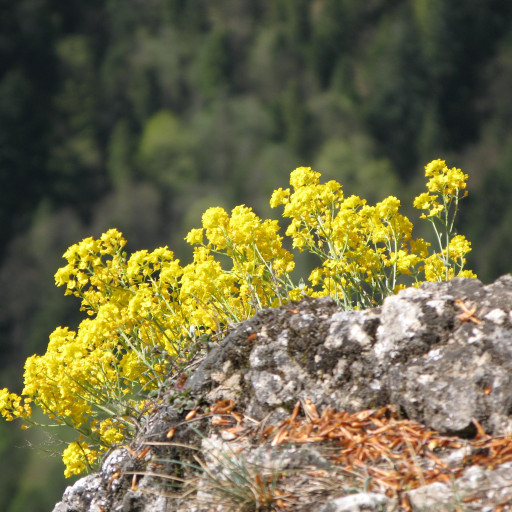
Widely known as "Basket of Gold" or "Gold-dust," this cheerful perennial transforms garden edges into a shimmering carpet of molten sunlight every spring. Native to the mountainous regions of Central and Southern Europe, it is a rugged survivor that has earned a place in hearts worldwide for its ability to thrive in the harshest rocky crevices. It is the ultimate "spiller" plant, famously cascading over stone walls like a living waterfall of yellow.
🔍 How to Identify
- 🌼 The Flowers: Dense, rounded clusters of tiny, four-petaled blooms in a brilliant, saturated sulfur-yellow.
- 🍃 The Foliage: Oblong, spatula-shaped leaves that are a distinct smoky gray-green. They have a soft, felted texture that helps the plant retain moisture.
- 🌱 Growth Habit: A low-growing, mounded evergreen that rarely exceeds 12 inches in height but spreads wide to form a dense, woody-based cushion.
🏡 In Your Garden
- 🪨 The "Rock Star": This plant is a true lithophyte at heart; it demands gritty, well-draining soil. It hates "wet feet" and will quickly succumb to root rot if planted in heavy, soggy clay.
- ✂️ Post-Bloom Haircut: To keep the plant from becoming leggy or dying out in the center, shear it back by about one-third immediately after the flowers fade. This encourages fresh, silvery leaf growth and maintains its tidy shape.
- ☀️ Sun Seeker: It thrives in the hottest, brightest spots of the garden, making it an excellent choice for xeriscaping or south-facing slopes where other plants might scorch.
⚠️ Safety & Toxicity
- ✅ Status: Generally considered non-toxic and safe for residential gardens.
- 🐾 Details: It is safe for households with cats, dogs, and children. While not meant for consumption, it lacks the harsh alkaloids found in many other ornamental perennials. Some sensitive individuals may experience very mild skin irritation if handling the woody stems for long periods.
✨ Fun Fact
Despite its delicate appearance and ornamental use, Aurinia saxatilis is a member of the Brassicaceae family—making this golden beauty a distant cousin to broccoli, cabbage, and mustard!

Detailed Care Instructions
| Color | Yellow |
| Soil Ph | 5.6 To 7.5 |
| Lighting | Full Sun |
| Soil Type | Dry, Sandy To Average, Well-Draining |
| Bloom Time | Spring |
| Plant Type | Herbaceous Perennial |
| Mature Size | 6 To 12 Inches Tall And 12 To 18 Inches Wide |
| Native Area | Asia, Europe |
| Sun Exposure | Full Sun |
| Hardiness Zones | 3 To 7 |
To grow Aurinia Saxatilis (Basket-of-Gold), follow these steps:
- Planting: Choose a location that provides full sun to partial shade. The soil should be well-draining and moderately fertile. Prepare the soil by removing weeds and rocks, and amend it with organic matter like compost.
- Planting method: You can sow seeds directly in the garden or transplant seedlings. If using seeds, start them indoors 6-8 weeks before the last frost date and then transplant them once the seedlings are strong enough. Otherwise, you can directly sow the seeds outdoors in spring.
- Watering: While Aurinia Saxatilis is drought-tolerant, it still requires regular watering during its initial establishment period. Once established, it becomes more tolerant of dry conditions. Water deeply and allow the soil to dry out between watering sessions.
- Mulching: Apply a layer of organic mulch around the plants to retain moisture, suppress weeds, and regulate soil temperature. Avoid covering the plant's crown, as it can promote rotting.
- Fertilizing: These plants do not require much fertilization. A light application of a balanced, all-purpose fertilizer in early spring should be sufficient. Avoid over-fertilizing, as it can lead to leggy growth.
- Pruning: After the flowering period, trim back the plants to encourage bushier growth and prevent reseeding. Additionally, trim off any dead or damaged stems throughout the year.
- Pests and diseases: Aurinia Saxatilis is generally resistant to pests and diseases. However, keep an eye out for aphids or caterpillars, which can occasionally appear. Treat them with organic insecticides or soapy water if necessary.
- Division: Every few years, divide the plants to control their size and rejuvenate them. Dig up the clumps, separate them into smaller sections, and replant the divisions in well-prepared soil.
By following these guidelines, you should be able to successfully grow Aurinia Saxatilis in your garden.

Place in a bright room that is sun drenched almost all day. Or directly in a south-facing window.

To water this plant, you should wait until the top inch of soil in the pot or ground feels dry to the touch. When watering, thoroughly moisten the soil, ensuring that the water penetrates to the roots. Avoid letting the plant sit in standing water, and never let the soil become waterlogged. If growing in a container, make sure there are drainage holes to allow excess water to escape. Water more frequently during hot, dry weather and less frequently during cool, humid weather. Remember to adjust the watering schedule as needed based on the conditions in your specific growing environment.
The best time to fertilize the plant is early spring, using a balanced fertilizer. Apply the fertilizer gently around the base of the plant, being careful not to get it on the leaves. Water the plant well after fertilizing, but do not overwater. Repeat this process every four to six weeks during the growing season.
The ideal soil for this particular plant species should be well-drained, slightly alkaline, and nutrient-rich. It should not be too heavy or compact, as this can prevent adequate water and nutrient absorption by the roots. A soil mixture consisting of sand, gravel, and loam is recommended, which ensures good aeration while retaining moisture. It is important to avoid using soil that is too acidic, as this can hinder plant growth and cause yellowing of the leaves. Additionally, regular fertilization with a balanced blend will help maintain the plant's health and vigor.
To propagate this plant, you can take stem cuttings in early summer. Cut a healthy stem about 5-6 inches long with a pair of clean and sharp scissors. Remove the leaves on the bottom half of the stem, leaving about 3-4 leaves at the top. Dip the cut end of the stem in rooting hormone powder. Then plant the stem in a pot filled with well-draining soil, making sure the soil is moist. Cover the pot with a plastic bag to create a humid environment that encourages root growth. Place the pot in indirect sunlight, and keep the soil moist but not waterlogged. After about 4-6 weeks, check for roots by gently tugging the stem. If there is resistance, roots have formed, and you can remove the plastic bag and move the plant to a bright, sunny location.








