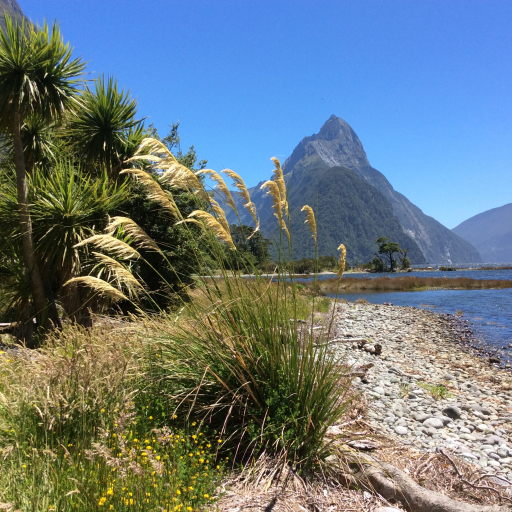
Plant Overview
Known as the ToeToe (pronounced toy-toy), this majestic grass is a true icon of the New Zealand landscape. While it looks like a soft, fluffy cloud from a distance, it is a sturdy survivor that thrives in the face of coastal winds and riverside dampness. It is the elegant, non-invasive alternative to the often-aggressive South American Pampas grass, offering a more graceful, drooping silhouette that dances beautifully in the breeze.
🔍 How to Identify
- 🌾 The Plumes: Features silky, creamy-yellow flower heads that arch and droop gracefully toward the ground, appearing from spring to summer.
- 🗡️ The Leaves: Long, leathery green blades that are marked by distinct longitudinal veins; they do not snap easily when tugged.
- 📏 The Habit: Forms a massive, fountain-like clump that can reach up to 3 meters in height, creating a dramatic architectural statement in any open space.
🏡 In Your Garden
- 💧 Wet Feet Welcome: Unlike many ornamental grasses that demand perfect drainage, ToeToe thrives in damp soil and is often found naturally near streams, swamps, or sand dunes.
- 🌬️ Wind Warrior: It is incredibly salt-tolerant and wind-resistant. It acts as an excellent natural windbreak or erosion control for coastal properties where other plants might wither.
- ✂️ Low Maintenance: It hates being moved once established due to its deep root system, so pick your spot wisely. To keep it looking fresh, simply comb out dead foliage with a rake rather than "hacking" it to the ground.
⚠️ Safety & Toxicity
- ⚔️ Physical Hazard: While not chemically toxic, the leaf edges are lined with microscopic silica teeth. These can cause sharp, painful "paper cuts" on bare skin.
- 🐾 Pets & Kids: It is generally safe and non-toxic if accidentally ingested, but the sharp texture of the leaves makes it unpalatable and potentially irritating to the mouths of curious pets. Always wear gloves when handling.
✨ Fun Fact
In Māori tradition, the hollow stalks (kākaho) were highly valued for creating the "tukutuku" panels—beautifully patterned lattice work—found on the interior walls of meeting houses. It was also used medicinally; the white pith was sometimes applied to wounds to help stop bleeding.

Detailed Care Instructions

Place in a bright room that is sun drenched almost all day. Or directly in a south-facing window.

Water-loving plants flourish in wet or sloppy soil and near ponds. The extensive root system enables these plants to absorb plenty of water. The surface of the soil should be kept moist at all times. Place your pot in a container filled with water to guarantee that plants get enough water. If the ground becomes dry, it is recommended that you water it well. Plants in smaller pots will need to be watered more frequently. Water the soil in which the plant is standing thoroughly using a watering can.








