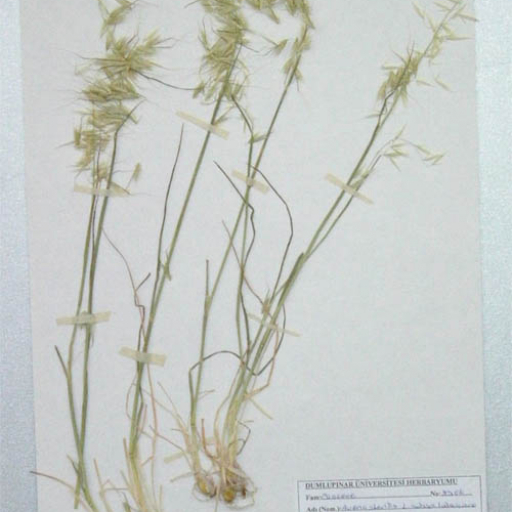
Plant Overview
Commonly known as the Animated Oat or Winter Wild Oat, Avena sterilis is a wild relative of the common oat that has a flare for the dramatic. While farmers often view it as a stubborn intruder in wheat fields, it is famous among nature lovers for its "magical" seeds that seem to crawl on their own. It’s a plant that perfectly demonstrates how nature uses physics to survive.
🔍 How to Identify
- 🌾 The Seed Head: It features large, loose, and nodding panicles. The heavy spikelets hang gracefully, resembling a delicate green chandelier that turns golden as it matures.
- 🌀 The Long Awns: Look for the stiff, dark, and twisted bristles (awns) protruding from the seeds. These are often 1-2 inches long and have a distinct "elbow" bend in the middle.
- 🧥 Hairy Husks: The base of the seeds is usually covered in dense, stiff hairs, which distinguish it from the smoother cultivated oats you might find in a pantry.
🏡 In Your Garden
- 🌱 The Opportunistic Guest: You’ll rarely find this sold at a nursery; it usually arrives as a "hitchhiker" in birdseed or straw mulch. It loves disturbed soil and can quickly outcompete smaller garden flowers if left unchecked.
- 💧 Self-Planting Mechanism: This plant doesn't need a gardener. Its twisted awns are hygroscopic—meaning they move in response to humidity. When it rains, the awns untwist, and when it dries, they coil back up, effectively "drilling" the seed into the soil.
⚠️ Safety & Toxicity
- 🟢 Non-Toxic: Avena sterilis is not poisonous to humans, cats, or dogs.
- 🐾 Mechanical Irritant: The biggest danger is to pets. The sharp, barbed awns are designed to hook into things. They can easily get stuck in a dog’s fur, ears, or between their toes, which can cause painful sores or infections if not removed promptly.
✨ Fun Fact
The "Animated Oat" gets its name because the seeds move so vigorously when exposed to moisture that they appear to be crawling like insects. Victorian-era children used to keep the seeds as "natural toys," placing them on a damp palm to watch them "dance" and flip over!

Detailed Care Instructions
To successfully grow Avena sterilis (also known as Wild Oat), follow these steps:
- Choose the right location: Avena sterilis prefers a sunny spot with well-draining soil.
- Prepare the soil: Before planting, loosen the soil with a garden fork or tiller. Remove any weeds or rocks and add organic matter like compost or aged manure to improve the soil's fertility.
- Select the planting time: Avena sterilis can be sown directly outdoors in early spring when the soil temperature reaches around 50°F (10°C). Make sure there are no expected frost events.
- Sowing the seeds: Scatter the seeds evenly across the prepared soil. Lightly rake them into the soil (around 1/4 inch or 0.6 cm depth). Wild oats grow best in clumps, so you don't need to worry too much about even spacing.
- Watering: Regularly water the area where you sowed the seeds. Keep the soil consistently moist but not overly saturated. Avoid letting the soil dry out completely, as it may result in poor germination.
- Thinning: Once the seedlings have emerged, thin them to allow enough space for each plant to grow properly. Remove any weaker seedlings, leaving the strongest ones with approximately 6-8 inches (15-20 cm) of spacing.
- Mulching: Apply a layer of organic mulch around the base of the plants to suppress weed growth and help retain moisture in the soil.
- Fertilizing: Wild oats do not typically require heavy fertilization. However, if your soil is poor, you can apply a balanced organic fertilizer once or twice during the growing season following the manufacturer's instructions.
- Controlling weeds: Monitor the area for weed growth and promptly remove any competing plants around the Avena sterilis seedlings.
- Pest control: Wild oats are generally resilient against pests and diseases, so you usually don't need to worry about specific control methods. However, if you notice any issues, consult with a local gardening expert or use appropriate organic pest control methods.
- Harvesting: Avena sterilis is typically harvested when the oat heads are fully ripened and have changed color to a golden hue. Cut the stalks about 1 inch (2.5 cm) above the ground, and allow the harvested oats to dry completely before threshing to remove the grains.
Remember that Avena sterilis can become invasive in some regions, so it's essential to check if it's permitted to grow in your area or if any specific regulations apply.

Place in a bright room that is sun drenched almost all day. Or directly in a south-facing window.

To properly water this plant, you should first assess the moisture level of the soil. This can be done by inserting your finger about 2-3 inches into the soil and feeling for any moisture. If the soil is dry to the touch, it’s time to water the plant.
When watering, it is important to avoid getting water on the leaves as this can promote the growth of fungus and other diseases. Instead, pour water directly onto the soil around the base of the plant. Make sure to water slowly and deeply so that the water has time to penetrate the soil and reach the roots.
It is also important not to overwater this plant as it prefers well-draining soil. Overwatering can lead to root rot and other issues. To prevent overwatering, wait until the top inch of soil is dry before watering again.
During the cooler months, you may need to water this plant less frequently as it will not require as much moisture. However, during the hotter months, you may need to water more often to keep the soil moist.
To fertilize this plant, use a balanced fertilizer with equal amounts of nitrogen, phosphorus, and potassium. Apply the fertilizer in a ring around the base of the plant, avoiding direct contact with the stems or leaves. Water thoroughly after fertilizing to ensure the nutrients are absorbed by the roots. Repeat this process every 4-6 weeks throughout the growing season.
Avena Sterilis plant will grow well in a well-draining soil that is rich in nutrients. Ideally, the soil should be slightly acidic, with a pH level of around 6.0 to 7.5. It is important to avoid heavy clay soils, as these can lead to poor drainage and waterlogging. Instead, it is better to opt for a loamy or sandy soil that is light and easily workable. When preparing the soil for planting, it is a good idea to add some organic matter, such as compost or well-rotted manure. This will help to improve the soil structure and fertility, which in turn will promote healthy growth and development of the Avena Sterilis plant. Regular watering is also important, especially during dry periods, to ensure that the soil remains moist but not waterlogged.
To propagate this plant, you can start by collecting seeds from mature plants and storing them in a cool, dry place until you are ready to use them. Then, sow the seeds in well-draining soil and lightly cover them with a layer of soil. Water the seeds regularly, but be careful not to overwater them.
Alternatively, you can propagate this plant using stem cuttings. Take a stem cutting from a mature plant and remove all but the top few leaves. Dip the cut end of the stem in rooting hormone and plant it in well-draining soil. Water the cutting regularly and keep it in a warm, humid environment until it begins to show new growth.
Finally, you can also propagate this plant by dividing mature plants. Gently dig up the plant and separate it into smaller clumps, making sure each clump has a good root system. Replant the clumps in well-draining soil and water them regularly until they are established.








