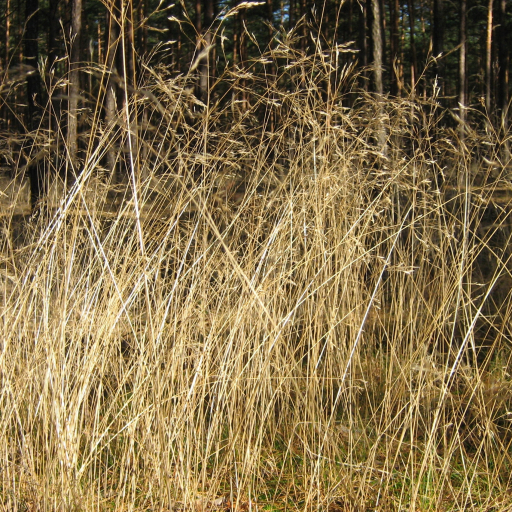
Plant Overview
Often referred to as the Wavy Hair-grass, Avenella flexuosa is the ballerina of the grass world. Found dancing across acidic moorlands and dappled pine forests, this perennial grass is beloved for its incredibly fine, thread-like foliage and delicate, shimmering flower heads. It creates a soft, misty "haze" in the landscape that catches the sunlight beautifully during the golden hour.
🔍 How to Identify
- 🌾 The "Wavy" Stems: Its most famous feature is the thin, wiry flower stalks that have a distinct zig-zag or "flexuose" shape, making the seed heads look like they are floating.
- 🍃 Fine Foliage: The leaves are exceptionally narrow—almost like dark green threads—forming dense, tufted cushions that remain green throughout much of the year.
- ✨ Shimmering Panicles: In mid-summer, it produces airy, loose clusters of flowers that range from bronze to silvery-purple, giving the plant a metallic glint in the wind.
🏡 In Your Garden
- 🌲 The Shade Specialist: Unlike many ornamental grasses that crave full sun, Wavy Hair-grass thrives in the "dry shade" found under pine or oak trees, where other plants often struggle to grow.
- 🧪 Soil Nuance: This plant is an "acid-lover." It serves as a natural indicator of acidic soil; if you see it thriving in the wild, the ground beneath is likely low in pH. In a garden setting, it hates lime and will struggle in alkaline environments.
- ✂️ Low Maintenance: Because it grows slowly and stays in neat clumps, it rarely requires division and only needs a light "comb through" or a gentle trim in late winter to remove old seed heads.
⚠️ Safety & Toxicity
- ✅ Generally Safe: Avenella flexuosa is not known to be toxic to humans, cats, or dogs.
- 🤧 Allergy Note: Like most grasses, it produces wind-borne pollen during its flowering season in June and July, which may trigger hay fever in sensitive individuals.
✨ Fun Fact
The name "Hair-grass" isn't just a metaphor for its thin leaves—in some folk traditions, the dried, wiry stems were actually bundled together to create small, delicate brushes for cleaning intricate items!

Detailed Care Instructions
To grow Avenella Flexuosa, also known as Wavy Hair-grass, you can follow these steps:
- Choose a suitable location: Avenella Flexuosa thrives in moist, well-drained soil and prefers partial shade to full sun. Select a location that meets these requirements.
- Prepare the soil: Ensure the soil is well-draining by adding organic matter such as compost or well-rotted manure. Incorporate it into the soil to improve its structure and fertility.
- Sow seeds or plant divisions: Avenella Flexuosa can be grown from seeds or by dividing existing plants. If starting from seeds, sow them in a seed tray or containers filled with seed compost. Cover the seeds lightly with a thin layer of compost and keep them moist. Transplant seedlings when they are large enough to handle.
- Watering: Keep the soil evenly moist until the plants establish. Water regularly, especially during dry periods, but ensure the soil does not become waterlogged.
- Mulch and weed control: Apply a layer of organic mulch around the plants to help retain soil moisture and suppress weed growth. This is particularly important while the plants are establishing.
- Maintenance: Avenella Flexuosa requires minimal maintenance. Remove any weeds that may compete with the plants for nutrients and water. You can also trim back the plants in late winter or early spring to tidy them up.
- Division: Over time, the plant will form dense clumps. You can divide these clumps every few years to create new plants or rejuvenate old ones. Dig up the clumps and separate them into smaller sections, each with roots attached. Replant them in suitable locations.
- Pest and disease control: Avenella Flexuosa is generally resistant to pests and diseases. However, it is still important to inspect the plants regularly for any signs of problems. If any pests or diseases are identified, take appropriate measures to control them, such as using organic insecticides or fungicides.
By following these steps, you can successfully grow Avenella Flexuosa and enjoy its beautiful wavy foliage in your garden.

Place in a bright room that is sun drenched almost all day. Or directly in a south-facing window.

To properly water this particular plant, you should first ensure that the soil is dry to the touch before proceeding. Once you have confirmed that the soil is ready for watering, you should slowly and evenly water the plant at its base, taking care to avoid getting water on the leaves. It is important to use a watering can or drip system rather than a hose or other high-pressure method, as this can damage the plant. You should aim to provide enough water to thoroughly saturate the soil, but not so much that the water pools at the base or runs off. Additionally, it is important to avoid leaving any standing water in the plant's saucer or container, as this can lead to root rot or other issues. It is recommended to water this plant on a regular schedule, such as once a week, but adjust as needed based on the specific needs of your plant and the conditions in which it is growing.
- Choose a balanced fertilizer: Select a fertilizer with a balanced ratio of nitrogen (N), phosphorus (P), and potassium (K). Look for a fertilizer labeled with equal or similar numbers representing the NPK ratio, such as 10-10-10 or 14-14-14.
- Read the instructions: Refer to the manufacturer's instructions on the fertilizer packaging for specific application rates and frequency.
- Time the fertilization: Apply fertilizer to the Avenella Flexuosa plant during its active growing season. Typically, this is in the spring or early summer.
- Dilute the fertilizer: Dilute the fertilizer according to the recommended dosage. This may involve mixing a specific amount of fertilizer with a certain volume of water. Follow the manufacturer's instructions to achieve the correct dilution.
- Apply evenly: Pour the diluted fertilizer solution around the base of the Avenella Flexuosa plant, being careful not to get the foliage wet. Ensure that the application is even and distributed across the root zone.
- Avoid over-fertilization: Do not exceed the recommended application rate, as this may harm the plant. Overly concentrated fertilizer can cause leaf burn or other damage.
- Water after application: After fertilizing, water the plant thoroughly. This helps to wash the fertilizer into the soil, ensuring that nutrients are accessible to the plant's roots.
- Monitor and adjust: Monitor the plant's growth and overall health after fertilization. If the plant shows signs of distress or exhibits excessive growth, reduce the frequency or dosage of future fertilization.
- Follow a regular fertilizing schedule: Avenella Flexuosa plants benefit from regular fertilization throughout the growing season. Develop a fertilizing schedule based on the specific product used, the plant's needs, and any other factors unique to your gardening situation.
Remember to follow safety precautions when handling fertilizers, and always consult the instructions provided by the manufacturer for the specific brand and type of fertilizer you are using.
A suitable soil for the plant commonly known as Avenella Flexuosa must be rich in organic matter and well-draining, retaining enough moisture to prevent the soil from becoming too dry. The ideal pH level for the soil should be slightly acidic, ranging from 5.5 to 6.5. Since the plant is native to acidic, sandy, and rocky soils, mixing coarse sand or grit into the soil to emulate these conditions could positively impact its growth. Additionally, incorporating organic matter such as compost or peat moss into the soil can provide essential nutrients to the plant and improve soil structure. It's important to avoid using soil that is too heavy or compacted, as the plant's roots require sufficient oxygen to thrive.
Avenella flexuosa can be propagated by several methods, including division, seed propagation, and rhizome cuttings. Here's a detailed guide on each method:
- Division:
- Identify a mature and healthy Avenella flexuosa plant with established clumps.
- During early spring or early autumn, carefully dig out the entire clump using a garden fork or shovel.
- Gently separate the clump into smaller sections, keeping each section with some roots attached.
- Replant the divided sections in a suitable location, ensuring they are at the same depth and spacing as the original plant.
- Water thoroughly and provide adequate moisture until the divisions establish.
- Identify a mature and healthy Avenella flexuosa plant with established clumps.
- Seed Propagation:
- Collect ripe seeds from mature Avenella flexuosa plants.
- Clean the seeds by removing any debris or dried plant material.
- Fill a seed tray or small pots with a well-draining, sterile seed-sowing mix.
- Sow the seeds evenly over the surface of the soil, lightly pressing them into the soil, or covering them with a thin layer of fine vermiculite or sand.
- Water gently, ensuring the soil remains moist but not waterlogged.
- Place the seed tray or pots in a warm and bright location, out of direct sunlight.
- Germination usually occurs within 2-4 weeks. Once the seedlings develop 2-3 true leaves, they can be transplanted into individual pots or a prepared garden bed.
- Collect ripe seeds from mature Avenella flexuosa plants.
- Rhizome Cuttings:
- Identify a healthy and established Avenella flexuosa plant with robust rhizomes.
- During early spring or early autumn, carefully dig out the plant, exposing the rhizomes.
- Cut the rhizomes into 2 to 4-inch sections, ensuring each section has at least one bud or growing point.
- Dust the cut ends with a rooting hormone powder to promote root development (optional).
- Fill pots or a prepared bed with a well-draining, fertile soil mix.
- Plant the rhizome sections horizontally in the soil, burying them to a suitable depth, about 1-2 inches below the soil surface.
- Water gently, keeping the soil consistently moist but not wet.
- Place the pots or prepared bed in a shaded or partially shaded area, protecting them from harsh sunlight or extreme temperatures.
- Gradually introduce the young plants to more sunlight over a period of a few weeks to acclimate them.
Remember to monitor the newly propagated plants regularly, ensuring they receive proper care in terms of watering, light exposure, and protection from pests or diseases.
- Identify a healthy and established Avenella flexuosa plant with robust rhizomes.








