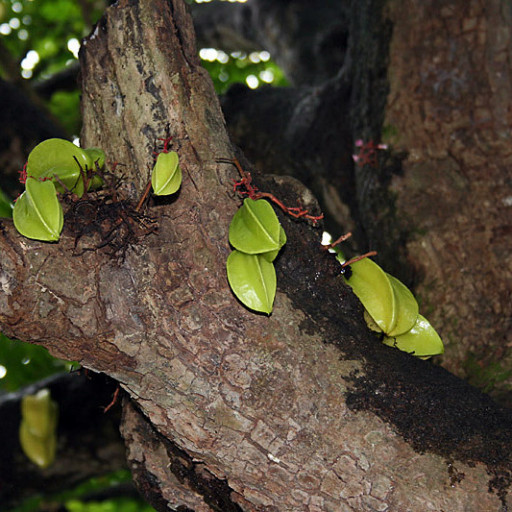
Plant Overview
Known as the "Starfruit tree" for the celestial shapes it produces, Averrhoa carambola is a tropical gem that feels like growing a piece of the galaxy in your backyard. Originally hailing from Southeast Asia, it is a favorite in warm-climate gardens for its waxy, translucent fruits and delicate, drooping foliage. Whether you call it Carambola or the "Five-Angled Fruit," this tree adds a touch of architectural elegance and a punch of tart sweetness to any landscape.
🔍 How to Identify
- ⭐ The Fruit: The most iconic feature is the oblong, waxy fruit with five (occasionally six) deep longitudinal ridges that form perfect, five-pointed stars when sliced crosswise.
- 🍃 Sensitive Leaves: The soft, medium-green leaves are pinnate and compound; interestingly, they are "nyctinastic," meaning they react to light and touch by folding up at night or when the tree is roughly handled.
- 🌸 Bell Blossoms: Look for clusters of tiny, fragrant, lilac-to-pink bell-shaped flowers that emerge in clusters from the leaf axils or directly from the younger branches.
🏡 In Your Garden
- 🌬️ Wind Protection: While the tree loves the sun, its wood is surprisingly brittle. It is best to plant it near a windbreak or a sturdy wall to prevent the fruit-heavy branches from snapping during summer storms.
- 💧 Thirst for Humidity: This is a true tropical that craves consistent moisture and high humidity to set fruit. However, it "hates wet feet," so ensure your soil is rich in organic matter but drains quickly to avoid root rot.
⚠️ Safety & Toxicity
- 🚫 Kidney Warning: While healthy and delicious for most people, the fruit contains caramboxin and high levels of oxalic acid. It can be dangerous or even fatal for individuals with chronic kidney disease or those on dialysis.
- 🐾 Pet Caution: The high oxalate content makes the fruit and leaves potentially toxic to dogs and cats if consumed in large quantities, which can lead to drooling, tremors, or digestive upset.
✨ Fun Fact
Because of its high acidity, sour varieties of starfruit juice are traditionally used in parts of Asia to clean rusty metal or polish brass—it is nature’s own biodegradable tarnish remover!

Detailed Care Instructions
| Lighting | Full Sun |
| Hardiness Zones | 9B - 11 |
To grow Averrhoa Carambola, also known as starfruit, follow these steps:
- Climate: Make sure you live in a suitable climate for growing starfruit. It thrives in tropical and subtropical regions with temperatures between 65-85°F (18-29°C).
- Soil: Choose well-draining soil with a pH level between 5.0 and 6.5. If your soil is heavy clay, mix it with organic matter or compost to improve drainage.
- Seed or Cutting: Obtain starfruit seeds or cuttings from a reputable nursery or online source. Cuttings are generally recommended, as they ensure consistent quality and fruit characteristics. Choose healthy, disease-free cuttings or seeds.
- Prepare the Planting Site: Select a sunny location that receives at least 6-8 hours of direct sunlight daily. Ensure there is enough space for the plant to grow, as it can reach up to 30 feet in height and 20 feet in width.
- Planting: Dig a hole twice as wide and deep as the root ball. Place the cutting or seedling into the hole, ensuring it sits at the same depth it was previously growing. Gently backfill the hole with soil, ensuring there are no air pockets.
- Watering: Initially, provide ample water to help the plant establish its root system. Once established, starfruit is reasonably drought-tolerant but will still appreciate consistent watering if rainfall is insufficient. Water deeply and regularly, but allow the soil to dry out slightly between waterings.
- Fertilization: Apply balanced fertilizer, such as a NPK (nitrogen, phosphorus, potassium) fertilizer, every 4-6 weeks during the growing season. Follow the package instructions for the correct dosage. Additionally, you can add organic compost or well-rotted manure around the base of the plant to improve soil fertility.
- Pruning: Prune the plant regularly to remove dead, damaged, or overcrowded branches. Promote proper air circulation and ensure sunlight reaches all parts of the plant. This will help prevent diseases and increase fruit production.
- Pests and Diseases: Monitor the plant regularly for common pests like aphids, scales, or mites. Treat infestations with organic insecticides or insecticidal soaps. Provide good airflow and avoid overwatering to prevent fungal diseases.
- Harvesting: Starfruit typically takes 3-5 years from planting to produce a substantial crop. Harvest ripe fruit when they are fully yellow and have a slight green hue. The fruit should be firm and have a sweet aroma. Twist or cut the fruit from the branch, being careful not to damage the stem.
By following these steps, you can successfully grow Averrhoa Carambola (starfruit) and enjoy its delicious, tropical fruit.

Place in a bright room that is sun drenched almost all day. Or directly in a south-facing window.

To water Averrhoa Carambola, use a watering can or hose and water the base of the plant until the soil is moist but not waterlogged. Water consistently, but do not overwater as this can lead to root rot. Check the top inch of soil before watering to ensure it has dried out slightly. Water more frequently during the growing season and reduce watering during the dormant period. Avoid getting the foliage wet to prevent disease.
To fertilize this plant, apply a balanced slow-release fertilizer with equal parts of nitrogen, phosphorus, and potassium. Use a fertilizer with a lower nitrogen content (represented by the first number in the N-P-K ratio) to prevent excessive vegetative growth at the expense of fruit production. Apply the fertilizer evenly around the base of the plant and water thoroughly. Avoid excessive fertilization as it can lead to salt buildup in the soil. Fertilize during the growing season every 6-8 weeks, reducing the frequency during the dormant season.
The preferred soil type for Averrhoa Carambola is loamy soil with good drainage. It should also provide sufficient nutrients and organic matter to the plant. Ideal soil pH is between 5.5 and 6.5, which is slightly acidic. The soil should not be compacted, and it should allow for aeration and water circulation. The addition of compost or well-rotted manure can improve soil fertility and structure. Avoid using heavy clay soils or sandy soils as they can impede plant growth and development. It is important to ensure that the soil is moist but not waterlogged. Overwatering can lead to root rot and other plant diseases.
To propagate this plant, you can take stem cuttings from healthy and mature plants. The cuttings should be about 6-8 inches long and have at least two or three nodes. Remove the leaves from the lower half of the stem cutting, leaving only a few leaves at the top.
Dip the cutting in rooting hormone powder and insert it into a pot filled with well-draining soil. Water the cutting well and cover the pot with a plastic bag to create a humid environment. Keep the pot in a bright, indirect light and ensure that the soil stays moist but not waterlogged.
After a few weeks, the cutting should start to develop roots. Once the roots have grown several inches long, you can transplant the new plant into a larger pot or directly into the ground. Be sure to keep the plant well-watered and provide it with plenty of sunlight for optimal growth.
Common pests of the carambola include Mealybugs, spider mites, aphids, larvae. Make a habit of checking your carambola frequently for pests so that any infestations can be caught and managed early.








