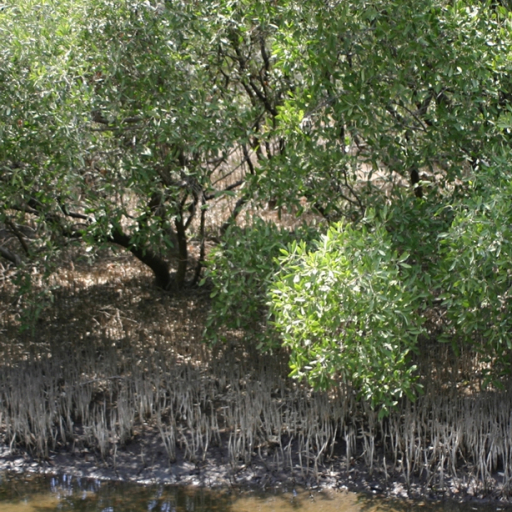
Plant Overview
Often called the Black Mangrove or Honey Mangrove, this salt-loving architect is a superstar of the tropical shoreline. While other plants wither in salty conditions, the Black Mangrove thrives, acting as a natural buffer against storms and a vital nursery for ocean life. In the Caribbean and Florida, it is highly prized by beekeepers for the distinct, high-quality honey produced from its nectar-rich white flowers.
🔍 How to Identify
- 🍃 The Leaf Trick: Look for narrow, elliptical leaves that are shiny dark green on top and fuzzy silver underneath. If you look closely, you’ll often see tiny, sparkling salt crystals sitting on the surface—the plant literally "sweats" out excess salt!
- 👃 Pencil Roots: Unlike the "walking" roots of the Red Mangrove, this species sends up hundreds of "pneumatophores." These are vertical, pencil-shaped roots that stick out of the mud like tiny snorkels to help the tree breathe during high tide.
- 🌑 The Dark Bark: Its namesake dark, scaly bark is rich in tannins and looks almost black when wet, distinguishing it from the lighter-colored mangroves nearby.
🏡 In Your Garden & Landscape
- 🌊 Salt Survivalist: This is not your typical backyard tree. It requires a brackish or saltwater environment to truly thrive. If you are lucky enough to have coastal property, planting these is the best way to prevent shoreline erosion and create a private sanctuary for local wildlife.
- 🌡️ Warmth Only: The Black Mangrove is more cold-hardy than other mangrove species, but it still shivers at the thought of frost. It prefers consistent tropical heat and will struggle if temperatures drop significantly for more than a few days.
⚠️ Safety & Toxicity
- ✅ Safe Status: The Black Mangrove is generally considered non-toxic to humans, dogs, and cats. It does not contain the dangerous alkaloids found in many other tropical ornamental plants.
- 🧂 Salt Residue: While the plant itself isn't toxic, the concentrated salt crystals on the leaves can be an irritant if they get into a pet's eyes or a small child's scrape. It’s always best to admire the "sweaty" leaves with your eyes, not your tongue!
✨ Fun Fact
The Black Mangrove practices "vivipary," which is like a plant version of a live birth. Its seeds actually begin to germinate and grow while they are still physically attached to the parent tree! Once they fall into the water, these "propagules" (which look like large lima beans) can float for a year before finally rooting in the mud.

Detailed Care Instructions
Here is a step-by-step guide on how to grow Avicennia Germinans, also known as the Black Mangrove:
- Choose the right location: Avicennia Germinans prefers to grow in brackish-water or saltwater environments. It requires full sun to partial shade and is typically found along the coastlines of subtropical and tropical regions.
- Obtain seeds or seedlings: You can purchase Avicennia Germinans seeds or seedlings from nurseries specializing in native or coastal plants. Alternatively, if you live in an appropriate coastal region, you can collect seeds or seedlings from existing Black Mangrove plants.
- Prepare a planting area or container: If you have access to a coastal area, choose a spot with sandy or muddy soil near tidal waters. Clear away any debris or competing weeds. Alternatively, you can plant the Avicennia Germinans in a large container filled with a mix of sandy soil and saltwater.
- Sow the seeds or transplant seedlings: If you have seeds, place them about an inch deep in the soil or seed tray. If using seedlings, dig a hole large enough to accommodate the root system and gently place the seedling into the hole. Backfill with soil, ensuring the seedling is securely positioned.
- Water regularly: Avicennia Germinans requires consistently moist soil. If you are planting in a container, regularly water with saltwater or a mix of saltwater and fresh water. If planting in a coastal area, the tides should provide the necessary moisture. Supplement with additional water during drought periods.
- Maintenance: Remove any competing weeds or grasses around the plant so that it can receive sufficient sunlight and nutrients. Prune any dead or damaged branches as needed.
- Protect from frost: Avicennia Germinans is highly sensitive to frost. If you live in an area prone to freezing temperatures, consider growing the plant in a greenhouse or bring it indoors during winter months.
- Observe and enjoy: Avicennia Germinans grows relatively slowly but will gradually develop a unique and attractive appearance. As it matures, it will play a crucial role in coastal ecosystems, providing habitat and protection for various marine organisms.
Remember that Avicennia Germinans is a mangrove plant that grows best in natural coastal environments. If you do not have access to appropriate coastal land or water, it may not be suitable for your location.

Place in a bright room that is sun drenched almost all day. Or directly in a south-facing window.

The watering requirements for this particular plant can vary depending on the climate and environment it is in. However, on average, it thrives in soil that is consistently moist. To maintain this level of moisture, you can water the plant 2-3 times a week, depending on the weather and season. When watering, it's important to avoid getting water on the leaves as this can cause fungal diseases. Instead, focus on watering around the base of the plant, ensuring that the soil is evenly wet. During periods of high heat or drought, you may need to increase the frequency of watering to prevent the plant from drying out. Proper watering will encourage healthy growth and ensure the plant stays strong and vibrant.
To fertilize this plant, use a balanced, slow-release fertilizer with equal parts nitrogen, phosphorus, and potassium. Apply the fertilizer in the early spring before new growth appears, and then again in mid-summer. Use a low-stress, gentle application method, and make sure to water the plant thoroughly after fertilizing. Avoid over-fertilizing, as this can harm the plant.
The Avicennia Germinans plant prefers a specific type of soil that is well-draining and rich in organic matter. The ideal soil is often characterized as mud, clay, or silt. These soil types help provide the plant with the necessary nutrients it needs to grow and thrive. Additionally, the soil should contain a high amount of salt due to the plant's tolerance to saline conditions. A pH range between 6.0 and 8.0 is also ideal for the Avicennia Germinans plant. When planting, it's recommended to mix the soil with sand to improve drainage. Overall, the Avicennia Germinans plant requires a specific type of soil that is rich in nutrients, well-drained, and able to tolerate high amounts of salt.
To propagate this plant, you will need to take cuttings from the mature plant and place them in a rooting hormone. It's important to ensure that the cuttings are taken during the appropriate season and that the rooting hormone is specifically designed for woody plants.
After you have placed the cuttings in the rooting hormone, you will need to place them in a suitable growing medium, such as a mixture of sand and peat moss.
The cuttings should be kept moist and warm, with a temperature of around 70 degrees Fahrenheit being ideal. It's important to monitor the cuttings for signs of disease or other issues.
After the cuttings have developed roots, they can be transferred to larger containers and eventually planted in their final location. Care should be taken to protect the young plants from extreme weather conditions and other factors that could damage them.








