Plant Overview
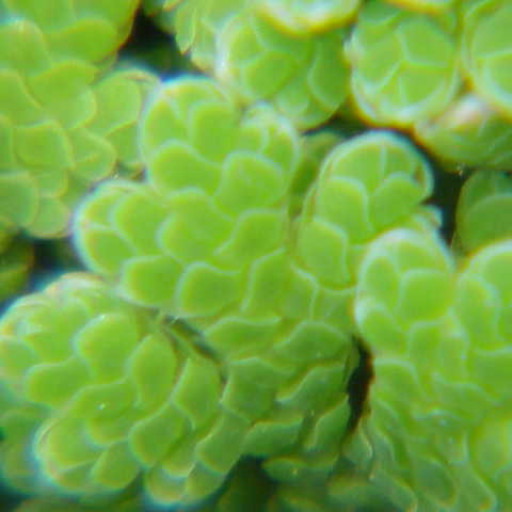
Known by the whimsical nicknames "Fairy Moss" or "Mosquito Fern," Azolla filiculoides is a tiny, floating aquatic fern that packs a massive ecological punch. Despite its delicate appearance, it has a legendary reputation for transforming entire landscapes, shifting colors from a lush emerald green to a deep, fiery crimson. It is famously used in ancient agriculture as a "living fertilizer" thanks to a special partnership with blue-green algae living inside its leaves.
🔍 How to Identify
- 🌿 Leaf Structure: Tiny, scale-like leaves that overlap like shingles on a roof or the feathers of a bird, giving the water surface a quilted, velvety texture.
- 🎨 Color Shift: While usually bright green in the shade, the plant produces anthocyanins under intense sunlight or cold temperatures, turning the entire pond surface a dramatic burgundy or rust-red.
- 💧 Water Repellency: The leaves are covered in microscopic hairs that trap air, making them completely water-repellent; even if pushed underwater, they will pop back up bone-dry.
🏡 In Your Garden
- 🧪 Nitrogen Powerhouse: This plant houses a cyanobacterium called Anabaena azollae, which pulls nitrogen from the air. If you have a koi pond or a water garden, adding Azolla can naturally enrich the water and support other aquatic life.
- 🛡️ Mosquito Control: It earned the name "Mosquito Fern" because it can grow so densely that it forms a solid carpet on the water's surface, supposedly preventing mosquitoes from laying their eggs or larvae from reaching the surface for air.
- ⚠️ Growth Management: Because it reproduces by simple fragmentation, it can double its biomass in just a few days. In a small garden pond, you must regularly thin it out to ensure that light and oxygen can still reach the fish and plants below.
⚠️ Safety & Toxicity
- ✅ Status: Generally non-toxic and safe for humans, pets, and livestock.
- 🐟 Aquatic Risk: The primary "danger" is to the ecosystem. If allowed to cover 100% of a pond's surface, it can cause "deoxygenation," which may harm fish or submerged plants by blocking light and gas exchange.
- 🚫 Environmental Alert: Never release Azolla into wild waterways or rivers, as it is considered a highly invasive weed in many regions outside its native range.
✨ Fun Fact
Geologists believe that a massive bloom of Azolla in the Arctic Ocean 49 million years ago (the "Azolla Event") pulled so much carbon dioxide out of the Earth's atmosphere that it helped trigger the transition from a "greenhouse" Earth to the ice age climate we know today!

Detailed Care Instructions
To grow Azolla Filiculoides (water fern), follow these steps:
- Find a suitable growing container: Azolla grows best in shallow containers such as trays or shallow tanks like aquariums. Ensure the container can hold water without leakage.
- Fill the container with water: Use freshwater, such as tap water or rainwater. Fill the container to a depth of about 5 to 10 cm.
- Temperature and lighting: Azolla prefers warm temperatures between 25-34°C (77-93°F). Place the container in a location that receives moderate sunlight or partial shade.
- Acquire Azolla Filiculoides: You can obtain Azolla from other aquarists, nurseries, or online suppliers. Ensure that the Azolla is healthy and free from pests or diseases.
- Introduce the Azolla: Gently place the Azolla on the water surface, allowing it to float. Avoid submerging or sinking the plants.
- Nutrient supply: Azolla requires nutrients for growth. You can add a source of nutrients to the water, such as a balanced liquid fertilizer suitable for aquatic plants. Follow the dosage instructions provided with the fertilizer.
- Water maintenance: Keep the water level constant, ensuring it does not dry out or overflow. Add water as necessary to maintain the ideal depth.
- Light maintenance: Ensure that the container receives enough light. Consider using artificial light sources if natural light is insufficient.
- Regular harvesting: As Azolla grows rapidly, it needs regular harvesting. Use a fine mesh net or similar tool to skim off excess growth. Harvested Azolla can be used as a feed supplement for animals or for composting.
- Manage water quality: Monitor water quality parameters like pH and dissolved oxygen levels. Algal growth or excessive decaying plant matter may negatively affect the Azolla's health. Regular water changes and filtration can help maintain water quality.
- Pest control: Inspect the Azolla regularly for pests like insects or snails. Remove any pests manually or use appropriate organic pest control methods.
Remember to research and follow any specific care recommendations for Azolla Filiculoides, as conditions may vary depending on your location and climate.

Place in a bright room that is sun drenched almost all day. Or directly in a south-facing window.
Azolla Filiculoides plant is a water-loving plant that needs to be constantly moist. To water this plant, you can fill a shallow container with water and place the plant in it. Make sure that the water level is high enough to cover the roots and leaves of the plant. You can also mist the plant regularly to keep it hydrated. Avoid letting the water become stagnant or dirty, as this can cause the plant to rot. It is important to monitor the moisture levels of the plant and adjust your watering schedule accordingly. Overall, this plant requires a consistent and steady supply of water to thrive.
To fertilize this kind of plant, you will want to use a balanced fertilizer that is high in nitrogen. You should apply the fertilizer once a month, using about one tablespoon per gallon of water. Be sure to apply the fertilizer evenly across the surface of the water, so that it reaches all of the plants. You can also supplement the plant's nutrition by adding fish or other aquatic animals to the water, as their waste will provide additional nutrients. However, be careful not to over-fertilize the plant, as this can lead to excessive growth and a depletion of oxygen in the water.
The recommended soil type for Azolla Filiculoides plant is a mixture of organic and mineral-rich soil. The soil should be well-draining, with a pH of 6.5 to 7.5. It should be composed of a mix of peat moss, sand, and perlite or vermiculite. The soil should be kept moist but not waterlogged, and the plant should be protected from direct sunlight. It is also important to keep the soil nutrient-rich by adding a balanced liquid fertilizer monthly and replacing the soil every 2-3 years.
The propagation process of this aquatic plant can be done through asexual reproduction, where the plantlets are produced from the mother plant. One way to propagate this plant is by dividing the biomass into small pieces and placing them in different water bodies. The plant can also be propagated by harvesting mature sporulated leaves and spreading them evenly across the surface of the water. The spores will eventually germinate and develop into small plantlets that will grow into mature plants. It is essential to ensure that the water body where the propagation takes place has adequate nutrients to promote healthy growth. This plant can reproduce rapidly, making it an ideal plant for use as a fertilizer for other crops if properly managed.








