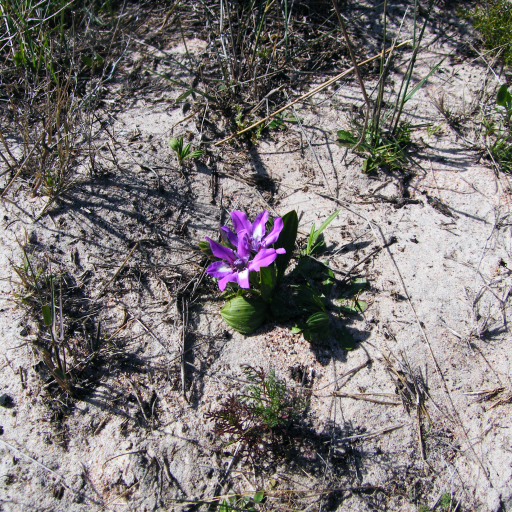
Plant Overview
Often called the Dwarf Baboon Flower, this South African gem may be small in stature, but it packs a punch with its vibrant colors and sweet, spicy perfume. Its name originates from the Dutch word baviaan, referring to the local baboons that consider the plant's underground corms a gourmet treat. It is a resilient, low-growing beauty that brings a splash of the Cape’s floral kingdom to any rockery or sunny container.
🔍 How to Identify
- 🌿 Pleated Foliage: The leaves are stiff, upright, and have distinct vertical pleats (folds), resembling a tiny handheld fan.
- 🌸 Vibrant Blooms: It produces clusters of trumpet-shaped flowers, typically in shades of deep violet, mauve, or sky blue, often featuring a white or pale yellow center.
- 📏 Compact Growth: Living up to its "Nana" (dwarf) name, the plant rarely exceeds 4 to 6 inches in height, making it look like a miniature bouquet emerging directly from the soil.
🏡 In Your Garden
- 🏖️ Sandy Roots: In the wild, these plants thrive in the sandy flats of the Western Cape. In your home, they demand excellent drainage; they hate "wet feet," which can cause their corms (bulbs) to rot during their dormant season.
- 💤 Summer Slumber: This is a winter-growing plant. Once the flowers fade in late spring, the leaves will turn brown and die back. Do not panic—the plant isn't dead! It is simply retreating underground to rest during the hot summer months.
⚠️ Safety & Toxicity
- 🐾 Generally Safe: Babiana nana is not known to be toxic to humans or common household pets like cats and dogs.
- 👶 Choking Hazard: Because the plant grows from small, nut-like corms, curious pets or toddlers who like to dig might find them. While not poisonous, the corms are hard and could pose a choking risk if swallowed whole.
✨ Fun Fact
Baboons aren't the only ones who like these plants; in the past, the starchy corms were harvested, boiled, or roasted by indigenous Cape people, reportedly tasting much like a sweet chestnut!

Detailed Care Instructions
To grow Babiana Nana plants, follow these steps:
- Choose the right location: Babiana Nana plants prefer full sun, so find a spot in your garden that receives at least 6-8 hours of direct sunlight per day.
- Prepare the soil: Babiana Nana plants thrive in well-draining soil with a slightly acidic to neutral pH. If your soil is heavy or clay-like, amend it with organic matter, such as compost, to improve drainage.
- Plant the bulbs: Babiana Nana bulbs should be planted in early spring or fall. Dig a hole that is about 4-6 inches deep and place the bulb in the hole with the pointed side facing up. Space the bulbs about 4-6 inches apart.
- Watering: Water the bulbs thoroughly after planting and keep the soil consistently moist but not waterlogged. Reduce watering during their dormant period to prevent rot.
- Mulching and weeding: Apply a layer of organic mulch around the plants to help maintain moisture and suppress weed growth. Be careful not to bury the bulbs too deeply with the mulch.
- Fertilizing: Babiana Nana plants generally do not require heavy fertilization. However, you can apply a well-balanced, slow-release fertilizer in early spring to provide essential nutrients for growth.
- Maintenance: Remove faded flowers and dead foliage regularly to maintain plant health and aesthetics. Babiana Nana plants may need to be divided every 3-4 years to prevent overcrowding.
- Overwintering: In regions with cold winters, Babiana Nana plants may need protection during the dormant period. Mulch the area with a thick layer of organic material to insulate the bulbs from freezing temperatures.
With proper care and attention to their growing requirements, Babiana Nana plants should thrive and produce beautiful flowers.

Place in a bright room that is sun drenched almost all day. Or directly in a south-facing window.

To water this plant, you should moisten the soil evenly around the base of the plant. It is important to avoid watering the leaves as this can cause disease and damage. The plant's soil should stay consistently moist, but not waterlogged, allowing excess water to drain away. During active growth periods, water more frequently and reduce watering during dormancy. Additionally, it is recommended to use tepid water rather than cold water to avoid shocking the plant's roots.
For best results, fertilize this plant during the growing season using a balanced fertilizer. Apply every two weeks at a rate of one tablespoon per gallon of water. Be sure to water the plant thoroughly before and after fertilizing. Avoid over-fertilizing as it can lead to root burn and damage the plant.
Babiana Nana plant prefers well-draining soil with a pH range of 6 to 7.5. It thrives in soil that is rich in organic matter and has good drainage properties. It is important to avoid soil that is too heavy or dense, as this can lead to poor root development and root rot. A mixture of sandy soil, peat moss, and perlite can be an excellent soil mixture for this plant. Additionally, adding some bone meal or other slow-release fertilizer can help to promote healthy growth and vibrant blooms. Proper soil moisture management is also critical to success with Babiana Nana. It should be kept consistently moist but not overly wet, and any excess water should be allowed to drain away to prevent stagnant water from accumulating around the roots.
To propagate this plant, first select a healthy parent plant with mature bulbs. Dig up the bulbs and use a sharp, clean knife to slice them into sections. Each section should have a section of the basal plate attached, as this is where the new roots will develop.
Prepare a well-draining potting mix and plant the bulb sections in individual pots, burying them to a depth of about three times their height. Water the pots thoroughly and keep them in a warm, bright location.
The bulbs should begin to sprout within a few weeks. As they grow, be sure to keep the soil moist but not waterlogged, and fertilize regularly with a balanced, all-purpose fertilizer.
After about a year, the bulbs should be large enough to transplant into the garden or into larger containers. However, keep in mind that Babiana Nana may not flower for a few years after being propagated from bulbs, so be patient and enjoy watching the foliage grow in the meantime.








