Plant Overview
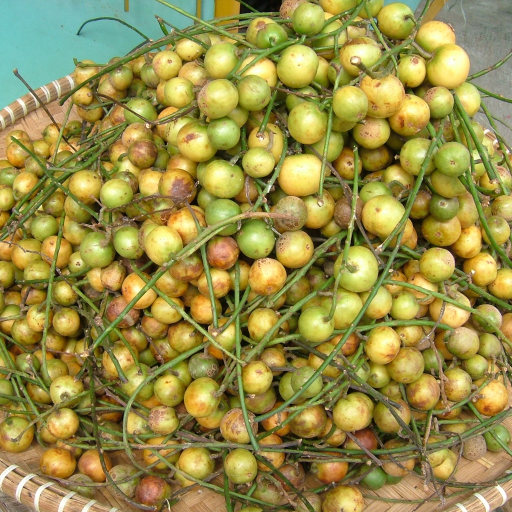
Commonly known as the Menteng or Kepundung, Baccaurea racemosa is a nostalgic treasure of Southeast Asian landscapes. Once a common sight in the royal gardens of Java, this tree is so iconic that it gave its name to one of Jakarta’s most prestigious districts, "Menteng." It is beloved for its dangling clusters of tart, refreshing fruits that resemble oversized grapes with a hidden, translucent glow.
🔍 How to Identify
- 🍇 The Fruit Clusters: The most striking feature is the way the fruit grows in long, pendulous bunches (racemes) directly from the older branches or the trunk, a phenomenon known as cauliflory.
- 🍃 Elliptic Foliage: The leaves are large, glossy, and dark green with a distinct papery texture, often clustering at the ends of the twigs to create a dense, shady canopy.
- 🟡 Leathery Skin: Each round fruit is encased in a thick, leathery skin that turns from green to a pale yellow or tinged red when ripe, protecting the juicy, acidic pulp inside.
🏡 In Your Garden
- 🌳 Space for Growth: While it starts as a modest sapling, the Menteng grows into a medium-sized tree with a wide, spreading crown. It requires a permanent spot in the garden where it won't be cramped by structures or power lines.
- 💧 Tropical Thirst: Coming from the humid rainforests of Indonesia and Thailand, this plant thrives in consistently moist, deep soil. It is particularly sensitive to long droughts, which can cause the developing fruit to drop prematurely.
- ⛅ Sunlight Needs: While mature trees love the full tropical sun, young saplings prefer "dappled" shade, mimicking the protection they would receive under a forest canopy in the wild.
⚠️ Safety & Toxicity
- ✅ Status: Generally safe and non-toxic.
- 👅 Sour Sensation: The fruit is edible and rich in Vitamin C, but it is notoriously sour. While humans enjoy it, the high acidity may cause minor stomach upset if consumed in large quantities by children or pets.
- 🐾 Pet Safety: There are no documented toxic effects for cats or dogs, though the large seeds inside the fruit could pose a choking hazard for smaller animals.
✨ Fun Fact
The Menteng tree is a "slow-burn" producer. It can take up to 10 years for a tree grown from a seed to start bearing its famous sour fruits, making it a true symbol of patience for traditional gardeners!

Detailed Care Instructions
Baccaurea racemosa, also known as the pulasan tree, is a tropical fruit tree native to Southeast Asia. Here are some tips on how to grow the Baccaurea racemosa plant:
- Climate: Baccaurea racemosa thrives in tropical climates with high temperatures and humidity. It does best in USDA hardiness zones 10-11.
- Soil: The plant prefers well-draining, fertile soil with a pH level between 5.5 and 6.5. Adding compost or organic matter to the soil can help improve its fertility.
- Sunlight: Baccaurea racemosa thrives in full sun to partial shade. Make sure the plant receives at least 6 hours of sunlight per day.
- Watering: Keep the soil consistently moist, but not waterlogged. Water the plant regularly, especially during dry periods. Avoid overwatering, as this can lead to root rot.
- Fertilization: Apply a balanced fertilizer to the plant every 4-6 weeks during the growing season to promote healthy growth and fruit production.
- Pruning: Prune the plant to remove dead or diseased branches, as well as to shape the tree and promote air circulation. Pruning should be done in the late winter or early spring before new growth appears.
- Mulching: Mulch the soil around the plant to retain moisture and suppress weeds. Use organic mulch such as bark chips or compost.
- Pests and diseases: Keep an eye out for common pests such as aphids, scale insects, and fruit flies. Treat infestations promptly to prevent damage to the plant. Baccaurea racemosa is also susceptible to fungal diseases, so make sure to provide good air circulation and avoid overwatering.
By following these tips, you can successfully grow Baccaurea racemosa and enjoy its delicious fruits.
Baccaurea Racemosa plants require regular watering to keep the soil consistently moist.
To water the plant, check the moisture level of the soil by feeling it with your fingers. If the top inch of the soil feels dry, it's time to water the plant.
When watering, apply water at the base of the plant to ensure the roots receive adequate moisture. Avoid watering the leaves directly, as this can lead to fungal diseases.
Water the plant slowly and deeply to allow the water to penetrate the soil and reach the roots of the plant. Be sure to water the plant thoroughly, but avoid overwatering as this can lead to root rot.
During hot weather or when the plant is actively growing, you may need to water more frequently. In colder months or when the plant is dormant, water less often. Adjust your watering schedule based on the specific needs of your Baccaurea Racemosa plant.
To fertilize Baccaurea Racemosa plants, use a balanced fertilizer with a ratio of 10-10-10 or similar. Apply the fertilizer in early spring before new growth appears and again in early summer. Follow the manufacturer's instructions for dilution and application method. Water the plant thoroughly after fertilizing to help the nutrients penetrate the soil and reach the plant's root system. Avoid over-fertilizing, as this can harm the plant.
Baccaurea racemosa plants prefer well-draining soil that is rich in organic matter. A suitable soil mix for this plant would be a combination of loamy soil, perlite, and peat moss. The loamy soil provides nutrients and stability, while the perlite helps improve drainage. Peat moss retains moisture and provides additional organic matter to support healthy root growth. A slightly acidic pH level is ideal for Baccaurea racemosa plants, so adding some pine bark or pine needles to the soil mix can help achieve this. It is important to ensure that the soil is not compacted, as good aeration is crucial for the plant's overall health and growth. Additionally, regular fertilization with a balanced fertilizer can help provide the necessary nutrients for optimal growth and development.
Baccaurea Racemosa plants can be propagated through seed germination or vegetative propagation methods such as stem cuttings or air layering.
To propagate Baccaurea Racemosa from seeds, the seeds should be collected from mature fruits and cleaned before sowing. The seeds should be planted in a well-draining soil mix and kept moist until germination occurs.
For vegetative propagation through stem cuttings, select a healthy branch and cut it at a node. Remove any leaves from the lower part of the cutting and plant it in a rooting mix. Keep the soil moist and place the cutting in a warm, bright location until roots develop.
Air layering is another method of propagating Baccaurea Racemosa by inducing roots to develop on a branch while it is still attached to the parent plant. To air layer a branch, make a cut in the bark and apply rooting hormone before wrapping the area with moist sphagnum moss and plastic wrap. Roots should develop within a few weeks, at which point the new plant can be cut from the parent and potted up.








