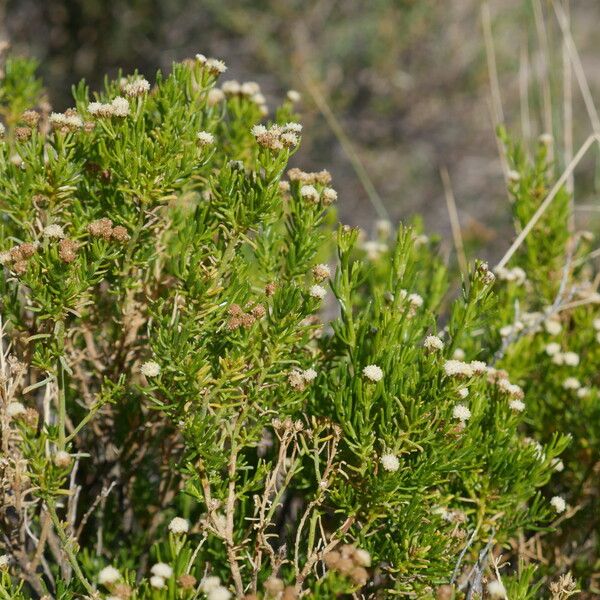
Plant Overview
Known in the high altitudes of the Andes as "Chilca," Baccharis boliviensis is a rugged, resinous shrub that thrives where many other plants give up. Native to the rocky slopes of Bolivia and northern Argentina, this hardy evergreen is a master of survival, often used by local communities for its medicinal properties and as a natural binder for soil in windy mountain terrains.
🔍 How to Identify
- 🌿 Sticky Foliage: The small, narrow leaves are coated in a thick, shiny resin that helps the plant retain moisture and protect itself from intense high-altitude UV rays.
- 🌼 Clustered Blooms: It produces dense clusters of tiny, cream-to-yellowish flowers at the tips of its branches, which lack showy petals but are highly attractive to local pollinators.
- 🪵 Woody Habit: It grows as a multi-branched, stiff shrub, often reaching heights of 1 to 2 meters, with a gnarled appearance shaped by mountain winds.
🏡 In Your Garden
- ☀️ UV Specialist: This plant is perfect for "un-killable" landscapes; it thrives in intense, direct sunlight and is highly resistant to drought once its root system is established.
- 🪨 Poor Soil Lover: Do not pamper this plant with rich potting mix! It prefers rocky, sandy, or volcanic soils with excellent drainage, as its roots are prone to rot in standing water.
- 💨 Windbreak Potential: Because of its stiff, woody structure, it serves as an excellent natural barrier for smaller, more delicate plants in wind-prone garden spots.
⚠️ Safety & Toxicity
- 🟢 General Safety: Baccharis boliviensis is generally safe to touch, though the resin on the leaves can be quite sticky and may catch dust or cause mild skin irritation in sensitive individuals.
- 🚫 Not for Consumption: While used in traditional Andean topical poultices, it should never be ingested by humans or pets. Many species in the Baccharis genus contain compounds that can cause digestive upset if eaten.
✨ Fun Fact
In traditional Bolivian medicine, the resinous branches of this plant are often bundled and used as a "natural plaster" to treat sprains and fractures, as the sticky sap helps hold heat and support the affected limb!

Detailed Care Instructions








