Plant Overview
Known as "Chilca" throughout the Andean highlands, Baccharis latifolia is more than just a hardy shrub; it is a cultural icon of South American landscapes. This fast-growing evergreen is famous for its resinous, sticky leaves and its historical role in traditional medicine and textile dyeing. Whether it is lining a riverbank or stabilizing a steep mountain slope, this resilient plant is a master of adaptation and environmental restoration.
🔍 How to Identify
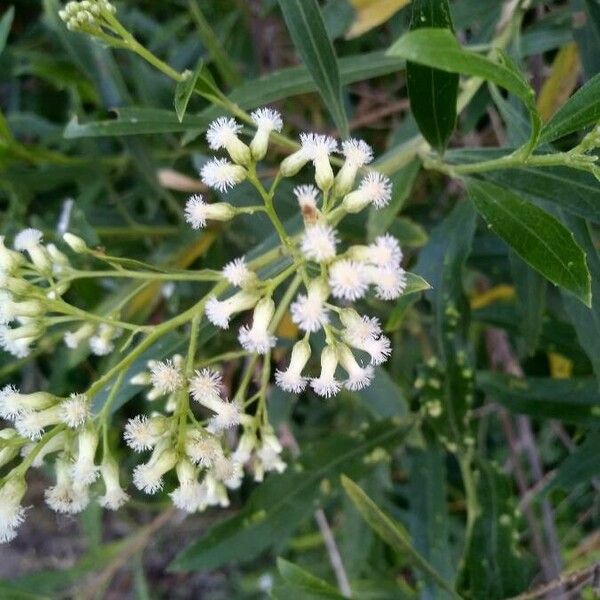
- 🍃 Leaf Texture: The leaves are lance-shaped and have a distinctively sticky, resinous feel when touched, which helps the plant protect itself from high-altitude UV rays.
- 🦷 Serrated Edges: Look closely at the leaf margins; they feature fine, irregular teeth that give the foliage a slightly rugged, saw-like appearance.
- ☁️ Puffy Blooms: It produces dense, terminal clusters of small, white to cream-colored flowers that eventually turn into fluffy, wind-dispersed seeds resembling tiny tufts of cotton.
🏡 In Your Garden
- 🌊 Erosion Specialist: Because it naturally grows near streams (riparian zones), this plant has an aggressive root system perfect for stabilizing loose soil or preventing erosion on slopes.
- ✂️ Vigorous Recovery: It handles heavy pruning exceptionally well. In its native habitat, it is often used as a "living fence" because it grows back thicker and bushier every time it is trimmed.
- ☀️ Sun Seeker: While it loves water, it demands full sun to thrive. It will quickly become "leggy" or sparse if tucked away in a shady corner of the yard.
⚠️ Safety & Toxicity
- 🌿 Generally Safe: Baccharis latifolia is not known to be toxic to humans or common household pets like dogs and cats.
- 🤧 Allergy Warning: As a member of the Asteraceae (daisy) family, its airborne pollen can be a significant trigger for hay fever sufferers during peak blooming periods.
- 🧴 Skin Sensitivity: The sticky resin on the leaves can occasionally cause mild contact dermatitis in individuals with highly sensitive skin.
✨ Fun Fact
🎨 Ancient Pigments: For centuries, Andean weavers have harvested Chilca leaves to create a vibrant, natural yellow dye. When mixed with different mineral mordants, the plant can even produce shades of deep forest green for traditional wool textiles.

Detailed Care Instructions
To grow Baccharis latifolia, also known as the Groundsel Tree or False Willow, follow these steps:
- Climate: Baccharis latifolia prefers a Mediterranean or coastal climate. It can tolerate a wide range of conditions, but it thrives in areas with mild winters and moderate temperatures throughout the year.
- Soil: Choose a well-draining soil that is rich in organic matter. The plant can tolerate slightly acidic to slightly alkaline soil.
- Sunlight: Baccharis latifolia prefers full sun to partial shade. It can tolerate shade, but it may grow leggy and have reduced flowering.
- Watering: Water the plant regularly until it is established. Once established, it is drought-tolerant and only requires occasional watering. Avoid overwatering, as it can cause root rot.
- Planting: Dig a hole that is slightly larger and deeper than the plant's root ball. Place the plant in the hole, ensuring that the top of the root ball is level with the soil surface. Backfill the hole with soil, gently firming it around the plant. Water thoroughly after planting.
- Pruning: Prune Baccharis latifolia in late winter or early spring before new growth appears. This helps maintain its shape and encourages dense growth. Remove any dead or damaged branches.
- Fertilization: Baccharis latifolia generally does not require much fertilization. However, you can apply a balanced, slow-release fertilizer in spring to promote healthy growth.
- Pest and disease control: Baccharis latifolia is generally resistant to pests and diseases. However, occasional problems such as aphids or powdery mildew may occur. Monitor the plant regularly and apply appropriate insecticides or fungicides if needed.
- Propagation: Baccharis latifolia can be propagated from seeds or cuttings. Seeds can be sown in containers filled with seed starting mix, kept moist, and placed in a warm location. Cuttings can be taken from semi-hardwood stems and rooted in a well-draining rooting medium.
With proper care and favorable conditions, your Baccharis latifolia plant should grow and thrive in your garden or landscape.

Place in a bright room that is sun drenched almost all day. Or directly in a south-facing window.

To water this plant, you should first make sure that the soil is dry to the touch before watering. When it is time to water, slowly and evenly pour water over the soil until it is moist but not saturated. Be sure to avoid getting water on the leaves as this can cause damage. Allow the excess water to drain out of the bottom of the pot before returning it to its proper location. It is best to water in the morning to allow the plant to dry out before nightfall.
To fertilize this plant, you should use a slow-release granular fertilizer with a balanced NPK ratio. Apply the fertilizer in the early spring or late fall, spreading it evenly around the base of the plant. Water the plant thoroughly after fertilizing to help the nutrients soak into the soil. Avoid over-fertilizing, as this can lead to excessive growth and weaken the plant's health.
Baccharis Latifolia requires a well-draining soil that is rich in organic matter. The soil should be slightly acidic, with a pH level between 5.5 to 6.5. It is best to avoid soil that is heavy and clay-like, as this can cause drainage issues and root rot. A sandy loam soil with good drainage properties is ideal for this plant. It is recommended to add a layer of organic mulch around the base of the plant to help retain moisture in the soil and provide the necessary nutrients for healthy growth. Additionally, it is important to monitor the moisture level of the soil and avoid overwatering, as this can lead to root rot.
There are several ways to propagate this plant, but the most common method is through stem cuttings.
- Choose a healthy stem with several leaves on it. Make sure that the stem is free from any disease or pests.
- Cut the stem at a 45-degree angle using a sharp, sterile pruning shears.
- Remove the leaves from the bottom 2/3 of the stem.
- Dip the cut end of the stem into a rooting hormone powder.
- Prepare a pot or container with well-draining soil. Use a soil mixture that is composed of equal parts potting soil, perlite, and vermiculite.
- Create a hole in the soil using a pencil or stick. Insert the cut end of the stem into the hole.
- Press the soil around the stem to secure it in place.
- Water the soil until it is moist but not soaking wet.
- Cover the pot or container with plastic wrap or a clear plastic bag. This will help to retain moisture around the stem.
- Place the container in a warm, bright location, but keep it out of direct sunlight.
- Monitor the cutting over the next few weeks for any signs of wilting or drying out. Water the soil as needed to keep it moist.
- After 4-6 weeks, check for root growth by gently tugging on the stem. If you feel resistance, roots have formed and it is ready to be transplanted to a larger pot or planted outside.








