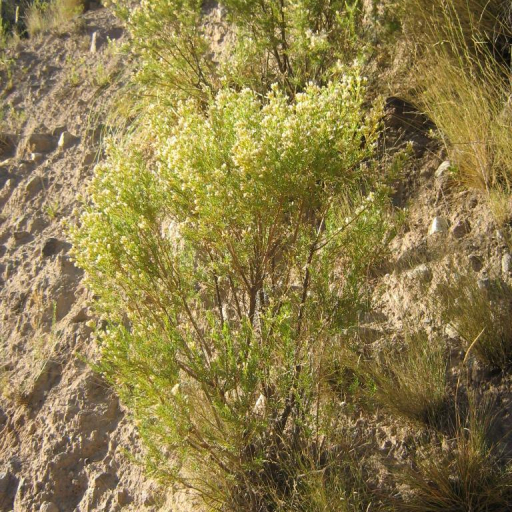
Plant Overview
Known as the Romerillo in its native Chile, Baccharis linearis is a rugged, sun-loving evergreen that acts as a silent guardian of the dry Andean hillsides. Its fine, needle-like foliage gives it a delicate, wispy appearance, but don't be fooled—this plant is built for endurance. It is a master of survival in Mediterranean climates, often seen dancing in the wind across rocky slopes.
🔍 How to Identify
- 🌿 Slender Foliage: The leaves are remarkably thin, linear, and small, closely resembling rosemary. This narrow shape is an evolutionary trick to minimize water loss during scorching summers.
- ☁️ Cloudy Blooms: In late spring and summer, the shrub transforms, becoming covered in tiny, brush-like white or yellowish flower heads that look like soft tufts of wool from a distance.
- 🪵 Resinous Stems: The branches are woody and highly branched, often feeling slightly sticky to the touch due to a protective resin the plant secretes to deter hungry insects.
🏡 In Your Garden
- ☀️ The Sun Worshiper: This plant thrives in full-blast sunlight and poor, rocky soil where most garden favorites would wither. It is an elite choice for "fire-wise" landscaping and xeriscaping because of its incredible drought tolerance.
- 🐝 Pollinator Buffet: While the flowers are small, they are rich in nectar. It is a vital pit stop for native bees and butterflies, making it a "must-have" for a biodiversity-focused backyard.
- ✂️ Pruning Nuance: Because it grows rapidly and can become "leggy," it appreciates a light trim after flowering to maintain a dense, bushy shape.
⚠️ Safety & Toxicity
- 🟢 Safe Status: Baccharis linearis is generally considered non-toxic to humans and common household pets like dogs and cats.
- 🧴 Skin Sensitivity: The sticky resin on the leaves and stems contains essential oils that can cause mild skin redness or itching in people with highly sensitive skin. It’s best to wear gloves when doing heavy pruning.
✨ Fun Fact
In its native habitats, the Romerillo is celebrated as a "Pioneer Species." It is often the very first plant to sprout after a wildfire or landslide, acting like a natural bandage for the earth by stabilizing the soil so other plants can eventually return.

Detailed Care Instructions

Place in a bright room that is sun drenched almost all day. Or directly in a south-facing window.

When the top few inches of soil dry out, water your plants. If the top few inches of soil are still moist, do not water your plant. Wait a few days, then poke your finger into the soil to see if anything has changed. Overwatering poses a disease risk, such as the development of fungal diseases in the roots. These plants have adaptations in there leaves that allow them to survive in low water supply.








