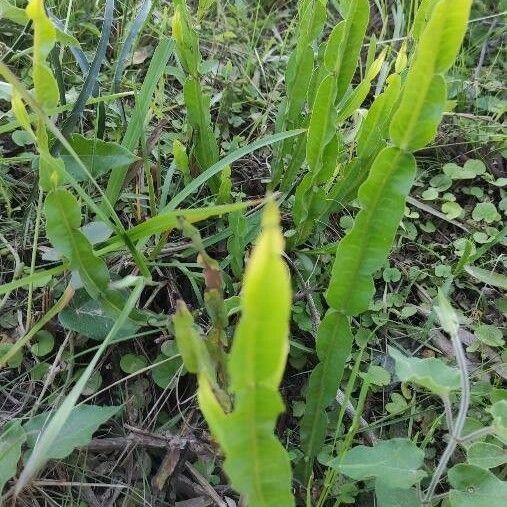
Plant Overview
Commonly known as Carqueja, this striking South American native is often mistaken for a cactus due to its strange, leafless appearance. In its homeland of Brazil and Argentina, it is revered as a "miracle herb" and a staple of folk medicine, famous for its intense bitterness and powerful digestive properties. It is a hardy, sculptural shrub that adds a unique, geometric texture to any landscape.
🔍 How to Identify
- 🌿 The "Wings": Instead of traditional leaves, this plant features flat, green, three-winged stems called cladodes. These "wings" are the plant's primary way of photosynthesizing.
- 🌼 Fluffy Blooms: In late summer, the tips of the winged stems produce small, inconspicuous yellowish-white flower heads that look like tiny tufts of cotton.
- 📐 Growth Habit: It grows as an upright, multi-branched shrub, typically reaching 2 to 4 feet in height, creating a jagged, zig-zag silhouette.
🏡 In Your Garden
- ☀️ Sun Seeker: Carqueja is a child of the sun. It thrives in bright, direct light and can become weak or "floppy" if tucked away in a shady corner.
- 💧 Drought Warrior: Because it evolved in rocky, well-draining terrains, it hates "wet feet." It is highly resistant to drought once established, making it perfect for xeriscaping or rock gardens.
- ✂️ Pruning Needs: To keep it from looking like a tangled mess, it benefits from a light pruning after the flowering season to encourage new, vibrant green growth.
⚠️ Safety & Toxicity
- 🟢 General Status: Non-toxic to touch and generally safe for home gardens.
- 🤰 Health Warning: While used in traditional teas, Baccharis trimera should be avoided by pregnant or breastfeeding women, as it can affect uterine contractions and blood sugar levels.
- 🐾 Pets: It is not known to be toxic to cats or dogs, but its high bitter resin content usually prevents pets from wanting to nibble on it.
✨ Fun Fact
In Brazil, Carqueja is sometimes used as a natural substitute for hops in craft beer brewing! Its intense bitterness provides a flavor profile similar to traditional ales, while its medicinal reputation gives it the nickname "The Physician of the Garden."

Detailed Care Instructions
To grow Baccharis trimera (also known as carqueja), follow these steps:
- Choose a suitable location: Baccharis trimera prefers full sun but can tolerate partial shade. Ensure the soil is well-draining and not overly compacted.
- Prepare the soil: If the soil is heavy or clay-like, amend it with organic matter, such as compost, to improve drainage and nutrient content. Baccharis trimera prefers slightly acidic to neutral soil pH levels (around 6-7).
- Planting: Dig a hole that is slightly larger than the root ball of your Baccharis trimera plant. Place the plant in the hole and backfill with soil, gently firming it around the roots. Water thoroughly after planting.
- Watering: Initially, keep the soil evenly moist but not waterlogged. Once established, Baccharis trimera is drought-tolerant and only requires occasional watering during prolonged periods of dryness.
- Mulching: Apply a layer of organic mulch, such as wood chips or straw, around the base of the plant. This helps to retain moisture, suppress weeds, and protect the roots during extreme temperatures.
- Pruning: Baccharis trimera benefits from annual pruning to maintain its shape and encourage bushier growth. Prune in late winter or early spring, before new growth appears. Remove any damaged or dead branches and trim to your desired height and shape.
- Fertilizing: A balanced, slow-release fertilizer can be applied in early spring to provide nutrients for the growing season. Follow the package instructions for the proper dosage and application method.
- Pest and disease control: Baccharis trimera is generally resistant to pests and diseases. However, occasional aphids or scale insects may infest the plant. Monitor regularly and use appropriate organic insecticides if necessary.
Remember to check with local nurseries or gardening experts for specific recommendations based on your region's climate and conditions.

Place in a bright room that is sun drenched almost all day. Or directly in a south-facing window.

To water this plant, you should first examine the soil to see if it feels dry to the touch. If the soil has become dry, it is time to water the plant. You should water the plant thoroughly, making sure that the water is evenly distributed throughout the soil. However, you should be careful not to overwater the plant, as this can lead to root rot and other issues. Depending on the climate and the plant's specific needs, you may need to water this plant anywhere from once a week to once a month. It is important to monitor the plant's moisture levels and adjust your watering schedule accordingly.
To fertilize this plant, use a balanced fertilizer with equal parts nitrogen, phosphorus, and potassium. Apply the fertilizer in the early spring, just before new growth begins. Use a slow-release fertilizer and apply according to the package instructions. Avoid over-fertilizing as this plant prefers low nutrient soil. Water the plant after applying the fertilizer to help it absorb the nutrients.
Baccharis trimera plant prefers well-draining soil that is nutrient-rich with a slightly acidic to neutral pH (around 6.0 to 7.5). The soil should also be able to retain moisture but not become waterlogged as this can lead to root rot. A mixture of sandy loam and organic matter like compost is suitable. The plant can tolerate different soil textures, including heavy clay or sandy soils, as long as they are amended with the appropriate amount of organic matter. It is important to avoid using soil that is contaminated with pollutants or heavy metals as the plant can absorb them, leading to toxicity. Adding mulch around the plant can help to retain moisture, regulate soil temperature, and prevent weed growth.
To propagate this plant you will need to take stem cuttings from a mature plant. Select a healthy stem that is approximately 4-6 inches long and remove the leaves from the bottom half of the stem. Dip the cut end of the stem in rooting hormone powder and place the cutting in a small container filled with moist soil. Keep the container in a warm, bright area but avoid direct sunlight. Water the soil regularly to keep it moist but not waterlogged. After a few weeks, the cutting should start to develop roots. Once the roots are well established, you can transplant your new plant into a larger container or into the ground.








