Plant Overview
Known as the "Purple Bacopa," this stunning aquatic perennial is currently the "it-plant" of the aquascaping world. While most Bacopa species are known for being easy-to-grow green fillers, Bacopa salzmannii (specifically the 'Purple' or 'SG' variants) offers a rare, deep violet hue that looks almost otherworldly underwater. It is a slow-growing gem native to the wetlands of Central and South America.
🔍 How to Identify
- 🍃 The Foliage: It features small, fleshy, oval-shaped leaves that grow in opposite pairs along a sturdy, upright stem.
- 🎨 Color Transformation: In its submerged form and under high-intensity light, the leaves turn a breathtaking shade of lavender to deep royal purple.
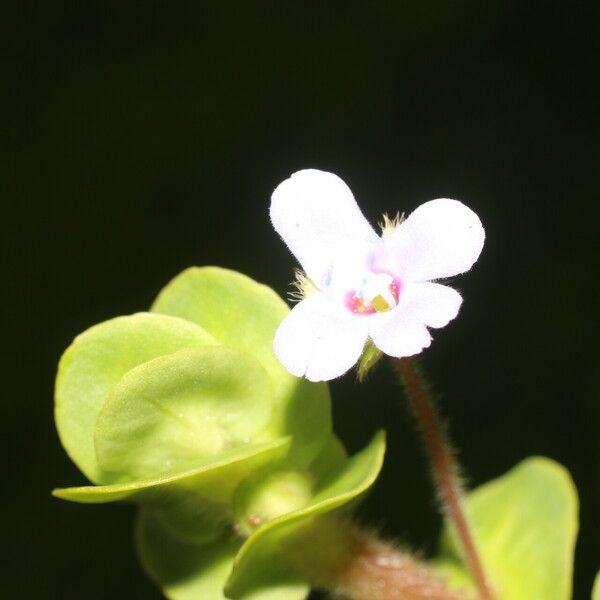
- 🌸 The "Land" Look: If grown emerged (above water), the leaves become thicker and greener, and the plant produces tiny, delicate four-petaled flowers that are usually pale blue or white.
🏡 In Your Garden (Aquarium)
- 💡 The Light Connection: To keep this plant purple, you must provide high-intensity lighting. In low-light environments, the plant will survive but will lose its royal color, fading into a muddy green or brown.
- ✂️ Steady Growth: Unlike its cousin Bacopa caroliniana, which grows like a weed, Salzmannii is more deliberate and slow. This makes it an excellent choice for "mid-ground" placement in an aquarium, as it won't outgrow its neighbors too quickly.
- 🧪 Nutrient Needs: It is a "heavy feeder." To see those vibrant colors, it appreciates a nutrient-rich substrate and the addition of CO2, which helps it maintain a compact and bushy appearance.
⚠️ Safety & Toxicity
- ✅ Fish & Shrimp Safe: This plant is completely non-toxic and provides excellent hiding spots for fry (baby fish) and shrimp.
- 🐾 Pet Safety: There are no known toxic effects for cats or dogs if they happen to nibble on a stray leaf during a water change.
- ✋ Skin Irritation: It is safe to handle; however, always wash your hands after working in an aquarium to prevent the spread of aquatic bacteria.
✨ Fun Fact
The 'Purple' variant of Bacopa salzmannii is unique because, unlike many other red or purple aquatic plants that turn green at the bottom where there is less light, this species often maintains its deep purple color all the way down to the substrate!

Detailed Care Instructions








