Plant Overview
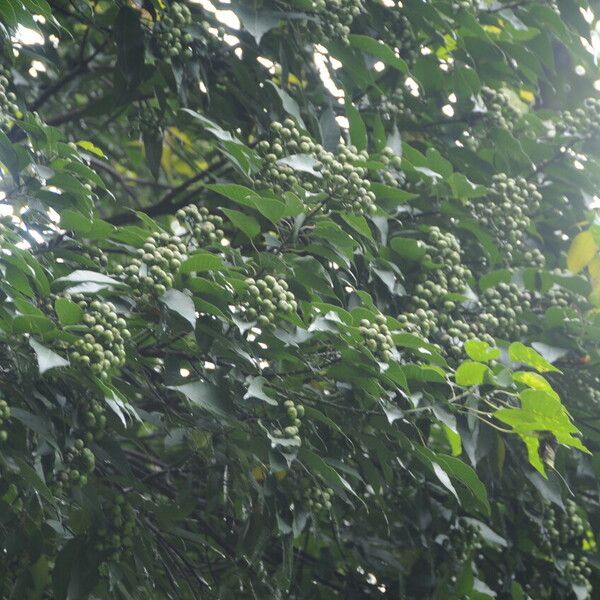
Often known as the "Berry-bearing Sapium," Balakata baccata is a majestic forest tree that adds a dramatic splash of color to Southeast Asian landscapes. While it begins its life as a discreet green sapling, it transforms into a towering presence with a canopy that shifts into vivid reds and purples during the cooler months. In its native habitat, it serves as a vital ecological hub, providing a seasonal feast for tropical birds and small mammals.
🔍 How to Identify
- 🍃 The Foliage: Look for smooth, oval to heart-shaped leaves with long stalks. Their most striking feature is their tendency to turn a brilliant crimson or deep purple before they drop.
- 🪵 The Bark: The trunk is usually straight and covered in smooth, greyish-brown bark that may develop shallow vertical fissures as the tree reaches maturity.
- 🍒 The Fruit: It produces dense clusters of small, pea-sized berries. These transition from a pale green to a deep, dark purple or black when they are fully ripe.
🏡 In Your Garden
- 🌳 Space Requirements: This is not a "windowsill" plant. Because it is a fast-growing deciduous tree that can reach significant heights, it requires a spacious outdoor setting where its roots can expand without interfering with foundations.
- ☀️ Light and Color: To achieve those signature fiery leaf colors, the plant needs plenty of direct sunlight. In shaded conditions, the leaves may remain a duller green and the growth may become leggy.
- 💧 Soil Nuance: It thrives best in moist, well-draining acidic soil. While it is relatively hardy once established, it dislikes "wet feet" (stagnant water at the roots), which can lead to fungal issues.
⚠️ Safety & Toxicity
- 🧤 Skin Irritant: Like many members of the Euphorbiaceae family, this tree contains a milky latex sap. This sap can cause skin irritation or rashes upon contact for sensitive individuals.
- 🐾 Pet Safety: While birds love the berries, the sap and raw seeds can be toxic if ingested by domestic pets like dogs or cats. It is best kept in areas where pets won't chew on fallen branches.
✨ Fun Fact
The species name baccata is Latin for "bearing berries." In some regions of Southeast Asia, it is nicknamed the "Mouse-deer’s fruit" because these tiny, elusive forest creatures are often spotted scavenging for the fallen fruit on the jungle floor!

Detailed Care Instructions

Place in a window with dappled sun or a spot in the middle of a room. Or directly in a window facing west or east.

When the top few inches of soil dry out, water your plants. If the top few inches of soil are still moist, do not water your plant. Wait a few days, then poke your finger into the soil to see if anything has changed. Overwatering poses a disease risk, such as the development of fungal diseases in the roots. These plants have adaptations in there leaves that allow them to survive in low water supply.








