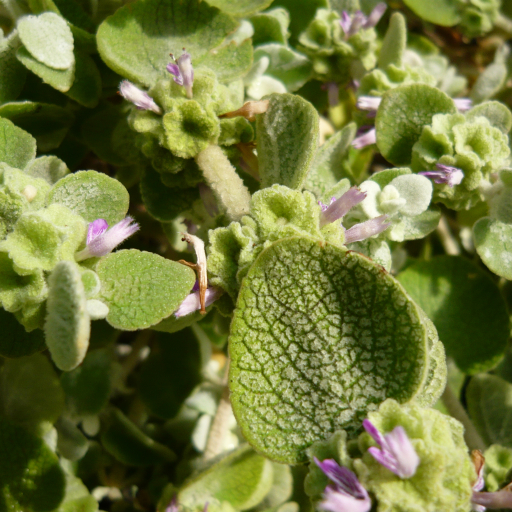
Plant Overview
Known affectionately as the Grecian Horehound, Ballota acetabulosa is a silver-leaved beauty that feels more like a piece of vintage velvet than a garden shrub. Native to the rocky, sun-drenched coasts of Greece and Turkey, this evergreen sub-shrub is a master of survival in harsh landscapes. It is beloved by "moon garden" enthusiasts because its pale, ghostly foliage seems to glow softly under the light of the stars.
🔍 How to Identify
- 🌿 Velvety Foliage: The leaves are rounded or heart-shaped, covered in a dense layer of fine, silvery-white hairs that give the plant a soft, felt-like texture.
- 🥣 Funnel Calyxes: The most distinct feature is the circular, funnel-shaped "cups" (calyxes) that whorl around the stems. They look like tiny green satellite dishes.
- 🌸 Hidden Blooms: Small, inconspicuous white or pinkish-purple flowers peek out from inside the funnel-shaped cups during late summer.
- 🏗️ Growth Habit: It forms a tidy, mounding cushion that eventually develops a woody base, typically reaching about 2 feet in height and width.
🏡 In Your Garden
- ☀️ The Sun-Worshipper: This plant thrives in "lean" or poor soil; in fact, providing too much fertilizer or rich compost will make it lose its silvery sheen and become "leggy."
- 💧 Dry Feet Only: Because it evolved in rocky Mediterranean terrain, its biggest enemy is soggy soil. It requires excellent drainage and is an ideal candidate for rock gardens, gravel beds, or xeriscaping.
- ✂️ Winter Care: While it is drought-tolerant, it can be sensitive to heavy snow or prolonged dampness in winter, which can cause the woolly leaves to rot.
⚠️ Safety & Toxicity
- ✅ Safe Status: Ballota acetabulosa is generally considered non-toxic to humans, cats, and dogs.
- 👅 Not for Eating: Unlike its relative, the Common Horehound (Marrubium vulgare), which is used in herbal lozenges, the Grecian Horehound is strictly ornamental and does not have a pleasant flavor or traditional culinary use.
- 🧤 Skin Sensitivity: While not toxic, some sensitive gardeners may find the fine hairs slightly irritating to the skin during heavy pruning, so gloves are recommended.
✨ Fun Fact
The species name acetabulosa comes from the Latin word "acetabulum," which refers to a small vinegar cup. In ancient Greece, the dried, cup-like calyxes of this plant were actually used as floating wicks for oil lamps!

Detailed Care Instructions
To grow Ballota acetabulosa, also known as Mugwort Ballota, you can follow these steps:
- Obtain a Ballota acetabulosa plant or seeds: You can purchase a young plant or acquire seeds from a reputable nursery or garden center. Ensure that the seeds or plant are healthy and disease-free.
- Choose the planting location: Select a sunny spot in your garden with well-draining soil. Ballota acetabulosa prefers full sun but can tolerate partial shade.
- Prepare the soil: Before planting, enrich the soil with organic matter like compost or aged manure. This will improve drainage and add nutrients to the soil, ensuring healthy growth.
- Planting seeds or transplanting the plant: If you have seeds, sow them directly into the prepared soil according to the recommended depth mentioned on the seed package. If transplanting, dig a hole slightly larger than the root ball of the plant, place it in the hole, and carefully backfill with soil.
- Watering: After planting, water the Ballota acetabulosa plant thoroughly to settle the soil around the roots. Keep the soil evenly moist but not soggy. Water deeply and less frequently rather than shallow, frequent watering.
- Mulching: Apply a layer of organic mulch around the plant to help retain moisture, suppress weed growth, and regulate soil temperature.
- Pruning: Ballota acetabulosa benefits from occasional pruning. Trim back any dead or damaged stems to encourage new growth and keep the plant tidy. Pinching off spent flowers can also promote blooming.
- Fertilizing: Apply a balanced, slow-release fertilizer once or twice a year in spring and summer to provide the plant with essential nutrients. Follow the instructions on the fertilizer package for proper application.
- Pests and diseases: Watch out for common pests such as aphids, spider mites, and whiteflies. Monitor the plant regularly and take appropriate pest control measures if needed. Ballota acetabulosa is generally resistant to most diseases.
- Winter care: This plant is typically hardy and does not require extensive winter care. However, in colder regions, providing a protective layer of mulch around the base of the plant can help insulate the roots during freezing temperatures.
By following these steps, you can successfully grow Ballota acetabulosa and enjoy its attractive foliage and blooms.

Place in a bright room that is sun drenched almost all day. Or directly in a south-facing window.

Ballota Acetabulosa is a plant that requires proper watering in order to thrive. When watering this plant, it is important to ensure that the soil is moist, but not waterlogged. Overwatering can cause root rot and other issues.
To properly water Ballota Acetabulosa, start by checking the soil moisture level. Stick your finger about an inch into the soil and check to see if it feels dry. If it does, it is time to water the plant.
When watering this plant, use a watering can or a hose with a gentle stream. Water the soil around the plant, taking care not to get water on the leaves or stems. Water until the soil is moist but not saturated.
It is important to allow the soil to dry out between waterings to prevent overwatering. The frequency of watering will depend on the climate and how quickly the soil dries out. In general, Ballota Acetabulosa can be watered once or twice a week during the growing season and less frequently during the dormant season.
In addition to proper watering, Ballota Acetabulosa requires well-draining soil and plenty of sunlight to grow. With proper care, this plant can thrive and add beauty to any garden or indoor space.
For optimal growth and flowering of this plant, apply a balanced fertilizer with equal amounts of nitrogen, phosphorus, and potassium once every four to six weeks during the growing season. Use a complete fertilizer with micronutrients, following the package instructions for dosage and application method. Avoid over-fertilizing, as this can lead to excessive vegetative growth and reduced flowering. Water the plant thoroughly after fertilizing to help distribute the nutrients evenly and prevent fertilizer burn.
Ballota Acetabulosa plants thrive in soil that is well-draining and has good aeration to promote healthy root growth. It is important to avoid soils that are too heavy or compacted, as this can lead to poor water penetration and hinder root growth. Organic matter such as compost or leaf mold can be incorporated into the soil to improve its structure and provide nutrients. A neutral to slightly alkaline soil pH is preferred for this plant. Regular watering is important, but it is important not to overwater as this can lead to root rot. Some gardeners also recommend adding a slow-release fertilizer to the soil to provide additional nutrients for the plant.
To propagate this plant, take stem cuttings that are around 6-8 inches long. Make sure the cutting has at least 2-3 nodes where leaves grow. Remove the leaves from the lower half of the stem, leaving only a few at the top. Dip the cut end of the stem in rooting hormone powder and plant it in a pot filled with a well-draining potting mix. Water the cutting well and place it in a bright, but indirect light. Keep the soil moist, but not water-logged. In several weeks, new growth should appear, indicating that the cutting has rooted and can be transplanted to a larger pot or planted in the garden.








