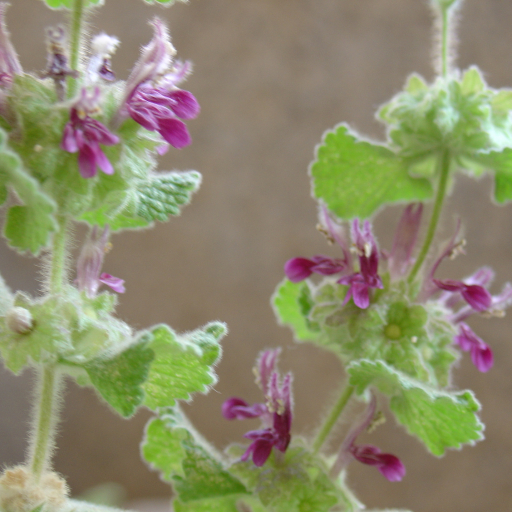
Plant Overview
Often called the Spanish Horehound, this Mediterranean native is a sensory delight for any garden. With its velvet-soft, silver-green foliage, it looks like a shimmering cushion nestled among the rocks. In ancient times, it was a staple of dry, sun-baked hillsides, prized for its ability to stay lush and soft even when the earth around it was parched.
🔍 How to Identify
- 🍃 Foliage Texture: The heart-shaped leaves are "hirsute" (hairy), covered in a dense, woolly coat of fine white hairs that make the plant feel like soft felt.
- 🌸 Flower Whorls: Small, tubular pink or lilac flowers emerge in tight, circular clusters called "verticillasters" that wrap around the stem at intervals.
- 📏 Growth Habit: It grows as a low, mounding sub-shrub, typically reaching about 2 feet in height and width, maintaining a tidy, rounded shape.
🏡 In Your Garden
- 🏜️ The Sun Worshiper: This plant thrives in "difficult" spots. It evolved to handle intense UV rays by using its white hairs to reflect sunlight, meaning it needs the brightest spot in your garden to stay healthy.
- 🪨 Poor Soil Preference: Do not over-fertilize! It actually prefers "lean" or rocky soil. In rich, damp garden beds, the plant can become leggy or succumb to root rot, as it requires exceptional drainage to survive the winter.
⚠️ Safety & Toxicity
- ✅ Generally Safe: Ballota hirsuta is not known to be toxic to humans, cats, or dogs. It is a peaceful addition to a family-friendly garden.
- 🧤 Skin Sensitivity: Although soft, the dense hairs can occasionally trap dust or pollen, which might irritate the skin of very sensitive gardeners. Wearing gloves during pruning is a good practice.
✨ Fun Fact
🕯️ The Living Wick: In historical Mediterranean folklore, the dried, woody calyxes (the "cups" that hold the seeds) were sometimes used as floating wicks in oil lamps. Because of their shape and slow-burning nature, they were perfect for providing a steady, gentle flame.

Detailed Care Instructions
| Humidity | Normal |
| Lighting | Full Sun |
| Difficulty | Easy |
| Temperature | 14°C - 30°C |
| Hardiness Zones | 7 - 10 |
To grow Ballota hirsuta, also known as hairy mint, follow these steps:
- Choose the right location: Select a spot in your garden that receives full sun to partial shade. Ballota hirsuta prefers well-drained soil that is not overly fertile.
- Prepare the soil: If your soil is heavy or clay-like, amend it with organic matter such as compost to enhance drainage. Ensure the soil pH is between 6.5 and 7.5, which is slightly acidic to neutral.
- Sow seeds or transplant: You can grow Ballota hirsuta from seeds or start with transplants purchased from a local nursery. Sow the seeds in early spring or late summer, as the plant prefers cooler temperatures and germination may occur in approximately 2-4 weeks.
- Watering: Once planted, water the seedlings regularly, especially during dry spells, to keep the soil moist. However, avoid overwatering, as the plant doesn't tolerate overly wet conditions.
- Pruning: Ballota hirsuta benefits from occasional pruning to maintain its shape and promote bushiness. After the flowering period, trim back the stems that have finished flowering to encourage new growth. This will also prevent the plant from becoming too woody.
- Fertilizing: Generally, Ballota hirsuta doesn't require excessive fertilization. However, you can apply a balanced, slow-release fertilizer in spring to provide necessary nutrients for healthy growth.
- Mulching: Apply a layer of organic mulch, such as wood chips or straw, around the base of the plant to help conserve moisture, regulate soil temperature, and deter weed growth.
- Pest and disease control: Ballota hirsuta is relatively pest and disease resistant. However, keep an eye out for common garden pests such as aphids or spider mites. If necessary, use insecticidal soap or organic neem oil to control infestations.
- Propagation: If you wish to propagate Ballota hirsuta, you can do so through stem cuttings in spring or autumn. Take 4-6 inch long cuttings and remove the lower leaves. Dip the cut end in rooting hormone and plant it in a pot filled with moist potting soil. Place the pot in a warm and bright area, mist the cuttings regularly, and roots should develop within a few weeks.
- Hardy zone: Ballota hirsuta is hardy in USDA zones 6-9. In colder regions, provide some winter protection by mulching around the base of the plant or using a frost cover.
By following these steps, you should be able to successfully grow Ballota hirsuta in your garden. Enjoy its attractive foliage and lovely flowers!

Place in a bright room that is sun drenched almost all day. Or directly in a south-facing window.

To water this particular plant, it is best to first observe the soil moisture levels by checking the top inch of soil. If the top inch feels dry to the touch, it is time to water. Use a watering can or hose attachment with a gentle spray to avoid causing soil erosion or damage to the plant. Water the plant thoroughly until excess water starts draining from the drainage holes at the bottom of the container or from the soil if it is planted directly in the ground. Avoid overwatering as this can lead to root rot and other fungal diseases. It is also recommended to water in the morning or evening to prevent evaporation and water loss.
To fertilize this plant, it is recommended to use a balanced fertilizer with equal parts nitrogen, phosphorus, and potassium. Apply the fertilizer in early spring, just before new growth begins. Water the plant deeply after fertilizing. Do not over-fertilize as it can cause damage to the roots and leaves. It is best to follow the instructions on the fertilizer package for application rates and frequency.
The ideal soil for this plant should be well-draining and nutrient-rich, with a pH level between 6.0 and 7.5. It should have a good mixture of organic matter, such as compost or leaf litter, and a coarse texture to allow water to drain easily. It is best to avoid heavy clay soils, as they can hold too much moisture and cause root rot. A sandy loam or loamy sand soil would be ideal. The plant prefers a slightly alkaline soil and can tolerate some drought, so it is essential to avoid overwatering.
To propagate the plant, take cuttings from the stem of a healthy mature plant. Make sure the cuttings are at least 4 inches long and have several nodes. Remove the bottom leaves from the cuttings and dip them in rooting hormone. Place the cuttings in a pot filled with a well-draining potting mix and water thoroughly. Keep the cuttings in a warm and bright location, out of direct sunlight. Ensure that the soil remains moist but not waterlogged. Within a few weeks, new roots should begin to grow, and new leaves will form. Once the new plants have developed a strong root system, they can be transplanted into separate pots or planted outside in the garden.








