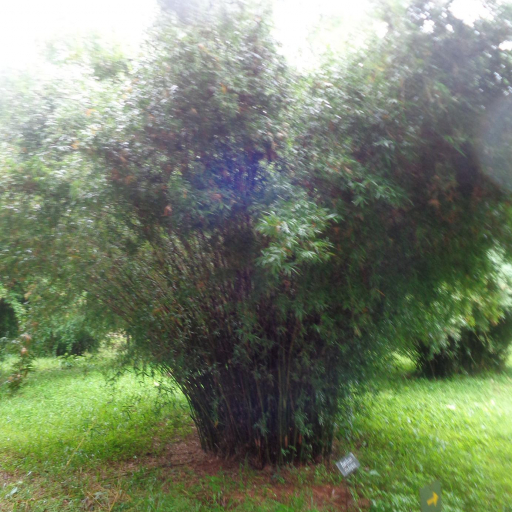
Plant Overview
Often called the "Hedge Bamboo," Bambusa multiplex is the secret weapon for gardeners seeking privacy without the "running" nightmare of invasive species. Native to China and Vietnam, this elegant clumper creates a dense, feathery wall of green that looks like a Zen watercolor painting come to life. Whether you are using the tiny "Fernleaf" variety or the towering "Alphonse Karr," it remains one of the most versatile and well-behaved bamboos in the world.
🔍 How to Identify
- 🌿 The Culms: Unlike many bamboos that have a single branch at each node, this species features multiple smaller branches sprouting from each joint, giving it a very bushy, "multiplexed" appearance.
- 🍃 Feathery Foliage: The leaves are relatively small, narrow, and arranged in neat, flat sprays that resemble a fern’s fronds.
- 🎋 Clumping Habit: This is a non-invasive, sympodial bamboo. It grows in tight, predictable circles rather than sending out underground "runners" that might take over your entire neighborhood.
🏡 In Your Garden
- ✂️ The Living Wall: Because it handles heavy pruning remarkably well, this is one of the few bamboos that can be sheared into a formal, square hedge or kept as a fluffy, natural privacy screen.
- 💧 Soil & Drainage: While it loves a good drink, it hates "wet feet." It needs well-draining soil and a layer of mulch to mimic the forest floor, which keeps its shallow roots cool and moist.
⚠️ Safety & Toxicity
- 🐾 Pet Friendly: Bambusa multiplex is generally considered non-toxic to cats, dogs, and horses by major veterinary associations.
- 🦷 Fiber Warning: While not poisonous, the leaves are extremely fibrous and high in silica; if a pet grazes on them heavily, it could lead to mild mechanical irritation in the mouth or a grumpy stomach.
✨ Fun Fact
In traditional Chinese culture, the dense, interlocking roots of the Hedge Bamboo are often used as a symbol of family unity and strength, as the stalks grow so closely together they are nearly impossible to separate.

Detailed Care Instructions
To grow Bambusa Multiplex plants, follow these steps:
- Choose a suitable location: Bambusa Multiplex prefers full sun to part shade. It can tolerate a wide range of soils but prefers well-draining soil.
- Prepare the soil: Before planting, loosen the soil and add organic matter such as compost or aged manure to improve drainage and fertility.
- Planting: Dig a hole twice the width and depth of the root ball. Place the plant in the hole, ensuring the top of the root ball is level with the ground or slightly above. Backfill the hole with soil and firmly press it around the base of the plant.
- Watering: Water the plant deeply after planting, and then water regularly to keep the soil consistently moist, especially during the first year. Once established, Bambusa Multiplex is moderately drought-tolerant.
- Mulching: Apply a layer of organic mulch around the plant, making sure to leave a small gap around the base to prevent rotting. Mulch helps retain moisture and suppresses weed growth.
- Fertilizing: Apply a balanced fertilizer formulated for bamboo plants in spring and early summer. Follow the instructions on the fertilizer packaging for application rates.
- Pruning: Bambusa Multiplex does not require extensive pruning. However, you may trim away any dead or damaged culms (stems) to maintain a neat appearance. Pruning is best done in early spring.
- Controlling spread: Bambusa Multiplex can spread quite vigorously. To control its spread, you can install a barrier around the plant's root zone by sinking a solid plastic barrier at least 30 inches deep into the soil. This prevents unwanted expansion.
- Invasive species awareness: Before planting Bambusa Multiplex, ensure it is not classified as an invasive species in your region. Check with local garden centers or horticultural organizations to confirm its suitability for your area.
By following these steps, you can successfully grow Bambusa Multiplex plants and enjoy their beauty in your garden.

Place in a window with dappled sun or a spot in the middle of a room. Or directly in a window facing west or east.

Bambusa Multiplex is a type of plant that requires adequate watering for healthy growth. When watering this plant, it is important to ensure the water reaches the root system. This can be achieved by watering the plant slowly and deeply, rather than a quick dousing.
One method of watering Bambusa Multiplex is to use a hose with a gentle stream of water and direct it at the base of the plant. Aim the water at the soil surface, and allow it to soak in for several minutes. Repeat this process until the soil feels evenly moist.
Another watering method that can be used for Bambusa Multiplex is a drip irrigation system. Drip irrigation delivers water directly to the plant's root system, ensuring that the water is used efficiently and not wasted. This method can be particularly useful during periods of heat or drought, as it helps the plant to survive without overwatering.
It is important to monitor the soil moisture level of Bambusa Multiplex frequently, as it can vary depending on temperature and humidity levels. Generally, this plant requires watering once or twice a week during the growing season, and less frequently during the dormant winter months.
Overall, watering Bambusa Multiplex effectively involves delivering water directly to the root system and monitoring soil moisture levels regularly. By providing adequate water, this plant can thrive and grow into a lush, vibrant addition to any garden or landscape.
To fertilize this plant, apply a balanced, slow-release fertilizer in early spring. Use a product with an NPK ratio of 10-10-10 or 12-12-12. Apply the fertilizer evenly around the base of the plant, taking care not to get it on the foliage or stems. Water the plant thoroughly after fertilizing to help the nutrients soak into the soil. Repeat this application once in mid-summer for best results.
Bambusa Multiplex requires well-draining soil that is nutrient-rich and slightly acidic, with a pH between 6.0 and 6.5. It is important that the soil retains moisture but does not become waterlogged as this can lead to root rot. A mix of organic matter such as compost, peat moss, and perlite can be used to ensure good aeration and drainage. The soil should be kept consistently moist but not soggy, and regular fertilization with a balanced fertilizer will help ensure healthy growth. Adding a layer of mulch around the base of the plant can help to retain moisture and suppress weeds.
Bamboo species can be propagated through various methods including division of rhizomes, cuttings, and seeds. To propagate this particular bamboo species, first, identify a healthy and mature plant that you wish to propagate.
The easiest and most effective way to propagate Bambusa Multiplex is by division of rhizomes. To do this, carefully dig up the entire clump and separate the rhizomes into sections with at least two stems and several roots. Plant the sections in a new location, preferably in fertile and well-draining soil.
Another method is to take cuttings from mature stems. Choose a healthy stem that is at least one year old and cut it at an angle, just below a node or joint. Trim off the leaves from the lower half of the stem and dip the cut end in rooting hormone. Plant the cutting in soil or water until roots form and then transplant them to a new location.
Propagation through seeds is the least common method as bamboo plants typically only bloom every few years. Harvest the seeds when they are ripe and plant them in a mixture of sand and soil. Keep the soil moist and the temperature between 70-80°F until the seeds germinate.
Regardless of the propagation method chosen, newly planted bamboo requires regular watering and proper care to establish itself and thrive.
Common pests of the golden goddess bamboo include Spider mites, thrips. Make a habit of checking your golden goddess bamboo frequently for pests so that any infestations can be caught and managed early.








