Plant Overview
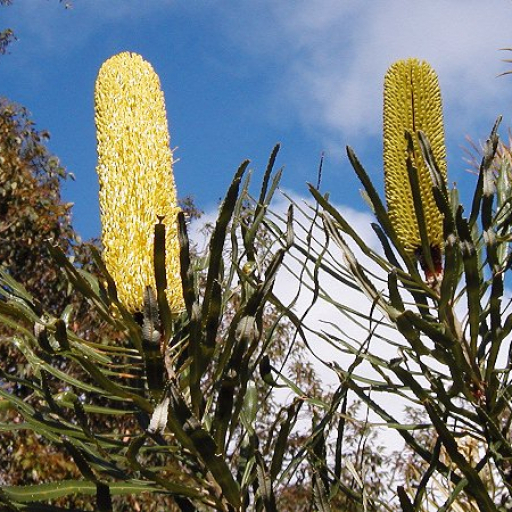
Often called the Slender Banksia or Candle Banksia, this golden icon is a cornerstone of the Western Australian landscape. It is famous for its glowing, torch-like flower spikes that stand upright among long, serrated leaves. Evolved to thrive in the harsh, sandy coastal plains, it acts as a vital "nectar bar" for native birds and honeypossums.
🔍 How to Identify
- 🕯️ Flower Spikes: Distinctive cylindrical blooms that start as greenish buds and open into brilliant, velvet-yellow "candles" up to 30cm tall.
- 🪚 The Leaves: Long, narrow, and leathery with a "saw-tooth" edge. They are usually a dull olive green, providing a muted backdrop for the bright flowers.
- 🧱 The Bark: Rough, crumbly, and grey. As the tree ages, it develops a thick, warty texture that helps it survive the heat of the Australian sun.
🏡 In Your Garden
- ⏳ Patience with Phosphorus: Like most members of the Proteaceae family, this plant has specialized "proteoid" roots. It is highly sensitive to phosphorus, so you must use specific "Native" fertilizers; standard garden food can be fatal.
- 🏖️ Drainage is King: It naturally grows in deep sand. In a garden setting, it hates "wet feet" and requires exceptionally well-draining soil. It is a perfect choice for coastal gardens where salt spray and wind are common.
- 🔥 Fire Survivor: It possesses a "lignotuber"—a woody swelling at the base of the trunk. If the top of the plant is damaged or burnt, it can sprout entirely new stems from this underground energy reserve.
⚠️ Safety & Toxicity
- ✅ Safe Status: Banksia attenuata is considered non-toxic to humans, dogs, and cats.
- 🌵 Physical Texture: While not poisonous, the spent flower spikes (which turn into hard, woody cones) are very rough and prickly. They can cause minor scratches if handled roughly or stepped on when dry.
✨ Fun Fact
The "Banksia Men"—the iconic villains of May Gibbs’ famous Snugglepot and Cuddlepie stories—were inspired by the weathered, multi-eyed seed cones of this genus. While they look like monsters in the stories, those "eyes" are actually woody follicles opening to release seeds after a fire!

Detailed Care Instructions

Place in a bright room that is sun drenched almost all day. Or directly in a south-facing window.

Some plants require more regular watering than others, which should be done every few days. It's critical to maintain the soil moist all of the time. The water requirements of the same plant placed in pots with varying sizes will differ. Because the water in the smaller pot evaporates faster than the water in the larger pot, it will require more watering. Regardless of pot size, the surface should constantly be maintained moist.








