Plant Overview
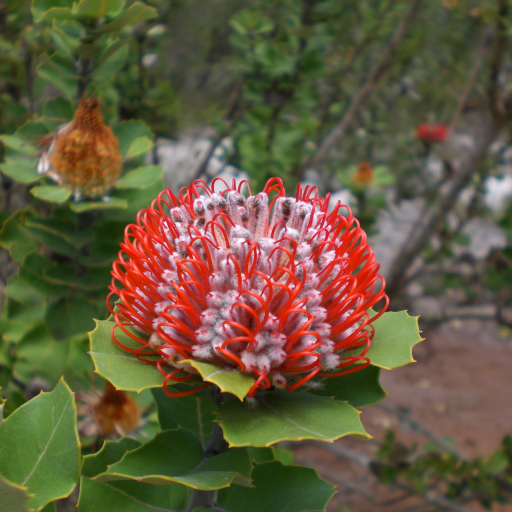
Often called the Scarlet Banksia or Waratah Banksia, this Australian icon is widely considered one of the most beautiful members of its family. Looking like a cluster of glowing red lanterns against silvery-green foliage, it has long been a favorite for high-end floral arrangements and coastal gardens. Native to the windswept southern coast of Western Australia, it carries an air of rugged elegance and wild architectural beauty.
🔍 How to Identify
- 🔴 The Flower Spike: Unlike the cylinder-shaped spikes of most Banksias, this species features distinctive vertical columns of bright scarlet styles that give the flower a "square" or geometric appearance.
- 🍃 Leathery Foliage: The leaves are broad, stiff, and heart-shaped at the base, with prominent "teeth" or serrated edges and a soft, greyish-green underside.
- 🏗️ Upright Habit: It grows as an erect shrub or small tree, often reaching 2 to 4 meters in garden settings, with a sturdy, woody trunk that becomes more gnarled with age.
🏡 In Your Garden
- 🏜️ Drainage is King: This plant has a specialized root system (proteoid roots) adapted for nutrient-poor, sandy soils. It is highly susceptible to root rot, so it must be planted in a spot where water never sits.
- 💨 Breezy Locations: It thrives in coastal conditions and requires excellent air circulation. High humidity can lead to fungal issues, so give it plenty of "elbow room" away from other dense shrubs.
- 🚫 Fertilizer Warning: Never use standard garden fertilizers. Like most Australian natives, it is extremely sensitive to phosphorus, which can actually be fatal to the plant. Use only specific "native-safe" blends.
⚠️ Safety & Toxicity
- ✅ Safe Status: Banksia coccinea is generally considered non-toxic to humans, dogs, and cats.
- 🌵 Physical Texture: The spent flower cones (the "wooden" parts) and the stiff, serrated leaves can be quite sharp and prickly. Wear gloves when pruning to avoid minor skin scratches.
✨ Fun Fact
The Scarlet Banksia is a masterpiece of natural engineering; its flowers are arranged in precise vertical rows. This unique "picket fence" look isn't just for show—it provides the perfect scaffolding for honeyeaters and tiny possums to grip onto while they drink the abundant nectar.

Detailed Care Instructions
- Climate: Banksia coccinea plants thrive in a Mediterranean climate, with warm, dry summers and mild, wet winters. They are not frost-tolerant and require protection from extreme cold.
- Soil: Banksia coccinea plants prefer well-draining soil that is slightly acidic to neutral in pH. Avoid heavy clay soils as they can cause root rot.
- Sunlight: Banksia coccinea plants need full sun to thrive and produce vibrant blooms. Ensure they receive at least 6-8 hours of direct sunlight each day.
- Watering: Banksia coccinea plants are drought-tolerant once established, but they still require regular watering during the growing season. Water deeply but infrequently to encourage deep root growth.
- Fertilization: Do not fertilize Banksia coccinea plants as they are sensitive to high levels of phosphorus. Instead, amend the soil with a slow-release, low-phosphorus fertilizer in spring.
- Pruning: Banksia coccinea plants do not require regular pruning, but you can trim back dead or damaged branches to promote healthy growth.
- Propagation: Banksia coccinea plants can be propagated from seeds or cuttings. Seeds should be scarified before planting to encourage germination, while cuttings should be taken from semi-hardwood stems in summer.
- Pests and diseases: Monitor Banksia coccinea plants for signs of pest infestations, such as scale insects or caterpillars. Treat with appropriate insecticides if necessary. Additionally, avoid overwatering to prevent root rot.
By following these tips, you can successfully grow a Banksia coccinea plant in your garden or landscape.

Place in a bright room that is sun drenched almost all day. Or directly in a south-facing window.
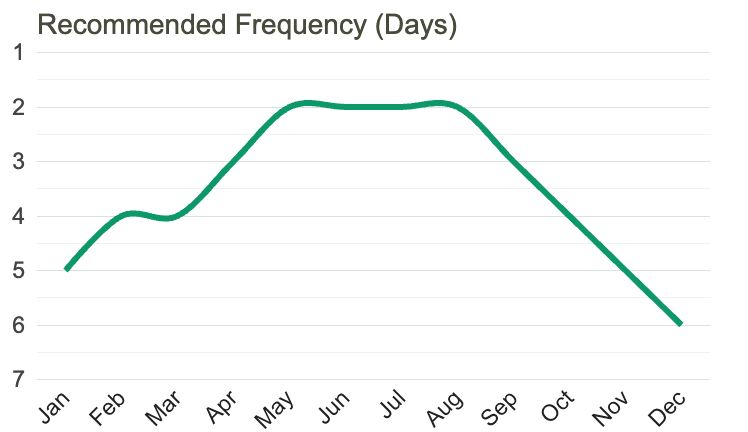
To properly water the Banksia Coccinea plant, it is important to provide it with enough water to keep the soil consistently moist but not waterlogged. This can be achieved by watering the plant deeply, allowing the water to penetrate the soil and reach the root system. It is recommended to water the plant at the base, near the roots, instead of on the leaves to prevent water from sitting on the foliage and potentially causing disease. Additionally, it is important to water the plant in the early morning or late afternoon to minimize water loss due to evaporation. The frequency of watering will depend on factors such as the temperature, humidity, and soil drainage, so it is important to monitor the plant's moisture levels regularly and adjust the watering schedule accordingly.
To fertilize Banksia Coccinea, use a slow-release fertilizer with a balanced ratio of nutrients, such as a 10-10-10 formula. Apply the fertilizer in early spring or late winter, before new growth begins. Follow the instructions on the fertilizer packaging for specific application rates. Water the plant thoroughly after fertilizing to help the nutrients reach the roots. Avoid over-fertilizing, as this can harm the plant. Repeat the fertilization process once or twice a year to support healthy growth and flowering.
Banksia coccinea grows best in well-draining, sandy soils that are slightly acidic to neutral in pH. The soil should be nutrient-rich and loamy, with a good balance of organic matter to promote healthy root development. Avoid heavy, clay soils that can become waterlogged and lead to root rot. It is important to choose a soil that will allow for sufficient aeration and drainage to prevent waterlogging, as Banksia coccinea is sensitive to excessive moisture. Adding a layer of mulch around the base of the plant can help retain moisture and improve soil structure. Additionally, incorporating a slow-release fertilizer into the soil before planting can help provide the necessary nutrients for optimal growth and flowering.
Banksia coccinea can be propagated through various methods such as seed propagation, cuttings, and grafting.
- Seed propagation: Collect mature seeds from the plant and sow them in a well-draining potting mix. Keep the soil moist but not waterlogged and place the pot in a warm, sunny location. Germination can take several weeks to months. Once the seedlings have established roots, they can be transplanted into individual pots.
- Cuttings: Take semi-hardwood cuttings from the plant during the growing season. Remove the lower leaves and dip the cut end in rooting hormone before planting it in a potting mix. Keep the soil moist and place the cutting in a warm, humid location. Roots should form within a few weeks, at which point the cutting can be transplanted into a larger container.
- Grafting: Banksia coccinea can also be propagated through grafting onto a compatible rootstock. This method is more complex and may require some skill and experience. It involves joining a cutting from the desired plant (scion) with the rootstock of another plant. Proper care and attention are needed to ensure the graft takes successfully.
Overall, propagation of Banksia coccinea can be a rewarding process but may require patience and attention to detail. Experimenting with different methods can help determine the most successful approach for propagating this unique plant species.








