Plant Overview
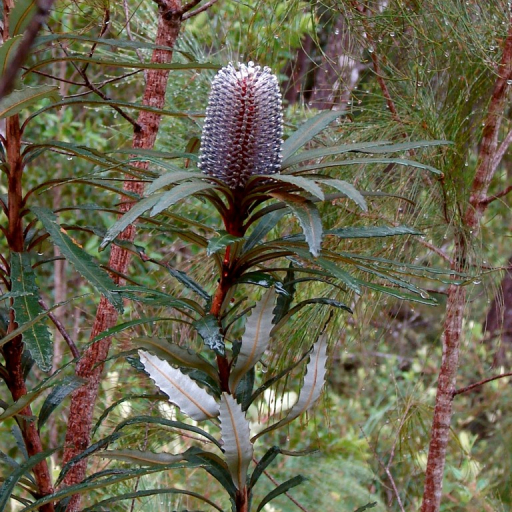
Known affectionately as the Blue Banksia or Hinchinbrook Banksia, this tropical beauty looks like it was plucked from a science fiction landscape. Native to the rugged coastlines of Queensland, Australia, it is famous for its shimmering, metallic-looking flower spikes that transition from a velvety steel-blue to a warm bronze. It is a prized choice for gardeners looking to add a structural, "architectural" element to their landscape.
🔍 How to Identify
- 🌬️ The Flower Spikes: The most striking feature is the cylindrical flower head. In its bud stage, it is covered in fine, velvety hairs that give it a distinct mauve or steel-blue tint.
- 🍃 Serrated Foliage: The leaves are long, narrow, and leathery. They typically feature lightly serrated edges and a glossy dark green top, contrasted by a paler underside.
- 🌳 Growth Habit: It usually grows as a tall shrub or a small, slender tree. The bark is relatively smooth and grey compared to the rugged, "corky" bark of its southern cousins.
🏡 In Your Garden
- 🏝️ Coastal Resilience: Coming from Hinchinbrook Island, this plant is a master of the coast. It thrives in humid environments and is highly resistant to salt spray, making it a perfect windbreak for seaside homes.
- 🧪 Specialized Roots: This Banksia uses "proteoid" roots—tiny clusters of rootlets that are experts at scavenging nutrients from poor soil. Because of this, you must avoid standard fertilizers; high phosphorus can actually "overdose" the plant. Always use a specialized native plant food.
⚠️ Safety & Toxicity
- ✅ General Safety: Banksia plagiocarpa is considered non-toxic to humans, dogs, and cats. It is a "friendly" addition to family backyards.
- 🪵 Physical Risk: The mature seed cones (often called "woody pears") become incredibly hard and heavy. Be careful when walking under large specimens, as a falling cone or a stray one on a walkway can be a tripping hazard or a bit of a toe-stubber.
✨ Fun Fact
This species was "lost" to science for over a century! After its initial discovery in 1867, it wasn't formally recognized or seen by botanists again until the mid-1980s, when it was rediscovered growing on the rocky slopes of the Hinchinbrook region.

Detailed Care Instructions








