Plant Overview
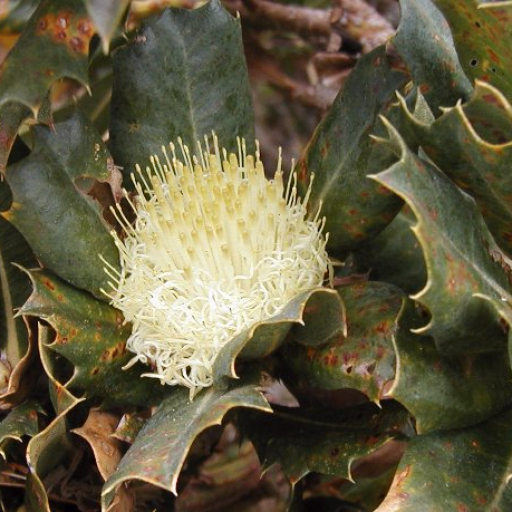
Known as the Parrot Bush, this Western Australian icon is a survivalist superstar. It often looks like a prickly fortress, but inside that armor beats a heart of gold—literally. Its flowers are so packed with nectar that they serve as a primary "gas station" for native birds and honeyeaters during the cooler months when other food is scarce.
🔍 How to Identify
- 🍃 Wedge-Shaped Leaves: The foliage is stiff, blue-green, and fan-shaped with sharp, prickly teeth along the edges, making it look somewhat like a very rugged holly leaf.
- 🌼 "Sessile" Blooms: Unlike many Banksias that have long, cylindrical cones, these flowers are dome-shaped, creamy-yellow clusters that sit directly on the stem without a visible stalk.
- 🌳 Dense Habit: It typically grows as a large, multi-stemmed shrub or small tree. Because of its thick growth, it is often used as a natural "living fence" or bird sanctuary.
🏡 In Your Garden
- 🏜️ Drainage is King: This plant is a specialist of sandy, limestone soils. It thrives in "lean" conditions and will struggle in heavy clay. If its roots stay wet for too long, it is highly susceptible to dieback.
- 🚫 Phosphorus Sensitivity: Like most members of the Protea family, it has specialized "proteoid" roots that are masters at absorbing nutrients. Standard fertilizers can actually "overdose" the plant; always use a dedicated low-phosphorus native fertilizer.
- 🐦 Wildlife Magnet: If you plant this, expect a flurry of activity. It is one of the most important nectar sources for the Carnaby’s Black Cockatoo and various honeyeaters.
⚠️ Safety & Toxicity
- ✅ Safe Status: The Banksia sessilis is generally considered non-toxic to humans, dogs, and cats.
- 🌵 Prickly Protection: While it won't poison you, the leaves are genuinely sharp. It is best placed in the back of a garden bed or as a perimeter hedge rather than right next to a narrow walkway or a children's play area.
✨ Fun Fact
The species name sessilis is Latin for "sitting." This refers to the unique way the flower heads "sit" directly on the branch without the support of a stalk, a key feature that distinguishes it from its more famous cone-shaped cousins.

Detailed Care Instructions

Place in a bright room that is sun drenched almost all day. Or directly in a south-facing window.

Some plants require more regular watering than others, which should be done every few days. It's critical to maintain the soil moist all of the time. The water requirements of the same plant placed in pots with varying sizes will differ. Because the water in the smaller pot evaporates faster than the water in the larger pot, it will require more watering. Regardless of pot size, the surface should constantly be maintained moist.








