Plant Overview
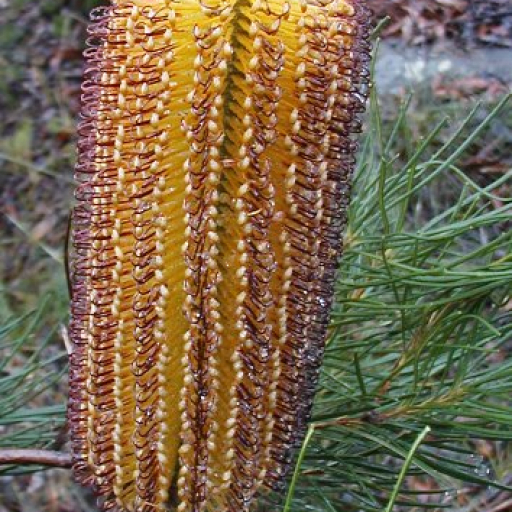
Commonly known as the Hairpin Banksia, this golden Australian native is a showstopper that looks like a cluster of glowing candles set against dark green foliage. Named for its uniquely hooked flower parts that resemble old-fashioned hairpins, it is a staple in coastal gardens and a favorite "fast food" stop for nectar-seeking birds.
🔍 How to Identify
- 🕯️ The "Candles": Large, cylindrical flower spikes that range from honey-gold to burnt orange. They typically bloom from autumn through winter, providing color when most other plants are dormant.
- 🪝 The Hairpins: Look closely at the flower spike; you’ll see hundreds of fine, wiry "styles" that hook downward. These are often a contrasting color, such as deep burgundy or jet black.
- 🌿 The Foliage: Long, narrow leaves that are dark green on top with a surprising silvery-white underside. The edges are often slightly serrated near the tips.
🏡 In Your Garden
- 🐦 Avian Magnet: If you plant a Hairpin Banksia, expect visitors. Its high nectar production makes it a primary food source for Honeyeaters and the acrobatic Eastern Spinebill.
- 🔥 The Survivor: This plant features a "lignotuber"—a woody swelling at the base. This allows the plant to completely regenerate from the ground up if it is damaged by a bushfire or an over-zealous pruning session.
- ⏳ Slow & Steady: While it is drought-tolerant once established, it is sensitive to phosphorus. Always use a fertilizer specifically labeled for Australian natives to avoid "burning" the roots.
⚠️ Safety & Toxicity
- ✅ Pet & Child Safe: The Banksia spinulosa is non-toxic to humans, cats, and dogs. It is a very "family-friendly" choice for suburban backyards.
- 🌵 Mechanical Irritation: While not poisonous, the dried flower cones and serrated leaves can be quite stiff and scratchy. Wear gloves when pruning to avoid minor skin abrasions.
✨ Fun Fact
The Hairpin Banksia was one of the original plants collected by Sir Joseph Banks (the namesake of the genus) during Captain Cook's first voyage to Australia in 1770!

Detailed Care Instructions
To grow Banksia spinulosa, also known as Hairpin Banksia, you can follow these steps:
- Select a suitable location: Hairpin Banksia prefers a sunny spot with well-draining soil. It can tolerate various soil types, including sandy and loamy soils.
- Prepare the soil: Before planting, loosen the soil in the selected area using a garden fork or tiller. Remove any weeds or large rocks. If the soil is heavy clay, you can incorporate some organic matter, such as compost or well-rotted manure, to improve drainage.
- Plant the seedlings: Banksia spinulosa can be grown from seeds, but it may take longer to establish. It is more commonly grown from seedlings or nursery-bought plants. Dig a hole slightly larger than the plant's root ball. Place the seedling in the hole, ensuring the top of the root ball is level with the surface. Backfill the hole with soil, gently firming it around the plant. Water thoroughly.
- Watering: Banksia spinulosa has moderate water needs. Water the plant deeply once or twice a week during the first few months after planting to help the roots establish. Then, reduce the frequency to once every 10-14 days during dry periods. Avoid overwatering, as the plant prefers well-drained soil.
- Mulching: Apply a layer of organic mulch, such as wood chips or straw, around the base of the plant. Mulch helps retain moisture, suppress weeds, and maintain a more consistent soil temperature. Keep the mulch a few centimeters away from the plant's stem to prevent rot.
- Pruning: Banksia spinulosa generally requires minimal pruning. However, if the plant becomes leggy or untidy, you can lightly prune it after flowering to maintain its shape. Trim back any dead or diseased branches as necessary.
- Fertilizing: Banksia spinulosa is adapted to low-nutrient soils and generally does not require regular fertilization. However, if desired, you can apply a slow-release native plant fertilizer during early spring. Follow the instructions on the fertilizer's packaging for the correct application rate.
- Pests and diseases: Banksia spinulosa is relatively resistant to pests and diseases. However, ensuring good air circulation between the plants and avoiding overwatering can help prevent any potential issues.
- Propagation: If you want to propagate Banksia spinulosa, you can collect and germinate seeds from the plant or take semi-hardwood cuttings during the warmer months.
Remember that Banksia spinulosa is a native plant in certain regions, so it is essential to check if it is suitable for your local climate before planting.

Place in a bright room that is sun drenched almost all day. Or directly in a south-facing window.

Banksia Spinulosa plants require regular watering, especially during the first few years of their growth. However, it is important not to overwater these plants as they can be susceptible to root rot. It is recommended to water them deeply once a week, allowing the soil to dry out slightly in between waterings. The frequency of watering should be adjusted based on the rainfall and temperature in the area. It is also important to avoid watering the foliage as this can promote fungal growth. Instead, aim to water the soil directly around the base of the plant. During hot and dry weather, it may be beneficial to mulch around the base to help retain moisture.
To fertilize the Banksia Spinulosa plant, follow these instructions:
- Choose a slow-release fertilizer specifically formulated for native plants or acid-loving plants.
- Apply the fertilizer during the early spring or late winter, preferably before the plant starts its active growing season.
- Read the fertilizer package instructions carefully and measure the recommended amount for your plant size and age.
- Sprinkle the fertilizer evenly around the base of the plant, keeping it away from the trunk or main stems to avoid burning.
- Gently work the fertilizer into the top layer of soil using a rake or hand cultivator, making sure it is well incorporated.
- Water the plant thoroughly after fertilizing to help the nutrients penetrate into the root zone.
- Avoid over-fertilizing as this can lead to excessive growth or burn the plant. Follow the recommended application rates and frequency stated on the fertilizer packaging.
- Monitor the plant's response to the fertilizer and adjust the application timing or amounts as needed.
Remember that it is important to adapt these instructions based on the specific needs of your Banksia Spinulosa plant, its age, and the soil conditions.
Banksia spinulosa is a shrub that requires well-draining soil. It prefers sandy or loamy soil with a pH range of 6.0-7.5. The soil should be rich in organic matter and should not be compacted as this can hinder root growth. It is important to avoid heavy clay soils or soils that are prone to waterlogging. If necessary, add organic matter, such as compost or well-rotted manure, to the soil to improve its structure and fertility. When planting Banksia spinulosa, ensure that the top of the root ball is level with the surface of the soil, and firm the soil around the plant to eliminate any air pockets. Water the plant well after planting and keep the soil moist but not waterlogged until the plant has established.
Banksia Spinulosa, also known by various common names, is a species of flowering plant native to certain regions. The propagation process for this plant can be achieved through the following steps:
- Select a healthy and mature Banksia Spinulosa plant from which you will obtain your cuttings. Ensure that the plant is free from any pests or diseases.
- Prepare a suitable rooting medium by mixing equal parts of peat moss and perlite or vermiculite. This will provide a well-draining and aerated environment for the cuttings to develop roots.
- Take semi-hardwood cuttings from the parent plant. These are usually taken during late spring or early summer when the current year's growth has started to harden but is not fully woody yet. Cuttings should be approximately 4-6 inches (10-15 cm) long and include a few pairs of leaves.
- Remove the lower leaves from the cuttings, leaving only a pair or two at the top intact. This helps reduce water loss and encourages root development.
- Dip the cut end of each cutting into a rooting hormone powder or gel. This will help stimulate root growth and increase the chances of successful propagation.
- Make small holes in the prepared rooting medium using a pencil or similar tool. Ensure the holes are deep enough to accommodate the lower portion of the cuttings.
- Insert the treated cuttings into the holes, gently firming the rooting medium around them to provide stability. It is recommended to plant multiple cuttings in the same container, maintaining a distance of 2-3 inches (5-7.5 cm) between each cutting.
- Place the container in a warm and bright location with indirect sunlight. Avoid placing it in direct sunlight, as this can cause excessive drying of the cuttings.
- Mist the cuttings and the surrounding area with water to increase humidity and prevent excessive moisture loss. It is essential to keep the rooting medium consistently moist but not waterlogged.
- Monitor the cuttings regularly for signs of root growth, which may take several weeks to months. Once significant root development is observed, the cuttings can be transplanted into individual pots filled with a well-draining potting mix.
- Gradually acclimate the newly rooted plants to the outdoor conditions by placing them in a sheltered location for a few weeks before transplanting them into their desired planting spot.
It is worth noting that the propagation success rate can vary, and certain factors like temperature, humidity, and care techniques can influence the outcome. Nonetheless, following these steps will provide a general guideline for propagating Banksia Spinulosa plants without using its common names.








