Plant Overview
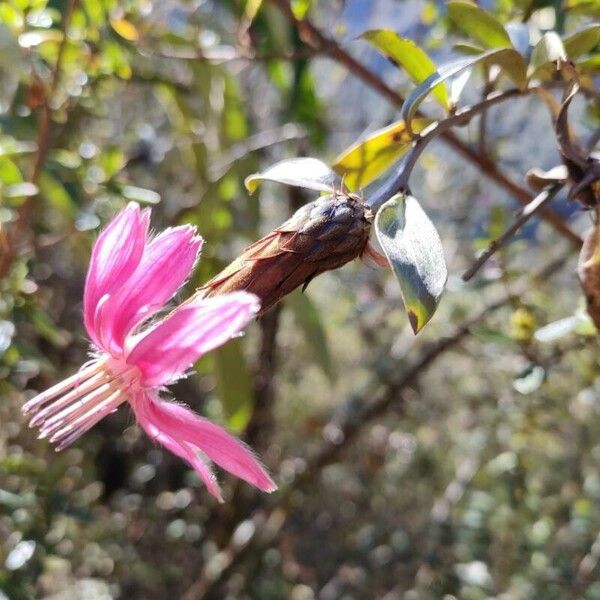
Known as the "Thorny Barnadesia" or sometimes referred to by its evocative Latin name Barnadesia horrida, this South American native is a master of contrast. Hailing from the high-altitude slopes of the Andes, it combines soft, silky pink blossoms with a dense fortress of needle-sharp spines. It is a member of a "primitive" lineage of the sunflower family, offering a glimpse into what flowers looked like millions of years ago.
🔍 How to Identify
- 🌵 The Armor: Every branch is heavily armed with paired, straight, and incredibly sharp spines that can grow several centimeters long.
- 🌸 The "Shaggy" Flowers: It produces clusters of tubular, bright pink to magenta flowers that have a distinctively hairy or "feathery" texture on the petals.
- 🍃 Small Leaves: The leaves are relatively small, oval-shaped, and often grow in clusters directly above the base of the spines.
- 🌬️ Silky Seeds: After flowering, it produces seeds attached to a feathery "pappus" (like a dandelion), designed to catch the Andean winds.
🏡 In Your Garden
- 🏔️ Mountain Roots: Because it originates in the Andes (Ecuador to Peru), it prefers "cool-summer" climates. It dislikes extreme tropical heat and requires sharp, gritty drainage to prevent its roots from rotting.
- 🛡️ Living Fence: Due to its "horrid" thorns, it is historically used as a defensive hedge. If you plant one, place it away from walkways or paths where a passerby might accidentally brush against its formidable spikes.
- 🥤 Thirst Quencher: While it is somewhat drought-tolerant once established, it appreciates consistent moisture during the growing season to produce its signature showy blooms.
⚠️ Safety & Toxicity
- ⚔️ Physical Hazard: The primary danger of Barnadesia horrida is mechanical. The thorns are stiff and can easily puncture skin or thin gardening gloves.
- 🐾 Pet & Child Safety: While not specifically listed as a highly toxic plant if ingested, it is considered "unsafe" for households with curious pets or toddlers purely because of the injury risk posed by the spines. Always wear heavy-duty leather gloves when pruning.
✨ Fun Fact
Despite its aggressive appearance, Barnadesia horrida is a favorite of high-altitude hummingbirds. The birds have evolved to navigate the maze of thorns effortlessly to reach the nectar hidden inside the tubular pink flowers!

Detailed Care Instructions








