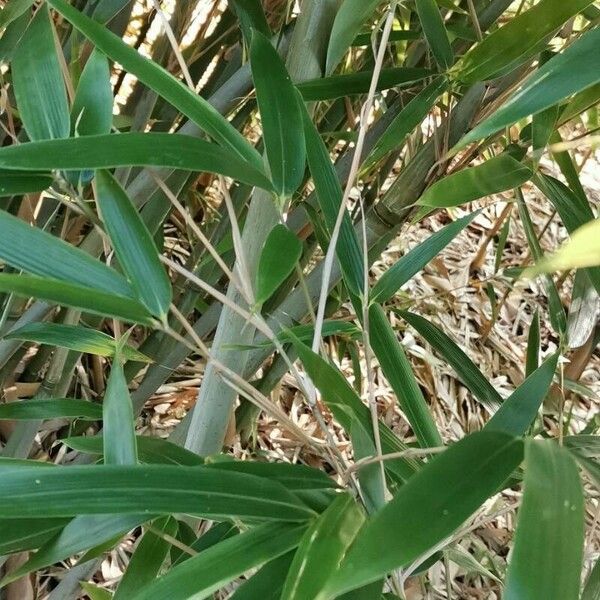
Plant Overview
Often called the Arrow Bamboo, Bashania fargesii is a titan of the high-altitude forests in China. Steeped in history, its incredibly straight and rigid culms were once harvested by ancient warriors to craft lethal arrows. In the wild, it forms dense, swaying "bamboo seas" that serve as a vital lifeline and favorite snack for the Giant Panda.
🔍 How to Identify
- 🎋 The Culms: The stems are remarkably straight and thick-walled. Young shoots often emerge with a beautiful bluish-gray waxy bloom that matures into a deep, matte olive green.
- 🍂 Persistent Sheaths: Unlike many bamboos that drop their "wrappers," this species keeps its papery, tan-colored culm sheaths for a long time, giving the base of the plant a textured, shaggy look.
- 🍃 Lush Foliage: The leaves are relatively large, long, and lance-shaped. They create a heavy, weeping canopy that provides excellent privacy screening.
🏡 In Your Garden
- 🏃 A Vigorous Runner: This is a "running" bamboo, meaning it spreads via underground rhizomes. To keep it from colonizing your neighbor's lawn, you should install a sturdy root barrier or plant it in a large, sunken container.
- ❄️ Cold Weather Warrior: Bashania fargesii is legendary for its hardiness. While other bamboos might wither in a frost, this species can handle temperatures well below freezing, making it perfect for temperate or mountain-side gardens.
⚠️ Safety & Toxicity
- ✅ Safe for Pets: Like most true bamboos, Bashania fargesii is non-toxic to dogs, cats, and horses.
- 🐕 Physical Hazards: Because it spreads rapidly, the "canes" can create tripping hazards if they pop up in the middle of a path. Additionally, the dried sheaths can be quite slippery when wet on a deck or patio.
✨ Fun Fact
This plant is a true "Panda Gourmet." In the Qinling Mountains of China, it makes up a massive portion of the Giant Panda's diet, providing the high-fiber nutrition these bears need to survive the harsh winters.

Detailed Care Instructions

Place in a bright room that is sun drenched almost all day. Or directly in a south-facing window.

Some plants require more regular watering than others, which should be done every few days. It's critical to maintain the soil moist all of the time. The water requirements of the same plant placed in pots with varying sizes will differ. Because the water in the smaller pot evaporates faster than the water in the larger pot, it will require more watering. Regardless of pot size, the surface should constantly be maintained moist.








