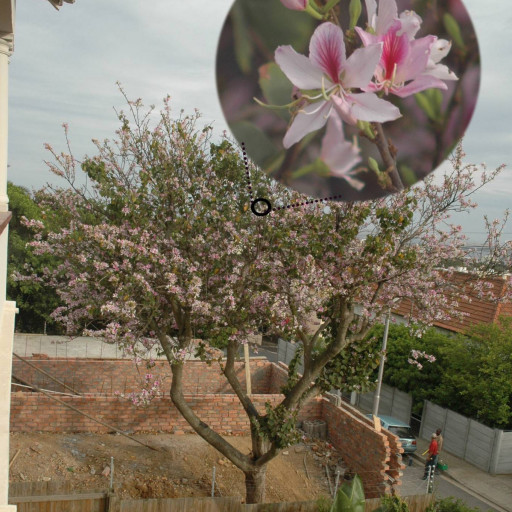
Plant Overview
Often called the "Purple Orchid Tree" or "Mountain Ebony," Bauhinia variegata is a showstopper that brings a tropical, fairytale vibe to any landscape. Native to Southeast Asia, it is beloved for its striking flowers that look remarkably like true orchids, despite the tree actually being a member of the legume (pea) family. Its unique, twin-lobed leaves give it a whimsical silhouette that stands out even when it isn't in bloom.
🔍 How to Identify
- 🦋 The "Butterfly" Leaf: The leaves are its most famous feature—rounded and deeply notched at the tip, creating two lobes that look exactly like a green butterfly or a camel's hoof.
- 🌸 Orchid-like Blooms: Large, fragrant, five-petaled flowers appear in late winter or early spring. They typically come in shades of magenta, lavender, or white, often with one petal featuring darker, contrasting streaks.
- 🫛 Flat Seed Pods: After flowering, the tree produces long, flat, brown woody pods that can reach up to 12 inches in length.
🏡 In Your Garden
- ☀️ Sun-Loving Temperament: This tree is a sun-worshipper. To get that iconic "explosion" of flowers, it needs a spot with full sun; too much shade will result in "leggy" branches and sparse blooming.
- 🧹 The "Beautiful Mess": While stunning, it is a deciduous tree that drops a significant amount of leaves and heavy seed pods. It is best planted in a garden bed or lawn rather than next to a pool or a pristine driveway.
- 🪴 Deep Root System: Because it develops a strong taproot, it is quite drought-tolerant once established. However, this also means it hates being moved—pick its "forever home" carefully!
⚠️ Safety & Toxicity
- ✅ Safe Status: Bauhinia variegata is generally considered non-toxic to humans, dogs, and cats. It is a popular choice for family-friendly gardens.
- 🐶 Seed Pod Precaution: While the plant isn't poisonous, the woody seed pods can be a choking hazard or cause minor digestive irritation if a curious pet decides to use them as a chew toy.
✨ Fun Fact
In many parts of South Asia, this tree is more than just an ornament! The unopened flower buds, known as Kachnar, are harvested and used in traditional cuisine—they are often pickled or sautéed with spices to make a delicious, savory curry.

Detailed Care Instructions
| Lighting | Full Sun |
| Hardiness Zones | 9A - 11 |
To grow a Bauhinia Variegata plant, also known as the orchid tree or butterfly tree, follow these steps:
- Sunlight: Plant your Bauhinia Variegata in a location that receives full sunlight for at least 6-8 hours a day.
- Soil: Use well-draining soil that is rich in organic matter. The plant prefers slightly acidic to neutral soil pH.
- Watering: Water regularly, keeping the soil consistently moist but not waterlogged. Allow the top inch of soil to dry out between waterings.
- Fertilizer: Use a balanced fertilizer during the growing season to promote healthy growth and flowering. Apply it according to the package instructions.
- Pruning: Prune your Bauhinia Variegata regularly to maintain its shape and size. Remove any dead or damaged branches and shape the plant as desired.
- Mulching: Apply a layer of organic mulch around the base of the plant to help retain moisture, regulate soil temperature, and suppress weed growth.
- Propagation: Bauhinia Variegata can be propagated from seeds or stem cuttings. To propagate from seeds, plant them in a seed-starting mix and keep them warm and moist until germination. For stem cuttings, select a healthy, young stem, remove the lower leaves, and place it in a well-draining rooting medium. Keep the cutting warm and moist until it develops roots.
- Pests and diseases: Monitor the plant for common pests such as aphids, mealybugs, or caterpillars. Treat any infestations promptly with appropriate insecticides or by introducing natural predators. Watch out for fungal diseases like powdery mildew and treat them with fungicides if necessary.
By following these guidelines, you should be able to successfully grow and care for your Bauhinia Variegata plant.

Place in a window with dappled sun or a spot in the middle of a room. Or directly in a window facing west or east.

1. Identify the plant: To water the plant, it is essential to have an understanding of the plant species.
2. Having the Right Soil: Bauhinia Variegata plant prefers well-draining soil that retains moisture while still allowing air to circulate around the roots.
3. Water Requirement: Water the plant thoroughly, so that the water penetrates deep into the soil.
4. Watering Frequency: The watering frequency of the Bauhinia Variegata plant depends on the surrounding temperature and humidity. During dry weather, it may require more frequent watering.
5. Timing: Never water the plant during the hottest part of the day, especially at midday, as the water may evaporate before getting to the roots of the plant.
6. Water Management: Monitor the plant carefully for signs of overwatering or under watering, such as yellowing or wilting leaves.
7. Ensure Proper Drainage: ensure that the Bauhinia Variegata plant has proper drainage, so that excess water does not accumulate around its roots.
8. Avoid Water logging: avoid frequent watering of the plant, as it may cause waterlogging, leading to root rot.
9. Use of Appropriate Measuring Tool: Use a watering tool such as a watering can, a drip irrigation system or a garden hose with a gentle spray, to ensure that the plant receives a consistent amount of water.
10. Watering during Summer: During hot and dry weather, the Bauhinia Variegata plant may require watering once or twice a week.
For a Bauhinia Variegata plant, it is recommended to fertilize during the growing season from spring to fall. A balanced fertilizer with an N-P-K ratio of 10-10-10 is ideal. Follow the instructions on the fertilizer packaging for the correct amount to use. Apply the fertilizer evenly around the base of the plant and water thoroughly. Avoid getting the fertilizer on the leaves or stems of the plant as this can cause damage. Repeat this process every 4-6 weeks during the growing season. In the winter, reduce fertilizer application to once every 2-3 months.
The ideal soil for Bauhinia Variegata plant is well-draining with a pH range of 6.0 to 7.5. It should be rich in organic matter and contain balanced nutrients such as nitrogen, phosphorus, and potassium. A mixture of soil, vermicompost, and sand in the ratio of 2:1:1 or 3:1:1 is generally suitable for this plant. The soil should not be compacted as it hampers the plant's growth and development. Also, the soil should be moist but not waterlogged. Overwatering or underwatering can cause root rot or stress the plant. The soil should be replaced every two to three years to maintain the plant's health and vigor.
To propagate this plant, you will need to gather mature seeds from a healthy parent plant, or use stem cuttings from a healthy branch. If you are using cuttings, choose a branch that is firm and healthy, but not too woody or brittle. Use a sharp, sterilized cutting tool to cut a section of the branch that is about 6-8 inches long, just below a node.
If you are using seeds, allow the seed pods to mature and dry out on the plant. Once the pods have turned brown and are starting to split open, harvest the seeds and allow them to dry completely.
To prepare the cuttings or seeds for planting, remove any leaves or flowers from the lower half of the cutting or seed. If using cuttings, dip the cut end into rooting hormone powder to speed up the rooting process.
Fill a small pot with well-draining potting soil, and plant the cutting or seed about 1 inch deep. Water the soil lightly, and cover the pot with a clear plastic bag to create a greenhouse effect.
Place the pot in a warm, bright area, but out of direct sunlight. Keep the soil moist but not waterlogged, and monitor the cutting or seed for signs of growth. Within a few weeks, you should start to see new growth emerging from the soil.
Once the new plant has developed a healthy root system and several new leaves, it can be transplanted into a larger pot or directly into the garden (if climate and soil conditions are suitable). Be sure to give the new plant plenty of water and TLC as it establishes itself.
Common pests of the mountain ebony include Spider mites, thrips, whiteflies, larvae. Make a habit of checking your mountain ebony frequently for pests so that any infestations can be caught and managed early.








