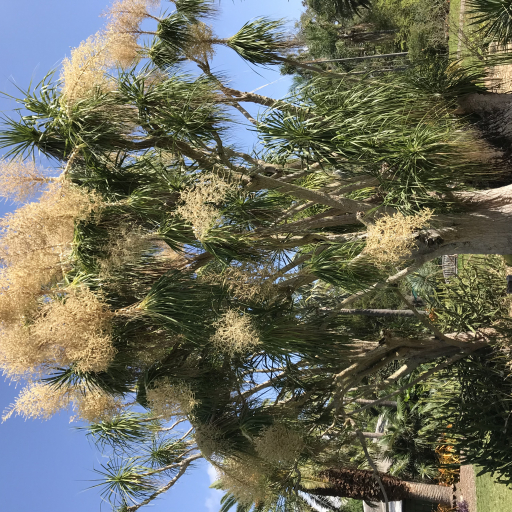
Plant Overview
Known as the Yucatan Ponytail Palm or "Izote," Beaucarnea pliabilis is a living architectural masterpiece from the dry tropical forests of Mexico and Belize. While it looks like a palm, it is actually a succulent relative of the asparagus! This "Living Sculpture" is prized for its dramatic, corky trunk and its ability to survive for centuries by storing water in its massive, bulbous base.
🔍 How to Identify
- 🐘 The Caudex: At the base, it develops a large, grayish, swollen "foot" that looks remarkably like elephant skin. This serves as the plant's personal water reservoir.
- 🌿 The Foliage: Long, slender, grass-like leaves sprout in fountain-like tufts from the ends of the branches. Unlike its cousin, B. recurvata, these leaves are often stiffer and more upright.
- 🌳 Growth Habit: In the wild, it can reach heights of 30 feet, developing a highly branched canopy that gives it an ancient, tree-like silhouette.
🏡 In Your Garden
- 🏜️ The "Thirsty" Illusion: Because of its massive trunk, this plant is a master of drought. It thrives on neglect; the most common mistake is overwatering, which can lead to root rot. Think of it as a desert survivor that prefers its "feet" to be bone-dry between drinks.
- ☀️ Light Seekers: To maintain its compact, tufted look, it needs the brightest light available. If kept in deep shade, the leaves may become spindly and lose their elegant "fountain" curve.
- 🪴 Slow and Steady: It is a very slow grower, making it an excellent long-term indoor companion. It won't outgrow its corner of the living room for many years, though it hates being moved once it settles into a spot.
⚠️ Safety & Toxicity
- ✅ Pet Friendly: Good news for pet parents! This plant is generally considered non-toxic to cats, dogs, and horses.
- ✂️ Mechanical Hazards: While not poisonous, the edges of the leaves can be quite sharp or serrated. Placing it away from high-traffic hallways prevents "paper cuts" for curious children or passing guests.
✨ Fun Fact
In its native Yucatan, Beaucarnea pliabilis is often found growing directly out of limestone cracks. Because it grows so slowly and lives so long, some large specimens in the wild are estimated to be over 500 years old—predating the arrival of many explorers in the region!

Detailed Care Instructions
To grow a Beaucarnea pliabilis, also known as a ponytail palm, you can follow these steps:
- Choose the right location: Beaucarnea pliabilis prefers bright, indirect sunlight. Place the plant near a window that receives bright light for a few hours a day.
- Select a suitable pot: Use a well-draining pot that is slightly larger than the current root space of the plant. Make sure it has drainage holes to prevent waterlogging.
- Soil and watering: Use a well-draining potting mix consisting of 50% regular potting soil and 50% perlite or gravel to ensure proper drainage. Water the plant thoroughly, allowing the excess water to drain out completely. Let the soil slightly dry out between waterings to prevent overwatering.
- Temperature and humidity: Beaucarnea pliabilis thrives in average room temperatures between 65-85°F (18-29°C). It can tolerate slightly cooler temperatures but is sensitive to cold drafts. Keep humidity levels average as they are tolerant of normal indoor humidity.
- Fertilization: During the growing season (spring and summer), use a balanced houseplant fertilizer diluted to half strength every two to four weeks. However, avoid fertilizing during the dormant season (fall and winter).
- Pruning: Trim off any dead or discolored leaves or branches using clean, sharp pruning shears. Do not remove the ponytail-like trunk as it stores water and nutrients.
- Repotting: Repot Beaucarnea pliabilis every 2-3 years into a slightly larger pot if the roots have outgrown the current container. Spring is the best time to repot the plant.
- Propagation: Ponytail palms can be propagated from seeds or by removing and rooting the offshoots (pups) that grow at the base of the main plant. Allow the pups to grow at least 4-5 inches (10-12 cm) in height before removing them and planting in their own pots.
Remember that Beaucarnea pliabilis is a slow-grower, so be patient with its growth. Provide proper care, and it will gradually develop into a beautiful and healthy plant.
In order to properly water this plant, it is important to consider its specific needs. The first step is to make sure the soil is completely dry before watering, as overwatering can lead to root rot. When watering, use a watering can or a hose with a gentle stream to avoid disturbing the soil or damaging the plant. It is best to water the soil directly rather than the leaves or trunk of the plant to prevent moisture from getting trapped in crevices and causing mold or rot. The frequency of watering will depend on factors such as the temperature, humidity, and amount of sunlight the plant is receiving, but generally, it is recommended to water only when the soil has dried out completely.
To ensure proper growth and development of this particular plant, it is important to fertilize it regularly. Use a well-balanced fertilizer with equal amounts of nitrogen, phosphorus, and potassium. Apply the fertilizer to the soil during the growing season (typically spring and summer) at a rate of approximately one tablespoon per square foot. Water immediately after fertilizing to help distribute the nutrients throughout the soil. Avoid fertilizing during the dormant season (fall and winter) as it can stimulate unwanted growth and lead to nutrient deficiencies.
When planting the Beaucarnea pliabilis, it is important to use a well-draining soil mix that is rich in nutrients. The soil should be composed of a mixture of peat moss, perlite, sand, and organic matter to provide an ideal growing environment for the plant. Additionally, the pH level of the soil should be slightly acidic to neutral. Prior to planting, it is recommended to amend the soil with a slow-release fertilizer to ensure that the plant has access to essential nutrients over an extended period. Regularly watering the soil is also important to maintain healthy root growth and prevent the soil from drying out.
Beaucarnea pliabilis plant can be propagated through a method called vegetative propagation. This method involves taking cuttings or offsets from the mother plant, then planting these new propagations in new soil and allowing them to root and establish themselves.
To start propagating a Beaucarnea pliabilis plant, the first step is to identify a healthy mother plant with several offsets or branches that can be cut off for propagation. Using a clean, sharp knife or pruning shears, cut off the desired branch or offset from the main plant.
Next, prepare a pot or container with well-draining soil. The soil should be slightly moist but not overly wet. Make a small hole in the soil with your finger or a pencil, then insert the cuttings or offsets into the soil, making sure that at least one node or bud is buried beneath the surface.
Water the new propagation lightly, being careful not to over-water. Place the pot in a warm, humid location with filtered light or partial shade. Make sure to keep the soil moist but not waterlogged, and mist the plant occasionally to help boost humidity levels.
Over time, the new Beaucarnea pliabilis plant should begin to root and establish itself in its new pot. Once it has developed a strong root system, it can be transplanted into a larger container or planted directly in the ground if desired.








