Plant Overview
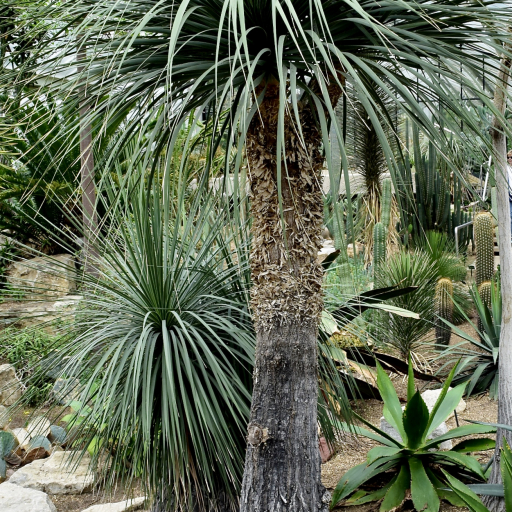
Often referred to as the "Stiff-leaved Ponytail Palm," Beaucarnea stricta is the rugged, architectural cousin of the more common houseplant varieties. Originating from the semi-arid regions of Mexico, it looks like a prehistoric survivor with its massive, corky base and crown of rigid, blue-green foliage. It is a slow-growing masterpiece, perfect for those who want a "living sculpture" that thrives on minimal attention.
🔍 How to Identify
- 🐘 The Caudex: It features a massive, swollen base that resembles a weathered boulder or an elephant’s foot. This woody structure acts as a primary water reservoir.
- 🗡️ Stiff Foliage: Unlike the drooping "hair" of its cousin (B. recurvata), the leaves of the stricta are straight, rigid, and project outward like a fountain of needles.
- 🎨 Glaucous Color: The leaves often have a beautiful dusty, blue-green or grayish tint, a natural adaptation to reflect harsh sunlight.
🏡 In Your Garden
- ☀️ High-Light Specialist: This plant is a sun-seeker. While it can survive in bright indoor spots, it truly flourishes—and keeps its iconic stiff leaf shape—when exposed to several hours of direct sunlight.
- 💧 The "Water Tank" Logic: Because the trunk stores months' worth of water, you should treat it more like a cactus than a palm. It is far better to forget to water it for a month than to water it twice in one week.
- 🪴 Potting Nuance: It prefers to be slightly root-bound in gritty, fast-draining soil. It has a relatively shallow root system for its size, so it does not require a deep pot, which helps prevent soil at the bottom from staying too wet.
⚠️ Safety & Toxicity
- ✅ Non-Toxic: Beaucarnea stricta is generally considered non-toxic to cats, dogs, and humans, making it a safe choice for pet-friendly households.
- 🌵 Mechanical Hazard: While not poisonous, the leaves are very firm and can have sharp edges. Placing it in a high-traffic hallway might result in a "paper cut" or a poke for anyone brushing past it too quickly.
✨ Fun Fact
Beaucarnea stricta is a true "slow-living" specialist. In its native Mexican habitat, some specimens are estimated to be over 300 years old. These ancient plants serve as vital micro-ecosystems, providing shelter for insects and birds within their cracked, corky bark.

Detailed Care Instructions
Beaucarnea stricta, commonly known as Ponytail Palm or Elephant's Foot, is a relatively low-maintenance plant that's admired for its distinctive swollen trunk and graceful, arching foliage. Here are some tips to help you grow a healthy Beaucarnea stricta:
Light
- Optimal Light: Beaucarnea stricta prefers bright, indirect light but can tolerate direct sunlight. A sunny windowsill can be ideal.
- Low Light: It can adapt to lower light conditions, but growth will be slower.
Watering
- Infrequent Watering: This plant is drought-tolerant and doesn't require frequent watering. Water deeply but infrequently, allowing the soil to dry out between waterings.
- Overwatering: Be cautious not to overwater, as this can lead to root rot. The swollen trunk stores water, so it's more forgiving of drought than excess moisture.
Soil
- Well-Draining Soil: Use a well-draining soil mix, such as cactus or succulent soil. You can also add sand or perlite to improve drainage.
Pot Selection
- Proper Pot: Choose a pot with drainage holes to prevent water from accumulating at the bottom, which helps avoid root rot.
Temperature
- Temperature Range: Beaucarnea stricta prefers temperatures between 60-85°F (16-29°C). It can tolerate higher temperatures but doesn't do well in prolonged cold conditions.
- Frost Sensitivity: Protect the plant from frost, as it is not frost-tolerant.
Humidity
- Humidity Needs: This plant is relatively adaptable and can thrive in a range of humidity levels, though it prefers moderate humidity.
Feeding
- Fertilizing: Feed sparingly. You can use a balanced, water-soluble fertilizer once a month during the growing season (spring and summer). Avoid over-fertilizing.
Pruning
- Minimal Pruning: Pruning is generally not necessary, but you can remove any dead or damaged leaves to keep the plant looking tidy.
Repotting
- Infrequent Repotting: Repotting is rarely needed, as Beaucarnea stricta grows slowly and prefers to be somewhat root-bound. Repot every 3-4 years, or when the plant has outgrown its pot.
Pests
- Pest Management: Beaucarnea stricta is generally resistant to pests, but it can occasionally be affected by spider mites or mealybugs. If you see pests, treat the plant with insecticidal soap or neem oil.
Propagation
- Seed Propagation: Propagation is typically done through seeds, although it can be a slow process.
- Offsets: Occasionally, mature plants may produce offsets, which can be carefully removed and potted separately.
By following these tips, you can help ensure that your Beaucarnea stricta thrives and remains healthy!
Beaucarnea Stricta needs to be watered regularly but cautiously, to ensure that the soil does not become overly saturated. It is important to only water the plant when the top inch of soil feels dry to the touch. When watering, pour water slowly and directly into the soil around the plant rather than on top of the leaves. This will help prevent any damage that may occur from standing water. Additionally, during the winter months when the plant is in dormancy, water should be reduced to once a month or whenever the soil becomes completely dry.
Here are the fertilizing instructions for Beaucarnea stricta:
- Frequency: Fertilize sparingly. Once every 2-3 months during the growing season, which typically extends from spring to early fall. During the dormant winter months, avoid fertilizing.
- Type of Fertilizer: Use a balanced, water-soluble fertilizer with an equal ratio of Nitrogen (N), Phosphorus (P), and Potassium (K), such as a 10-10-10 formula. Alternatively, a cactus or succulent-specific fertilizer can also be suitable.
- Dilution: When using a water-soluble fertilizer, dilute it to half the recommended strength to avoid over-fertilization. Over-fertilizing can harm the plant’s roots and overall health.
- Application: Apply the fertilizer directly to the soil around the base of the plant. Be sure the soil is moist before application to prevent fertilizer burn. Watering the plant lightly after fertilizing can help distribute the nutrients more evenly.
- Organic Alternatives: If you prefer organic options, you can use compost tea or a diluted fish emulsion. Apply these in the same way as the synthetic fertilizers, paying attention to the recommended dilution and frequency.
- Monitor Plant Health: Keep an eye on your plant for signs of nutrient deficiency (such as yellowing leaves) or over-fertilization (such as burnt leaf tips). Adjust the fertilization routine accordingly.
- Soil and Drainage: Ensure the plant is in well-draining soil. Good drainage is crucial as sitting water can lead to root rot, which can be exacerbated by fertilization.
By following these guidelines, you can help ensure that your Beaucarnea stricta remains healthy and thrives.
Beaucarnea stricta, a resilient and attractive plant, thrives best in well-draining soil. When selecting soil, consider the following characteristics and components:
- Soil Type: A sandy or loamy soil mixture is ideal. The soil should be loose to ensure good aeration and proper drainage.
- Cactus or Succulent Mix: Commercial cactus or succulent potting mixes are typically well-draining and can be an excellent choice for this plant.
- Homemade Mix:
- Combine regular potting soil with coarse sand or perlite to enhance drainage.
- A common homemade mix ratio is 2 parts potting soil, 1 part coarse sand, and 1 part perlite.
- You can also add small amounts of gravel or orchid bark for added texture and drainage.
- Combine regular potting soil with coarse sand or perlite to enhance drainage.
- Avoid Heavy Soils: Avoid using clay-rich or other heavy soils that retain moisture, as these can lead to root rot.
- pH Level: The soil should be slightly acidic to neutral, with a pH range of 6.0 to 7.5.
- Organic Matter: While excessive organic matter isn’t necessary, a small amount of compost can provide beneficial nutrients. However, ensure that it does not overwhelm the mix, maintaining the primary focus on drainage.
- Fertilization: During the growing season, you can periodically use a balanced, diluted fertilizer diluted to half strength.
By adhering to these guidelines, you can create an optimal soil environment that promotes the healthy growth and longevity of your Beaucarnea stricta plant.
Propagating Beaucarnea stricta, a type of plant belonging to the Asparagaceae family, can be accomplished through either seed or offset methods. Here are the detailed procedures for both propagation techniques:
Seed Propagation
- Obtain Seeds:
- Purchase seeds from a reputable supplier or collect them from a mature plant. Seeds should be fresh for the best germination rate.
- Purchase seeds from a reputable supplier or collect them from a mature plant. Seeds should be fresh for the best germination rate.
- Prepare the Soil:
- Use a well-draining soil mix, such as a cactus or succulent mix. You can also create your own by combining equal parts of potting soil, sand, and perlite.
- Use a well-draining soil mix, such as a cactus or succulent mix. You can also create your own by combining equal parts of potting soil, sand, and perlite.
- Sow the Seeds:
- Place the seeds on the surface of the soil and lightly cover them with a thin layer of soil or sand. The seeds should not be buried too deeply.
- Place the seeds on the surface of the soil and lightly cover them with a thin layer of soil or sand. The seeds should not be buried too deeply.
- Watering:
- Water the soil gently to keep it moist but not waterlogged. You can use a spray bottle to avoid displacing the seeds.
- Water the soil gently to keep it moist but not waterlogged. You can use a spray bottle to avoid displacing the seeds.
- Provide the Right Conditions:
- Keep the soil at a consistent temperature of around 20-25°C (68-77°F).
- Place the container in a bright location but avoid direct sunlight, which can dry out the soil.
- Keep the soil at a consistent temperature of around 20-25°C (68-77°F).
- Germination:
- Seeds typically take several weeks to a couple of months to germinate. Be patient and keep the soil moist during this period.
- Seeds typically take several weeks to a couple of months to germinate. Be patient and keep the soil moist during this period.
- Transplanting:
- Once the seedlings are large enough to handle, typically when they have developed a few sets of leaves, they can be transplanted into individual pots.
Offset or Pups Propagation
- Once the seedlings are large enough to handle, typically when they have developed a few sets of leaves, they can be transplanted into individual pots.
- Identify Offsets:
- Look for small offshoots (pups) growing at the base of the parent plant. These can be removed and used for propagation.
- Look for small offshoots (pups) growing at the base of the parent plant. These can be removed and used for propagation.
- Remove Offsets:
- Use a clean and sharp knife to carefully cut the offset away from the parent plant. Make sure to include some roots with the offset if possible.
- Use a clean and sharp knife to carefully cut the offset away from the parent plant. Make sure to include some roots with the offset if possible.
- Drying:
- Allow the offset to dry for a few days to a week. This helps to prevent rot when the offset is planted. The cut end should callous over during this period.
- Allow the offset to dry for a few days to a week. This helps to prevent rot when the offset is planted. The cut end should callous over during this period.
- Prepare the Soil:
- Use a well-draining soil mix. A cactus or succulent mix works well.
- Use a well-draining soil mix. A cactus or succulent mix works well.
- Plant the Offset:
- Place the calloused offset into the soil. Ensure that only the roots and the cut end are buried.
- Place the calloused offset into the soil. Ensure that only the roots and the cut end are buried.
- Watering:
- Water the soil lightly, and then allow it to dry out completely before watering again. Overwatering can lead to root rot.
- Water the soil lightly, and then allow it to dry out completely before watering again. Overwatering can lead to root rot.
- Provide Appropriate Conditions:
- Place the pot in a bright location with indirect sunlight. The temperature should be warm, ideally between 20-25°C (68-77°F).
- Place the pot in a bright location with indirect sunlight. The temperature should be warm, ideally between 20-25°C (68-77°F).
- Monitor Growth:
- New roots should begin to develop within a few weeks. During this time, continue to water sparingly and ensure the plant is not exposed to extreme temperatures.
Care Guide
- New roots should begin to develop within a few weeks. During this time, continue to water sparingly and ensure the plant is not exposed to extreme temperatures.
- Light: Prefers bright, indirect light but can tolerate some direct sunlight.
- Water: Water sparingly. Allow the top inch of soil to dry out between watering. Overwatering can cause root rot.
- Temperature: Ideal temperatures range from 15-30°C (59-86°F). Protect from freezing temperatures.
- Fertilizer: Feed with a balanced liquid fertilizer during the growing season (spring and summer), following the manufacturer's recommendations.
By following these detailed steps, you can successfully propagate Beaucarnea stricta from seeds or offsets, ensuring you have more of these striking plants in your collection.








