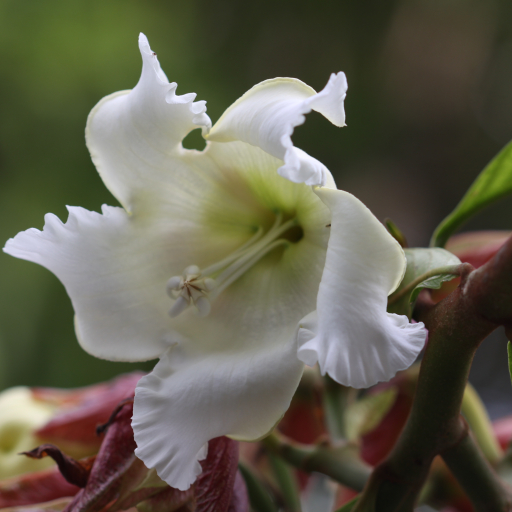
Plant Overview
Often called the Herald's Trumpet or Nepal Trumpet Vine, this spectacular evergreen climber is the definition of botanical grandeur. Native to the misty foothills of the Himalayas, it produces some of the largest and most fragrant flowers in the vine world. It is a showstopper that demands space and a sturdy structure to support its lush, jungle-like growth.
🔍 How to Identify
- 🎺 Giant Blooms: Massive, creamy-white trumpet-shaped flowers that resemble giant Easter Lilies, often reaching up to 5 inches (13 cm) across with a sweet, heavy fragrance.
- 🍃 Grand Foliage: Large, leathery, dark green leaves with deep, prominent veins. The underside is often slightly fuzzy, giving the foliage a rich texture.
- 💪 Woody Stems: This is a "liana" (woody vine). It develops thick, rope-like stems that can grow over 30 feet long, aggressively twining around any support it can find.
🏡 In Your Garden
- 🏗️ The Weight Factor: Because of its immense weight and vigorous growth, this isn't a vine for a flimsy plastic trellis. It requires a heavy-duty pergola, a stone wall, or a very sturdy fence to keep its massive "trumpets" from collapsing their support.
- ✂️ Pruning Nuance: To ensure a spectacular show, prune the vine immediately after it finishes flowering in late spring. It blooms on "old wood" (growth from the previous year), so if you prune it too late in the season, you might accidentally cut off next year's flower buds.
- ☀️ Climate Needs: While it loves the sun, it prefers its "feet" (roots) to stay cool and moist. In hotter regions, it thrives best when the base is shaded by smaller shrubs while the top reaches for the sunlight.
⚠️ Safety & Toxicity
- 🐾 Toxic if Ingested: Like many members of the Apocynaceae (Dogbane) family, this plant contains compounds that can be harmful if eaten. It is best kept away from curious pets and small children.
- 💧 Sap Sensitivity: The plant produces a milky white latex sap when cut. This sap can cause mild skin irritation or rashes for people with sensitive skin, so wearing gloves while pruning is highly recommended.
✨ Fun Fact
The genus was named in honor of Lady Diana Beaumont, a 19th-century English socialite and legendary gardener who was famous for her massive collection of exotic plants at her Bretton Hall estate.

Detailed Care Instructions
To grow Beaumontia Grandiflora, also known as Easter Lily Vine or Nepal Trumpet Flower, follow these steps:
- Climate: Plant Beaumontia Grandiflora in a warm climate with full sunlight. It prefers temperatures between 60-85°F (15-29°C).
- Soil: It grows well in well-draining, fertile soil. Ensure that the soil is slightly acidic to neutral, with a pH range of 6-7.
- Watering: Water the plant regularly, keeping the soil moist but not waterlogged. Avoid over-watering, as it can cause root rot.
- Planting: Select a suitable location where the vine can receive ample sunlight. Dig a hole twice the size of the root ball and plant the vine, ensuring the top of the root ball is slightly above ground level. Backfill the hole with soil and gently tamp it down.
- Support: This vine requires a trellis, fence, or other support structure to climb. Install a sturdy trellis or provide a support structure at the time of planting to allow the vine to climb and spread properly.
- Pruning: Prune Beaumontia Grandiflora in late winter or early spring to remove dead or damaged branches. Also, prune for desired shape and size. This vine can become quite large if left unpruned, so regular trimming will help maintain its shape.
- Fertilizer: Apply a balanced fertilizer, such as a 10-10-10 or 14-14-14 formula, during the growing season (spring and summer) to promote healthy growth. Follow the recommended application rates mentioned on the fertilizer packaging.
- Pests and diseases: Keep an eye out for common pests like aphids, mealybugs, and scale insects. Treat infestations promptly with appropriate insecticides. Also, monitor for diseases like root rot or leaf spots, and take necessary actions to control them.
- Propagation: You can propagate Beaumontia Grandiflora through stem cuttings or layering. Take cuttings from healthy vines and root them in well-draining potting soil or directly in the ground. Layering involves bending a low branch to the ground, burying a section and allowing it to root before cutting it from the main plant.
With proper care and maintenance, Beaumontia Grandiflora will develop and produce beautiful, fragrant flowers.

Place in a bright room that is sun drenched almost all day. Or directly in a south-facing window.

To water this plant, wait until the top layer of soil feels dry to the touch before watering. Water thoroughly until the excess water drains out of the bottom of the pot. Do not let the plant sit in standing water. During the growing season, water more frequently, but be cautious of over-watering as this plant prefers well-draining soil and may rot if the soil is too wet. In the winter months, reduce watering and allow the soil to dry out more in between watering sessions.
- Choose a high-quality fertilizer with balanced N-P-K (nitrogen-phosphorus-potassium) ratios, ideally formulated for flowering plants.
- Begin fertilizing in early spring, before new growth emerges.
- Dilute the fertilizer according to package instructions, typically 1 tablespoon per gallon of water.
- Water the soil thoroughly before applying fertilizer to avoid burning the roots.
- Apply fertilizer every 2-3 weeks during the growing season (spring and summer).
- Reduce fertilizer application frequency in fall and winter.
- Monitor the plant's growth and adjust your fertilizing schedule as needed. Over-fertilization can lead to excessive growth and reduced flowering.
- Always follow the manufacturer's instructions and best practices for fertilizing plants.
The ideal soil for Beaumontia Grandiflora plant is a well-draining, fertile soil that is rich in organic matter. The soil should have a pH level between 6.0 and 7.0. It should be moist, but not waterlogged, as this can cause root rot. A mixture of peat, sand, and loam is recommended for potting, while garden soil can be amended with compost or well-rotted manure. It is important to ensure that the soil has good aeration and is not compacted, as this can restrict root growth. The plant prefers slightly acidic soil that is neutral to alkaline in nature. Therefore, to maintain healthy growth of the Beaumontia Grandiflora plant, you need to keep the soil moist but not wet and make sure it has proper drainage.
There are several ways to propagate this plant:
- Stem Cuttings - Take a stem cutting from the parent plant that is approximately 6 inches long with several nodes. Remove the bottom leaves and dip the cut end in rooting hormone. Plant the cutting in a pot with well-draining soil and keep it moist. Place the pot in a bright, indirect light and wait for roots to form.
- Air Layering - Select a healthy, vigorous branch and remove a small section of bark from the middle of the stem. Dust the exposed area with rooting hormone, then wrap the area with damp sphagnum moss and plastic wrap. Secure in place with string or tape. Keep the moss consistently moist and wait for roots to form before cutting the new plant away from the parent.
- Division - When the plant becomes too large for its container or when you want to create more plants, gently remove it from the pot and carefully separate the roots. Each section should have several healthy stems and roots. Plant each division in a pot with fresh soil, making sure to water thoroughly.
Regardless of propagation method, it's important to keep the new plants warm and humid while they develop roots. Once the plants are established, move them to bright, indirect light and gradually increase watering as needed. As the plants grow, provide structural support to prevent breakage from the weight of their flowers.








