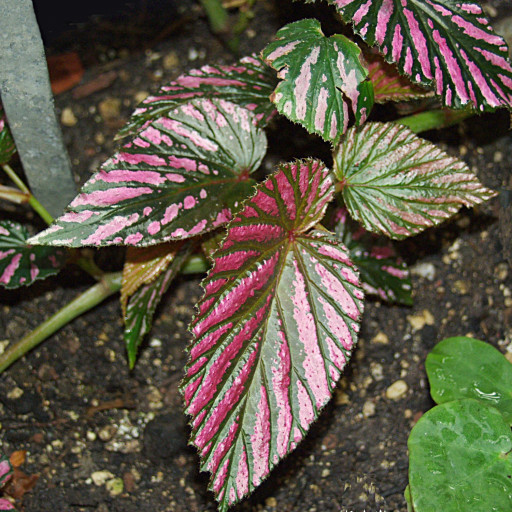
Plant Overview
Often called the "Exotic Begonia," this New Guinea native looks like something plucked from a neon-lit sci-fi film. With its metallic pink stripes and deep, moody foliage, it is a crown jewel for collectors who enjoy a bit of botanical drama. While it has a reputation for being a "diva" regarding its environment, its visual payoff is unmatched in the shade-loving plant world.
🔍 How to Identify
- 💖 Metallic Variegation: The most striking feature is the high-contrast, glowing magenta or hot-pink veins that cut through the dark leaf surface.
- 🍃 Elongated Leaves: Unlike the rounder Rex begonias, these leaves are long, pointed, and asymmetrical, often reaching 8–12 inches in length.
- 🎋 Cane-Like Growth: It grows more like a shrub than a ground-cover, developing upright, bamboo-like stems that can reach up to 3 feet tall in ideal conditions.
🏡 In Your Garden & Home
- ☁️ The Humidity Requirement: This plant is a "humidity hound." Because it originates from the misty rainforests of New Guinea, it often requires a terrarium or a dedicated humidifier to prevent its thin, delicate leaves from crisping at the edges.
- 💧 Brittle Nature: Be careful when moving it! The stems and leaves are remarkably brittle. It resents being frequently repositioned or placed in high-traffic areas where it might be bumped.
- 💡 Light Sensitivity: While it loves bright light to keep its pink colors vivid, direct afternoon sun will scorch the metallic pigments instantly. Think "bright but dappled" forest floor light.
⚠️ Safety & Toxicity
- 🚫 Status: Toxic to pets and humans.
- 🐱 Details: Like most members of the Begonia family, it contains calcium oxalate crystals. If chewed by curious cats or dogs, it causes intense mouth irritation, drooling, and difficulty swallowing. Keep this "Goth Princess" on a high shelf away from nibblers.
✨ Fun Fact
The "glowing" pink color of the Begonia brevirimosa isn't just for show; it is an evolutionary adaptation. In the deep shade of the jungle floor, these colors help the plant capture and utilize the limited light spectrum more efficiently for photosynthesis!

Detailed Care Instructions
| Soil Ph | 6.1-7.5 |
| Humidity | Normal |
| Lighting | Part Sun |
| Soil Type | Moist But Well-Drained |
| Difficulty | Medium |
| Plant Type | Herbaceous Perennial |
| Native Area | Papua New Guinea |
| Temperature | 21°C - 29°C |
| Sun Exposure | Full Sun, Partial Shade |
| Hardiness Zones | 11 - 11 |
To grow Begonia Brevirimosa plant, you can follow these steps:
- Choose a suitable location: Begonia Brevirimosa prefers bright, indirect light. Ensure the spot receives at least a few hours of indirect sunlight each day but avoid direct exposure to intense sunlight.
- Prepare the soil: Use well-draining potting soil with organic matter to provide good drainage and nutrition to the plant. Begonias prefer slightly acidic soil with a pH of 5.5 to 6.5.
- Watering: Keep the soil evenly moist but not waterlogged. Water the plant when the top inch of soil feels dry to the touch. Begonias are susceptible to root rot, so avoid overwatering.
- Humidity: Begonia Brevirimosa thrives in high humidity environments. You can increase humidity by placing a pebble tray filled with water near the plant or using a humidifier.
- Temperature: This plant prefers average room temperatures between 65-75°F (18-24°C). Protect it from extreme temperatures and drafts.
- Fertilizing: Feed the begonia with a balanced water-soluble fertilizer every four to six weeks during the growing season (spring to fall).
- Potting: Begonia Brevirimosa does well in pots. Choose a pot with drainage holes and repot the plant if it becomes root-bound. Use fresh potting soil during repotting.
- Pruning: Regularly pinch or trim the plant to encourage bushier growth. Remove any dead or yellowing leaves and flowers to maintain plant health.
- Propagation: Begonias can be propagated from stem cuttings. Take healthy stem cuttings with at least two leaf nodes and root them in a well-draining soil mix.
- Pests and diseases: Watch out for pests like aphids and mealybugs. Treat them with insecticidal soap or neem oil. Also, ensure good air circulation to prevent fungal diseases.
Remember, Begonia Brevirimosa is a tropical plant, so it requires a bit more care compared to some other houseplants. However, with proper attention to its light, water, and humidity needs, it can thrive and provide beautiful foliage and flowers.

Place in a window with dappled sun or a spot in the middle of a room. Or directly in a window facing west or east.

To water this particular plant, it is important to create a watering schedule that will not overwater or underwater the plant. This can be achieved by ensuring that the plant's soil is completely dry before watering. This species of plant should ideally be watered once a week during its growing season during summers and mildly in winters. Overwatering can lead to root rot, and underwatering can lead to a stressed and wilted plant. Therefore, it is important to monitor the plant closely and adjust the watering schedule accordingly. It's important to avoid watering the leaves and try for watering on the soil itself to prevent Fungal Infections. In summary, be mindful of the watering schedule and ensure that the plant's soil remains dry before watering to maintain the health and growth of the plant.
To fertilize this plant, use a balanced, water-soluble fertilizer once a month during the growing season. Dilute the fertilizer to half its recommended strength before applying it to the soil around the plant. Be sure to moisten the soil before adding the fertilizer to prevent root burn. Avoid fertilizing during the plant's dormant period, as it will not be actively growing and will not require additional nutrients.
Begonia Brevirimosa prefers well-draining soil that is rich in organic matter. The soil should have a slightly acidic pH level, around 5.6 to 6.5. It is important to choose a soil that can hold moisture well, but is not waterlogged, as this can lead to root rot. A mix of peat moss, perlite, and vermiculite is often used as a suitable soil for this plant. Additionally, adding some sand or grit to the soil mix can help improve drainage. Fertilizing the plant with a balanced, water-soluble fertilizer once a month during the growing season can also help ensure healthy growth.
To propagate this particular species of Begonia plant, you will need to follow a few simple steps.
First, gather a healthy leaf from the parent plant. This leaf should be fully grown and mature, with no signs of damage or disease.
Next, prepare a container with moist soil. Make sure the soil is loosely packed and well-draining. You can also add some peat moss or perlite to improve drainage.
Carefully cut the stem of the leaf, leaving a small portion of the stem attached. This will be the point where the new plant will grow.
Insert the stem into the soil, making sure it is upright and secure. Water lightly and cover the container with a plastic bag to create a mini-greenhouse effect.
Place the container in a bright but indirect light, with temperatures around 70-75 degrees Fahrenheit.
After a few weeks, new growth should appear at the stem cut. Once the new plant has grown several leaves, you can transplant it into a larger container or directly into the garden.
Keep the new plant well-watered and continue to provide bright, indirect light. With proper care, your new Begonia Brevirimosa plant should thrive and grow into a beautiful addition to your collection.
Common pests of the exotica begonia include Mealybugs, spider mites, aphids, whiteflies. Make a habit of checking your exotica begonia frequently for pests so that any infestations can be caught and managed early.








