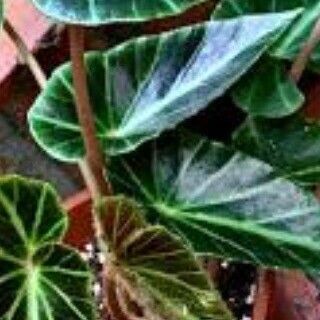
Plant Overview
Known as a crown jewel among Philippine flora, Begonia chingipengii is a breathtaking species that looks as though it was splattered with shimmering silver paint. Discovered in the lush, shaded regions of Luzon, this rare beauty has quickly become a "must-have" for collectors who appreciate the dramatic flair of tropical forest floors. It is a rhizomatous begonia, meaning it grows horizontally across the soil, creating a lush, low-profile canopy of "galaxy-printed" leaves.
🔍 How to Identify
- 🍃 The Leaf Pattern: The most striking feature is the dark olive-green foliage, which is heavily adorned with irregular, metallic silver-white spots that vary in size.
- 📐 Asymmetrical Shape: Like many begonias, the leaves are distinctly "lopsided" or heart-shaped, often featuring a slightly puckered (bullate) texture that catches the light.
- 🔴 Reddish Accents: The stems (petioles) are often tinted with a deep burgundy or reddish hue and are covered in fine, soft hairs that help the plant manage moisture.
🏡 In Your Garden
- ☁️ Humidity is Essential: This species hails from damp limestone forests, meaning it craves high humidity (60% or higher). It is a perfect candidate for a large terrarium or a glass cabinet where moisture can be trapped.
- 💧 Sensitive Roots: Because it grows from a thick rhizome, it is very prone to rot if the soil stays soggy. It requires a chunky, airy potting mix—think orchid bark, perlite, and peat—to ensure the roots can breathe.
- 💡 Soft Forest Light: It has adapted to the deep shade of the jungle floor. Direct afternoon sun will quickly scorch the delicate silver markings, so keep it in bright, filtered light only.
⚠️ Safety & Toxicity
- 🐾 Toxic to Pets: Most begonias contain calcium oxalate crystals. If a curious cat or dog nibbles on the leaves or rhizome, it can cause intense mouth irritation, drooling, and digestive upset.
- 👶 Human Caution: While the plant isn't considered "deadly," the sap can cause mild skin irritation for those with sensitive skin. It should always be kept out of reach of small children.
✨ Fun Fact
🎓 This plant was named in honor of the late Dr. Ching-I Peng, a legendary Taiwanese botanist who was often called the "Begonia King." Over his prolific career, he discovered and described more than 100 new species of Begonias!

Detailed Care Instructions

Place in a window with dappled sun or a spot in the middle of a room. Or directly in a window facing west or east.

The presence of a dry surface layer of soil does not indicate that the plant requires water. Instead, stick your finger 1-2" (3-5 cm) deep in the soil to feel dampness or moisture content. If the soil seems dry, it's time to water your greens. If the soil is still moist, however, it is better not to water your plant and instead wait a day or two. Overwatering or waterlogging raises the risk of root rot. So if the soil takes longer than a week to dry, check the light conditions because it's likely that the plant isn't getting enough light. It's fine if the upper layer of soil is dry between waterings, but the deeper soil layer should always have some moisture.
These plant needs regular fertilizing during growing seasons. Fertilizing your plants in dormant state during the winter, might result in scorching or browning of the leaf tips. If mature plants display signs of nutrient insufficiency, fertilizer administration is necessary to restore the plant to its previous state.
You may use All Purpose Plant Food or Flower Fertilizer or Green Plant Food for your Begonia Chingipengii
Common pests of the begonia chingipengii include Mealybugs, spider mites, aphids, whiteflies. Make a habit of checking your begonia chingipengii frequently for pests so that any infestations can be caught and managed early.







