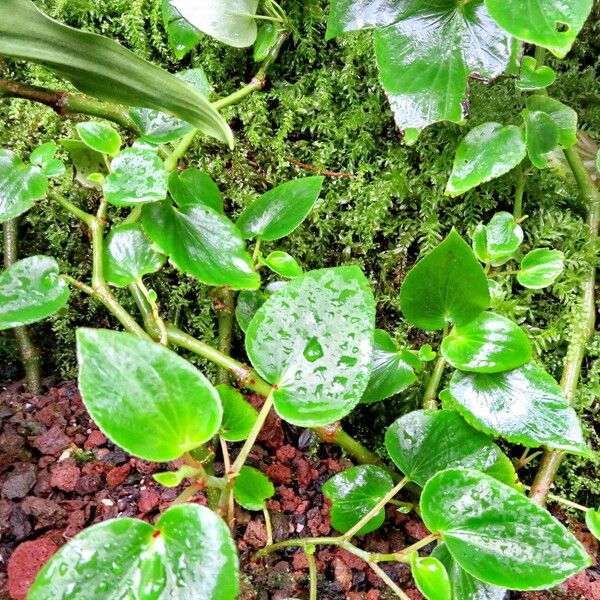
Plant Overview
Often called the "Puckered Begonia," Begonia descoleana is a hidden gem hailing from the lush Atlantic forests of Brazil. This rhizomatous beauty is prized by collectors for its prehistoric, highly textured foliage that looks more like embossed leather than a living leaf. It is an understory specialist, evolved to thrive in the dappled shadows where its unique "bumpy" surface helps it catch every stray beam of sunlight.
🔍 How to Identify
- 🍃 Bullate Texture: The most striking feature is its "bullate" leaves, which are covered in deep puckers and raised bumps, giving it a three-dimensional, quilted appearance.
- 🎨 Deep Colors: The leaves are typically a rich, dark forest green on top, often contrasted by a vibrant reddish-maroon or pale green underside.
- 🌱 Creeping Rhizomes: Instead of growing tall on a central stalk, it spreads via thick, fleshy horizontal stems (rhizomes) that stay close to the soil surface.
🏡 In Your Garden
- ☁️ Humidity is Key: As a rainforest native, this plant demands high humidity (ideally above 60%). If the air is too dry, the magnificent puckered edges will quickly turn brown and crispy.
- 💧 The "Melt" Risk: Because its stems are succulent and store water, it is highly sensitive to overwatering. It prefers a "soak and dry" approach—let the top inch of soil dry out completely to prevent the plant from "melting" due to rot.
⚠️ Safety & Toxicity
- 🚫 Toxic to Pets: Like most members of the Begonia family, this plant contains calcium oxalate crystals.
- 🐱 Irritant: If chewed by cats or dogs, it can cause intense oral irritation, drooling, and swelling of the throat. It is best kept on high shelves or in a terrarium away from curious nibblers.
✨ Fun Fact
The bumpy "bullate" texture of the leaves isn't just for show; it increases the surface area of the leaf, allowing the plant to maximize photosynthesis in the dim light of the Brazilian jungle floor!

Detailed Care Instructions

Place in a window with dappled sun or a spot in the middle of a room. Or directly in a window facing west or east.

The presence of a dry surface layer of soil does not indicate that the plant requires water. Instead, stick your finger 1-2" (3-5 cm) deep in the soil to feel dampness or moisture content. If the soil seems dry, it's time to water your greens. If the soil is still moist, however, it is better not to water your plant and instead wait a day or two. Overwatering or waterlogging raises the risk of root rot. So if the soil takes longer than a week to dry, check the light conditions because it's likely that the plant isn't getting enough light. It's fine if the upper layer of soil is dry between waterings, but the deeper soil layer should always have some moisture.
These plant needs regular fertilizing during growing seasons. Fertilizing your plants in dormant state during the winter, might result in scorching or browning of the leaf tips. If mature plants display signs of nutrient insufficiency, fertilizer administration is necessary to restore the plant to its previous state.
You may use All Purpose Plant Food or Flower Fertilizer or Green Plant Food for your Begonia Descoleana
Common pests of the begonia descoleana include Mealybugs, spider mites, aphids, whiteflies. Make a habit of checking your begonia descoleana frequently for pests so that any infestations can be caught and managed early.







