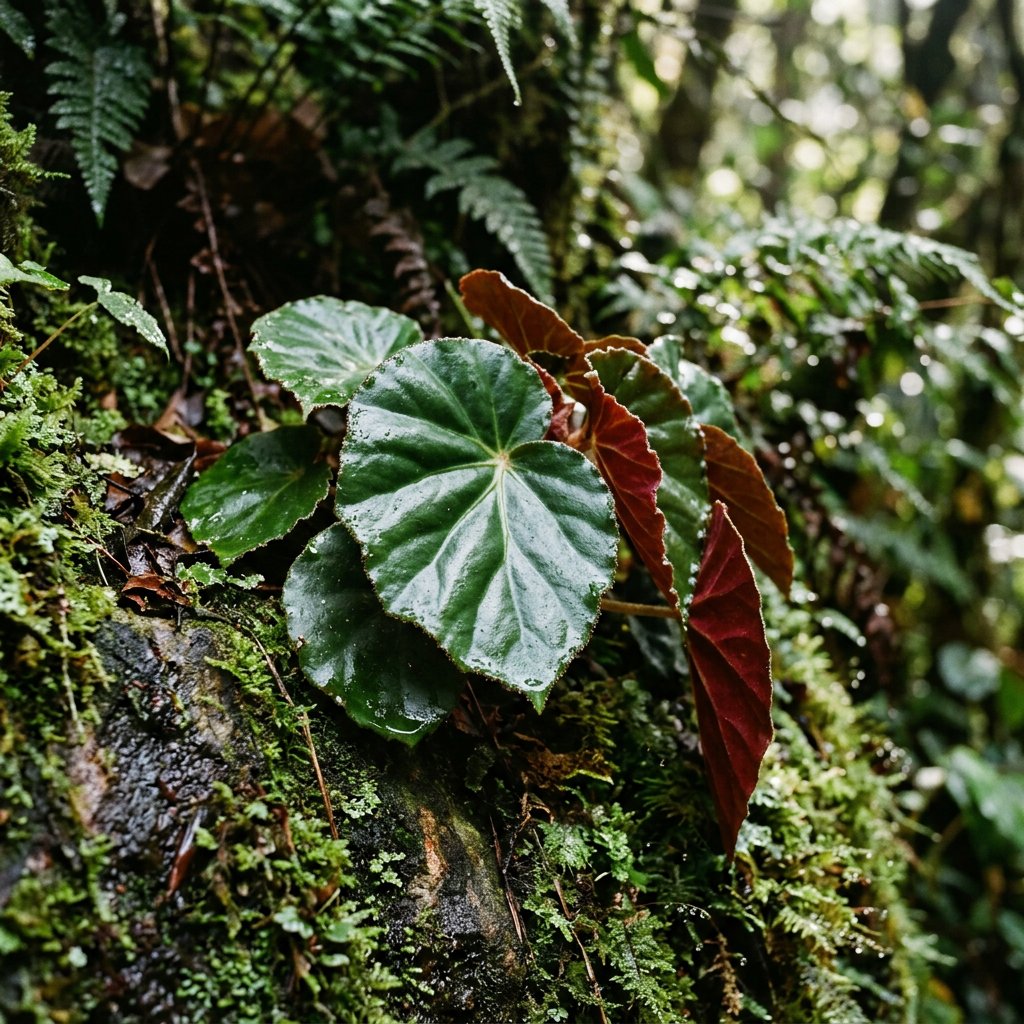
Plant Overview
Known affectionately as the Beefsteak Begonia, this vintage superstar is one of the oldest cultivated hybrids in the plant world, dating back to Germany in 1845. Its common name comes from the striking, fleshy appearance of its leaves, which look almost like polished stones or, as the name suggests, a rich cut of meat. It is a "rhizomatous" begonia, meaning it grows from thick, creeping stems that hug the soil, making it a resilient and charming heirloom that has been passed down through generations of gardeners.
🔍 How to Identify
- 🍃 The Leaves: Perfectly round, waxy, and thick. The top side is a deep, glossy forest green, while the underside is a dramatic, matte blood-red.
- 🌸 The Blooms: In late winter or early spring, it sends up tall, delicate stalks that hover over the foliage, displaying clusters of tiny, airy pink flowers.
- 🌱 Growth Habit: Unlike upright plants, this begonia has a "creeping" habit. You will see thick, fuzzy brown stems (rhizomes) that crawl across the surface of the soil rather than growing straight up.
🏡 In Your Garden
- 🪴 The Rhizome Rule: Because this plant grows horizontally, it prefers shallow, wide pots rather than deep ones. If you bury the thick, fuzzy stems too deep in the soil, they are prone to rot; they love to "sit" right on top of the medium.
- 💡 Light Sensitivity: To keep that signature deep red color on the underside of the leaves, it needs bright, filtered light. In too much shade, the red fades to a dull green; in too much direct sun, the thick leaves can actually scorch and blister.
⚠️ Safety & Toxicity
- 🐾 Status: Toxic to pets and mildly irritating to humans.
- 🧪 Details: Like most begonias, the Erythrophylla contains calcium oxalate crystals. If chewed by cats or dogs, it can cause oral irritation, drooling, and vomiting. The most toxic part of the plant is the underground rhizome, so keep it out of reach of "diggers."
✨ Fun Fact
The Beefsteak Begonia is often called a "Pass-along Plant." Because it is so incredibly easy to grow from a single leaf tucked into moist soil, it became a staple of Victorian-era windowsills, where friends would snap off a leaf to give to a neighbor, spreading the hybrid across the world long before commercial nurseries existed!

Detailed Care Instructions
To grow Begonia Erythrophylla plant, follow these steps:
- Choose a suitable location: Begonia Erythrophylla prefers bright and indirect sunlight. Avoid direct exposure to harsh sunlight as it can burn the leaves. Place the plant in a location where it receives filtered light or morning sunlight.
- Provide the right temperature and humidity: Begonia Erythrophylla thrives in temperatures between 60-75°F (15-24°C). It prefers high humidity levels, so if your indoor environment is dry, consider using a humidifier or placing the plant on a tray filled with pebbles and water.
- Select the right soil: Begonia Erythrophylla requires well-draining soil. Choose a potting mix that is rich in organic matter and provides good drainage. You can also add perlite or sand to improve drainage.
- Planting and potting: Select a pot with drainage holes to prevent waterlogging. Fill it halfway with the potting mix. Gently place the Begonia Erythrophylla plant in the pot, ensuring that the crown is slightly above the soil level. Fill the remaining space with the potting mix, and press it lightly to secure the plant.
- Watering: Keep the soil evenly moist but not waterlogged. Begonia Erythrophylla prefers moderate watering. Water the plant when the top inch of soil feels dry to the touch. Avoid overwatering as it can lead to root rot.
- Fertilizing: During the growing season (spring and summer), feed Begonia Erythrophylla with a balanced houseplant fertilizer every 2-4 weeks. Follow the manufacturer's instructions for dosage. Reduce fertilizer application during the rest period (fall and winter).
- Pruning: Regularly trim the dead or yellow leaves to maintain the plant's appearance. Pinch back the tips of the plant to encourage bushy growth.
- Propagation: Begonia Erythrophylla can be propagated through stem cuttings. Take a 3-4 inch long cutting from a healthy stem just below a leaf node. Remove the lower leaves and dip the cut end in rooting hormone. Plant the cutting in a small pot with moist, well-draining soil. Keep the soil consistently moist and place the pot in a warm, humid area. After a few weeks, roots should start to develop.
By following these steps, you can successfully grow Begonia Erythrophylla plant and enjoy its beautiful foliage.
To water this plant, you should first ensure that the soil is dry to the touch before proceeding. Once the soil is dry, water the plant deeply, ensuring that the water reaches the roots. However, be sure not to overwater the plant as this can lead to root rot. It is also important to allow the soil to dry out partially before watering again. Additionally, avoid watering the leaves of the plant as this can lead to fungal disease. Finally, consider using a well-draining soil mix and a container with drainage holes to ensure proper water management.
To fertilize this plant, use a balanced water-soluble fertilizer every two weeks during the growing season (spring and summer) and reduce the frequency during the dormant season (fall and winter). Dilute the fertilizer to half strength and apply it to the soil according to the package instructions. Avoid fertilizing when the soil is dry or the plant is stressed.
The best type of soil for the Begonia Erythrophylla plant is well-draining soil that is rich in organic matter and has a slightly acidic pH level. It should be able to hold moisture but not become waterlogged, as the plant is susceptible to root rot. A combination of peat moss, perlite or vermiculite, and coarse sand or grit can be used to create a suitable soil mix. Additionally, adding a slow-release fertilizer or organic compost can provide the necessary nutrients for optimal growth.
To propagate this plant, take stem cuttings that are at least 4 inches long. Remove any leaves from the bottom half of the cutting. Dip the end of the cutting in rooting hormone and then plant it in a well-draining potting mix. Water the cutting and place a plastic bag over the top of the pot to create a humid environment. Keep the cutting in a warm and bright location, but out of direct sunlight. Mist the cutting regularly and remove any wilted or yellowing leaves. After about 4-6 weeks, the cutting should have rooted and can be transplanted into a larger pot.








