Plant Overview
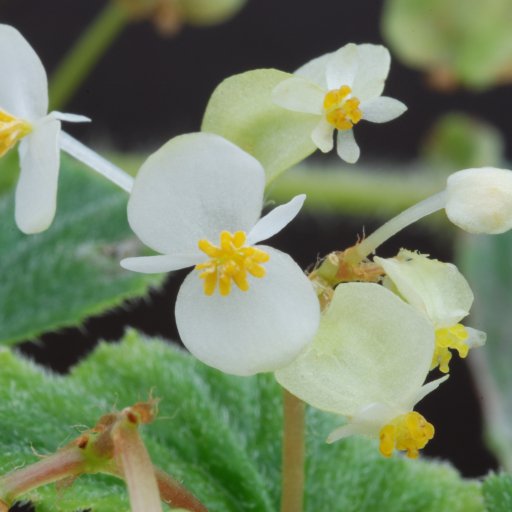
Known affectionately as the Brazilian Begonia or the "Bearded Begonia," this charming species is a world traveler. While it originated in the lush rainforests of South America and the Caribbean, it has gained a reputation as a "friendly hitchhiker" because it frequently pops up uninvited—but usually welcomed—in the pots of other tropical plants. It is a delicate, understated beauty that prioritizes soft textures over flashy colors.
🔍 How to Identify
- 🌿 The "Hairy" Foliage: True to its name (hirtella means "somewhat hairy"), the stems and light-green, heart-shaped leaves are covered in fine, translucent white hairs that catch the light.
- 🌸 Dainty Blooms: It produces small, pearl-white flowers that dangle from thin, reddish stalks. These flowers are much smaller than those of typical ornamental begonias.
- 🍃 Asymmetrical Leaves: Look for the classic "begonia lean"—the leaves are lopsided at the base, with one side of the heart shape being larger than the other.
🏡 In Your Garden
- 💧 The Humidity Lover: This plant thrives in "Goldilocks" conditions—it wants moist soil and high humidity but will rot quickly if left in standing water. It’s a perfect candidate for a closed terrarium or a steamy bathroom windowsill.
- 🌱 The Master Seeder: Unlike many fussy begonias, Begonia hirtella is a prolific self-seeder. Once it reaches maturity, it will drop tiny seeds that sprout readily in nearby soil, making it very easy to propagate and share with friends.
⚠️ Safety & Toxicity
- 🐾 Toxic to Pets: Like almost all members of the Begonia family, this plant contains calcium oxalate crystals.
- 🚫 Keep Away from Nibblers: If ingested by cats or dogs, it can cause intense oral irritation, drooling, and vomiting. While the most toxic parts are underground (the roots), the leaves should still be kept out of reach of curious pets and toddlers.
✨ Fun Fact
In the world of professional botany, Begonia hirtella is often called a "nursery weed." Because its seeds are as fine as dust, they can travel through greenhouse ventilation systems and "colonize" the pots of expensive orchids or palms!

Detailed Care Instructions
| Humidity | Normal |
| Lighting | Part Sun |
| Toxicity | Poisonous |
| Difficulty | Easy |
| Temperature | 13°C - 30°C |
| Hardiness Zones | 8 - 11 |
To grow a Begonia Hirtella plant, you can follow these steps:
- Choose the right location: Begonia Hirtella thrives in bright, indirect light. Place it near a window where it can receive filtered sunlight or provide it with artificial grow lights if required.
- Planting: Select a well-draining potting mix that is rich in organic matter. Fill a pot with this mix, leaving some space for the plant's roots. Gently remove the plant from its nursery container and place it in the new pot.
- Watering: Begonia Hirtella prefers slightly moist soil. Water the plant when the top inch of soil feels dry. Avoid overwatering, as it can lead to root rot. Always allow excess water to drain out of the pot.
- Humidity: Begonia Hirtella prefers high humidity levels. You can increase humidity by placing a tray with water near the plant or using a humidifier.
- Temperature and Ventilation: Begonia Hirtella enjoys moderate temperatures ranging from 65-75°F (18-24°C). Avoid exposing it to extreme temperatures or drafts. Adequate ventilation is crucial to prevent fungal diseases, so ensure some airflow around the plant.
- Fertilization: Feed the plant with a balanced, water-soluble fertilizer every 4-6 weeks during the growing season (spring and summer). Follow the package instructions for the correct dosage.
- Pruning: Regularly trim any dead or yellowing leaves to promote healthier growth. Also, pinch back the tips of the plant to encourage bushiness.
- Propagation: You can propagate Begonia Hirtella through stem cuttings. Take a cutting from a healthy plant and insert it into a moist potting mix. Keep the soil moist until the cutting establishes roots.
- Pests and Diseases: Watch out for common pests like aphids, mealybugs, and spider mites. Treat any infestations immediately to prevent damage. Begonia Hirtella is generally resistant to diseases but ensure good air circulation to avoid issues like powdery mildew.
- Winter Care: As Begonia Hirtella is sensitive to cold temperatures, protect it from drafts and provide extra insulation during winter months. Reduce watering and fertilization during this dormant period, but ensure the soil doesn't completely dry out.
By following these steps and providing proper care, your Begonia Hirtella plant should thrive and grow successfully.

Place in a window with dappled sun or a spot in the middle of a room. Or directly in a window facing west or east.

Begonia Hirtella is a plant that requires moderate watering. It is important to not over-water the plant as this can lead to root rot. The best way to water the plant is to wait until the top layer of soil is dry to the touch, and then water it thoroughly until water comes out of the drainage holes in the bottom of the pot. It is important to ensure that the pot has good drainage as sitting in water can also cause root rot. In the winter, water the plant less frequently than in the summer, as the plant will require less water during its dormant period. Additionally, it is important to avoid getting water on the leaves of the plant as this can cause fungal diseases.
For optimal growth and health, it is recommended to fertilize this plant during the active growing season.
- Choose a balanced, water-soluble fertilizer with equal parts nitrogen, phosphorus, and potassium.
- Dilute the fertilizer to half the recommended strength.
- Water the plant thoroughly before applying the fertilizer to prevent root burn.
- Apply the diluted fertilizer once every two weeks during the growing season.
- Avoid fertilizing during dormant periods or when the plant is stressed.
- Monitor the plant for signs of over-fertilization, such as discolored or burnt leaves, and adjust the frequency or strength of fertilization as needed.
Begonia Hirtella plant requires well-draining and fertile soil that is rich in organic matter. It should have a pH level between 5.5 and 6.5. A mixture of peat moss, perlite, and vermiculite or a good quality potting mix that is specifically designed for growing Begonias can be used as the soil mix. The soil should hold moisture, but at the same time, it should not retain water for extended periods as this can lead to root rot. Additionally, the soil should be porous, allowing air to circulate freely around the roots. It is important to keep the soil evenly moist, but not waterlogged. Adding compost or other organic material to the soil can help to improve its structure and fertility.
Propagation of this plant can be done through stem cuttings or division of the mature plant.
To propagate through stem cuttings, first find a healthy mature stem. Use sterilized scissors to cut a section of the stem around 4-5 inches long. Remove the leaves on the bottom 2 inches of the stem. Dip the cut end in rooting hormone and plant it in a pot filled with well-draining soil. Water the cutting and cover it with a plastic bag to create a humid environment. Place the pot in a warm, bright spot but away from direct sunlight. Rooting should occur within 4-6 weeks.
To propagate through division, carefully remove the entire plant from its pot or ground. Gently separate the stems and roots into clumps, making sure each clump has some stems and roots. Re-pot the clumps into their own pots with fresh soil and water well. Place the new plants in a bright spot but away from direct sunlight until they establish themselves.
Common pests of the brazilian begonia include Mealybugs, spider mites, aphids, whiteflies. Make a habit of checking your brazilian begonia frequently for pests so that any infestations can be caught and managed early.








