Plant Overview
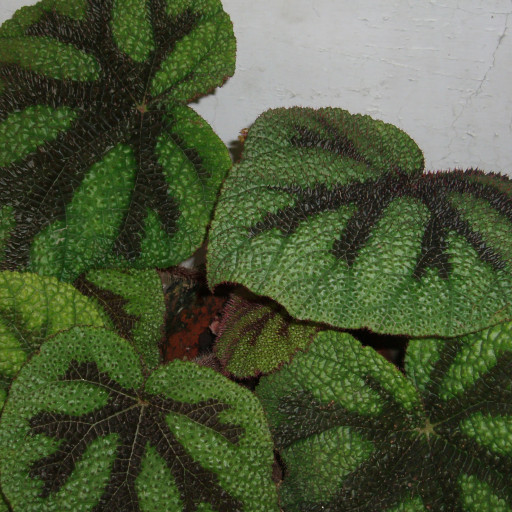
Often called the Iron Cross Begonia, this striking foliage plant is a superstar in the world of indoor greenery. Originally discovered in the humid limestone forests of Southeast Asia and China, it is famous for the bold, dark patterns on its leaves that resemble a medieval heraldic emblem. It is a plant that demands attention not through bright flowers, but through its incredible, almost prehistoric-looking texture.
🔍 How to Identify
- 🍃 Leaf Pattern: The most iconic feature is the dark chocolate-colored, four-lobed "cross" that sits boldly in the center of each bright neon-green leaf.
- ⛰️ Puckered Texture: The leaf surface is heavily "bullate," meaning it is covered in tiny bumps and ridges that give it a unique 3D, pebbled appearance.
- 🧶 Hairy Stems: The stems (petioles) are typically reddish or pinkish and are covered in soft, fine white hairs that catch the light.
🏡 In Your Garden
- ☁️ Humidity is Vital: Because it evolved on the damp floors of tropical forests, this begonia craves high humidity. If your home air is too dry, the edges of those spectacular leaves will quickly turn brown and crispy.
- 🚿 Watering Nuance: It is highly susceptible to "rhizome rot." While it loves moisture, its roots must never sit in stagnant water. It prefers to have the top inch of soil dry out before receiving a drink.
- ☀️ Light Sensitivity: Think of the forest floor—it prefers bright, filtered light. Direct midday sun is its enemy and will scorch the textured leaves, leaving permanent bleached spots.
⚠️ Safety & Toxicity
- 🐾 Toxic to Pets: Like most members of the Begonia family, the Masoniana contains soluble calcium oxalate crystals. It is toxic to both cats and dogs if chewed or swallowed.
- 👶 Human Safety: While not usually life-threatening, ingestion can cause significant oral irritation, swelling of the tongue, and vomiting in children. It is best kept on a high shelf or plant stand.
✨ Fun Fact
🎩 A Recent Discovery: Despite its "antique" medieval look, the Iron Cross Begonia was only introduced to the Western gardening world in 1952. It was named after Maurice Mason, a prolific British plant hunter who brought it back to Europe from Singapore.

Detailed Care Instructions
| Humidity | Normal |
| Lighting | Part Sun |
| Toxicity | Poisonous |
| Soil Type | Light And Rich |
| Bloom Time | Summer |
| Difficulty | Medium |
| Plant Type | Annuals That Can Be Grown As A Houseplant |
| Hibernation | Cold Period |
| Mature Size | Leaves Grow 4–9 Inches Long |
| Native Area | South And Central America, Africa, Southern Asia |
| Temperature | 18°C - 25°C |
| Sun Exposure | Medium To High Light |
| Hardiness Zones | 10-11 |
To help grow a Begonia Masoniana plant, also known as Mason's Begonia or Iron Cross Begonia, follow these steps:
- Choose the right location: Place the Begonia Masoniana in a spot that receives bright, indirect light. Direct sunlight can scorch the leaves, so avoid placing it in full sun. A north- or east-facing window is usually ideal.
- Provide proper temperature and humidity: Begonia Masoniana prefers warm temperatures between 65-85°F (18-29°C). It also thrives in high humidity environments, so consider misting the leaves occasionally or placing a tray filled with water near the plant to increase humidity.
- Use well-draining soil: Make sure to plant your Begonia Masoniana in a well-draining potting mix. You can mix regular potting soil with perlite or sand to improve drainage.
- Watering routine: Water the Begonia Masoniana thoroughly when the top inch of soil feels dry. Be careful not to overwater, as it can lead to root rot. Allow excess water to drain away, and ensure your pot has drainage holes.
- Fertilize regularly: Begonia Masoniana benefits from regular fertilization. Use a balanced houseplant fertilizer diluted to half-strength, and feed every two to four weeks during the growing season (spring and summer). Avoid fertilizing during winter when the plant enters a dormant phase.
- Propagation: You can propagate Begonia Masoniana through stem cuttings. Cut a healthy stem just below a node, remove the lower leaves, and place it in a container with moist potting mix. Keep the soil consistently moist and provide high humidity until roots develop, which usually takes a few weeks.
- Pruning: Regularly prune your Begonia Masoniana to maintain its shape and promote bushier growth. Pinch off the tips of branches to encourage lateral growth.
- Pest control: Keep an eye out for common houseplant pests such as aphids, mealybugs, and spider mites. If you notice any signs of infestation, treat the plant with a suitable insecticide or try natural remedies like neem oil or insecticidal soap.
By following these tips, you can successfully grow a beautiful Begonia Masoniana plant.

Place in a window with dappled sun or a spot in the middle of a room. Or directly in a window facing west or east.

Begonia Masoniana plants prefer to be watered when their soil is dry to the touch. It's important not to overwater, as this can lead to root rot and other issues. Water the plant slowly and thoroughly, making sure that the water reaches the entire root system. It's a good idea to water in the morning or early afternoon, as this gives the plant time to absorb the moisture before cooler temperatures set in at night. Avoid getting water on the leaves, as this can lead to fungal diseases.
To fertilize this plant, use a balanced fertilizer with equal parts nitrogen, phosphorus, and potassium. Apply this fertilizer every two weeks during the growing season. Do not fertilize the plant during its dormant period. Dilute the fertilizer with water according to the instructions on the package before applying it to the soil. Be careful not to over-fertilize, as this can cause damage to the plant.
For Begonia Masoniana, it is recommended to use a well-draining soil mix with a slightly acidic pH level. The soil should be rich in organic matter and should not be too compact. It is also important to ensure good airflow around the roots of the plant to avoid root rot. The soil should be kept consistently moist but not waterlogged, and it is recommended to avoid letting the soil completely dry out between watering. Additionally, adding a slow-release fertilizer to the soil can help promote healthy growth and flowering.
Begonia Masoniana can be propagated through stem cuttings or through leaf cuttings.
To propagate through stem cuttings, take a healthy stem from the parent plant that is about 4-6 inches long and has a few leaves on it. Remove the lower leaves and dip the cut end in rooting hormone. Then, plant the stem cutting in moist soil and place it in a warm, bright location. Keep the soil moist, but not waterlogged, until roots have formed and new growth appears.
To propagate through leaf cuttings, select a mature leaf and cut it from the parent plant, making sure to include the petiole (the stem that attaches the leaf to the plant). Place the leaf cutting in a container of water and change the water every few days. After a few weeks, roots will begin to form and small plantlets will appear on the petiole. When the plantlets are a few inches tall, plant them in soil and care for them as you would the parent plant.
Propagation is best done in the spring or summer when the plant is actively growing. With proper care, both methods of propagation should result in a healthy, new Begonia Masoniana plant.
Common pests of the iron-cross begonia include Mealybugs, spider mites, aphids, whiteflies. Make a habit of checking your iron-cross begonia frequently for pests so that any infestations can be caught and managed early.








