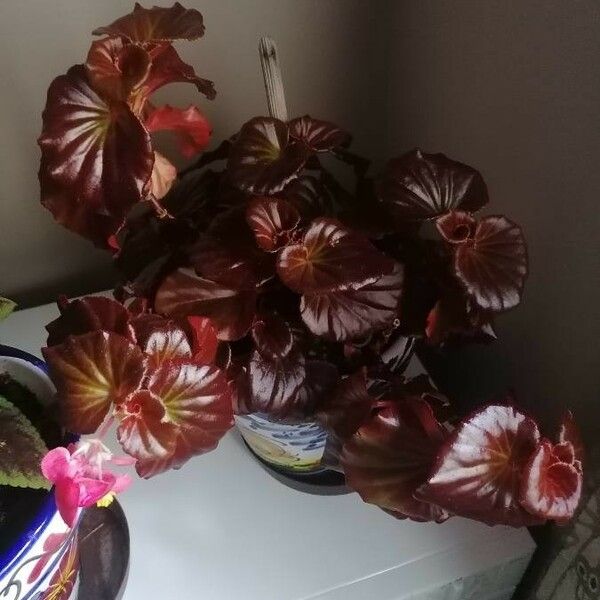
Plant Overview
Often called the "Shining Begonia," Begonia minor holds a prestigious place in botanical history as the very first Begonia species ever described by science. Native to the misty, rocky cliffs of Jamaica, this elegant shrub-like plant brings a touch of tropical heritage into the modern home. It is a resilient beauty, cherished for its waxy, reflective foliage and dainty, dangling blossoms that appear throughout the year.
🔍 How to Identify
- 🍃 Asymmetrical Leaves: Features the classic "angel wing" or lopsided heart shape, boasting a deep, glossy green surface that reflects light beautifully.
- 🌸 Waxy Clusters: Produces small, nodding clusters of white or pale pink flowers with bright yellow centers, typically emerging from the leaf axils.
- 🎋 Shrubby Growth: Unlike trailing or tuberous begonias, this species grows upright with reddish, succulent stems, giving it a bushy, miniature tree-like appearance.
🏡 In Your Garden
- ☁️ Atmospheric Moisture: Because it originated in Caribbean coastal forests, it thrives in high humidity. If the air is too dry, the leaf edges will turn brown and brittle, signaling it needs a pebble tray or a humidifier.
- ⛰️ Cliffside Drainage: In the wild, it grows in rocky crevices. In a pot, it demands a "breathable" soil mix—incorporating orchid bark or perlite is essential to prevent the delicate roots from suffocating in heavy potting soil.
- ✂️ Pruning Response: It handles pruning exceptionally well. Pinching off the tips encourages the plant to branch out, preventing it from becoming "leggy" as it searches for light.
⚠️ Safety & Toxicity
- 🐾 Toxic to Pets: Like all members of its family, it contains calcium oxalate crystals. If chewed by cats or dogs, it causes intense oral irritation, drooling, and vomiting.
- 👶 Keep Out of Reach: While not usually fatal, the sap can cause skin irritation for some people and should be kept away from curious toddlers who might be tempted by the succulent leaves.
✨ Fun Fact
📜 The Original Begonia: Begonia minor is the "Type Species" for the entire Begonia genus. When French botanist Charles Plumier first discovered and named the genus in honor of his patron, Michel Bégon, in the late 17th century, this was the specific plant that defined the entire category!

Detailed Care Instructions
| Humidity | Normal |
| Lighting | Part Sun |
| Toxicity | Poisonous |
| Difficulty | Medium |
| Temperature | 18°C - 28°C |
| Hardiness Zones | 9 - 11 |
To grow a Begonia Minor plant, you can follow these steps:
- Choose the right location: Begonia Minor plants thrive in bright, indirect sunlight. Select a spot in your home or garden that receives filtered sunlight or only indirect light for a few hours each day.
- Prepare the soil: Begonia Minor plants prefer well-draining soil. Use a mixture of potting soil and perlite or sand to create a loose and well-aerated soil that retains some moisture without becoming waterlogged.
- Propagation: Begonia Minor plants can be propagated through stem cuttings or from tubers called corms. For stem cuttings, choose a healthy stem with a few leaves and remove any lower leaves. Dip the cut end in a rooting hormone and plant it in a small container with moist soil. Place it in a warm and humid environment until roots develop.
- Planting: If growing from corms, plant them about one inch deep in pots or directly in the ground during spring or early summer. If growing from stem cuttings, transplant them into pots or larger containers once they have developed roots.
- Watering: Begonia Minor plants prefer slightly moist soil. Allow the top inch of soil to dry before watering, then water thoroughly and allow any excess water to drain away. Avoid overwatering, as it can lead to root rot.
- Humidity: These plants prefer higher humidity levels. Increase humidity by placing a tray of water near the plant or using a humidifier. Alternatively, you can mist the leaves with water every few days.
- Fertilizing: Fertilize Begonia Minor plants once a month during the growing season (spring and summer) using a balanced water-soluble fertilizer. Follow the instructions on the packaging for proper dilution and application.
- Pruning: Regular pruning can help maintain the shape and encourage bushier growth. Pinch or trim back any leggy or overgrown stems to encourage new growth.
- Pests and diseases: Keep an eye out for common pests like aphids, mealybugs, or spider mites. Treat any infestations promptly using organic or chemical pesticides. Also, be cautious about overwatering, as it can lead to root rot or fungal diseases. Ensure good air circulation around the plants to prevent disease development.
- Overwintering: In colder climates, Begonia Minor plants are often grown as houseplants. Reduce watering and move indoor plants to a cooler location during the winter months to encourage dormancy.
By following these steps, you should be able to successfully grow Begonia Minor plants and enjoy their beautiful foliage and flowers.

Place in a window with dappled sun or a spot in the middle of a room. Or directly in a window facing west or east.

Begonia Minor is a beautiful plant that requires appropriate watering to maintain its health. To water Begonia Minor, you must first ensure that the soil is slightly damp. Avoid overwatering the plant as it may cause root rot, which can be harmful to the plant. The soil should have good drainage to avoid standing water.
Allow the soil of the plant to dry out slightly before watering it again. The frequency of watering will depend on various factors, such as environmental conditions, the size of the pot, and the growth stage of the plant. Moreover, direct sunlight and dry air can cause the plant to wilt and dry, so you must consider the surrounding environmental factors.
To water the plant, use a watering can or a spout to provide a slow and steady stream of water to the soil. Make sure not to pour water directly on the leaves of the plant as it can lead to fungal growth. During the hot and dry summer months, the plant requires more frequent watering, whereas in the winter months, you need to reduce the watering frequency.
Overall, the success of watering your Begonia Minor plant depends on appropriate soil moisture and proper drainage; you must take into consideration the environmental factors and adjust your watering routine accordingly.
To fertilize the Begonia Minor plant, use a balanced fertilizer with equal parts nitrogen, phosphorus, and potassium. Apply the fertilizer once a month during the growing season, from spring to fall. Dilute the fertilizer in water according to the package instructions and pour it around the base of the plant. Do not fertilize the plant during the winter when it is dormant. Avoid over-fertilizing as it can damage the plant.
The best type of soil to use with this plant is a well-draining, nutrient-rich soil with high organic matter content. The ideal pH level for the soil is slightly acidic to neutral, within the range of 5.5 to 7.0. The soil should be porous and loose, allowing for good aeration and water drainage, and it should also be able to retain enough moisture to prevent the soil from drying out completely. The addition of peat moss, compost, or perlite can help improve the soil's texture and water retention capabilities. It is important to avoid using heavy or compacted soils, as well as soils that are too alkaline or poorly draining, as these can lead to root rot and other fungal diseases. Overall, the goal when choosing soil for this plant is to provide it with the ideal growing environment that promotes healthy growth and development.
To propagate this plant, you will need to carefully remove a healthy stem segment from the mother plant using sharp, sterile scissors or a razor blade. It is important to choose a stem that has several leaves and nodes, as these will be key to successful propagation. Next, treat the cut end of the stem with a rooting hormone to encourage the growth of new roots. Then, plant the stem segment in a well-draining potting mix, making sure to keep the soil moist but not waterlogged. Place the pot in a warm, bright location but out of direct sunlight, and mist the plant daily to increase humidity. Within a few weeks, you should see new growth emerging from the stem and new roots forming in the soil. Once the new plant has grown several sets of leaves and appears healthy and strong, it can be transplanted into a larger pot or out into the garden.
Common pests of the minor begonia include Mealybugs, spider mites, aphids, whiteflies. Make a habit of checking your minor begonia frequently for pests so that any infestations can be caught and managed early.








