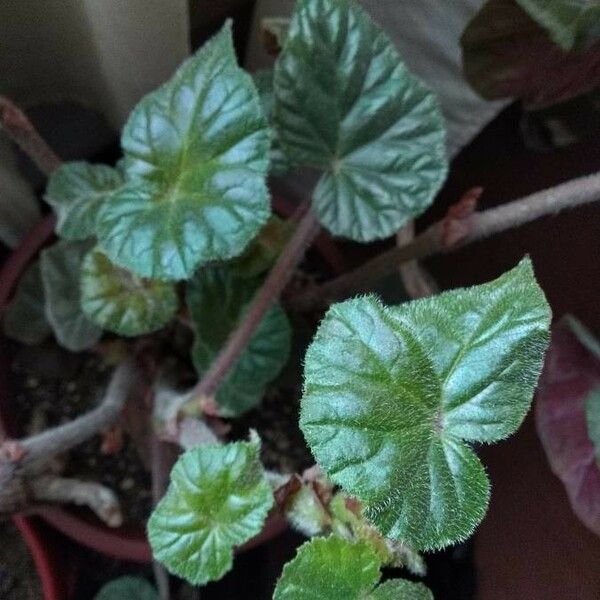
Plant Overview
Often called the "Elephant-ear Begonia," Begonia scharffii is a Victorian-era favorite that hails from the humid rainforests of Brazil. It is a tactile wonder, prized more for its dramatic, oversized foliage than its blooms. With its deep colors and "shaggy" appearance, it brings an air of antique elegance and tropical mystery to any indoor plant collection.
🔍 How to Identify
- 🐘 The Foliage: Large, asymmetrical heart-shaped leaves that can grow up to 8 inches long. They are olive-green on top and a striking, deep burgundy-red underneath.
- ☁️ The Texture: The entire plant—leaves, stems, and flower buds—is covered in soft, bristly white hairs (trichomes), giving it a velvety, frosted look.
- 🌸 The Blooms: It produces pendulous clusters of pale pinkish-white flowers that feature two large sepals and prominent yellow centers, often appearing "hairy" themselves before they open.
🏡 In Your Garden
- 💧 Humidity over Wetness: Because of its rainforest roots, this Begonia thrives in high humidity. However, the hairy leaves are prone to powdery mildew if they stay wet, so it’s best to use a pebble tray rather than misting the foliage directly.
- 🪴 Brittle Beauty: The stems are quite succulent and "crisp," meaning they can snap easily under their own weight or if bumped. It’s a plant that prefers a permanent, "low-traffic" spot where it won’t be moved frequently.
- ☀️ Light Sensitivity: The fine hairs act as a natural sunshade, but they can’t protect against harsh midday rays. Bright, filtered light is essential to keep the red undersides vibrant without scorching the leaf tips.
⚠️ Safety & Toxicity
- 🐾 Status: Toxic to pets.
- 🚫 Details: Like most Begonias, B. scharffii contains calcium oxalate crystals. If ingested by cats or dogs, it can cause intense oral irritation, drooling, vomiting, and difficulty swallowing. The most toxic part of the plant is actually the underground rhizome/roots.
✨ Fun Fact
The "fuzz" on the leaves isn't just for decoration! In its native Brazilian habitat, those tiny hairs help the plant trap a layer of still air against the leaf surface, which reduces water loss and helps the plant survive the fluctuating humidity levels of the forest floor.

Detailed Care Instructions

Place in a window with dappled sun or a spot in the middle of a room. Or directly in a window facing west or east.

To water this plant, it is important to first check the soil moisture level before watering. Insert your finger into the soil up to the second knuckle and if it feels dry, it is time to water. Water the plant thoroughly until water begins to drain out of the bottom of the pot. Allow the soil to dry out slightly and then water again. It is important not to let the soil become waterlogged or completely dry out. This plant prefers moist but well-draining soil, so adding perlite or sand to the soil mix can help improve drainage. It is also important to avoid getting water on the leaves, as this can lead to fungal infections. Watering early in the day can help prevent this issue.
Begonia Scharffii plant prefers well-draining soil which is rich in nutrients. The best soil for this plant is a mixture of peat moss, perlite, and sand. It is important to ensure that the soil is not too heavy and has good drainage. A pH level between 5.5 and 6.5 is ideal for optimal growth and health of the plant. Adding organic matter to the soil can also improve its overall quality. It is recommended to use a potting mix that is specifically designed for Begonia plants or creating a custom soil mix that meets the plant's requirements.








