Plant Overview
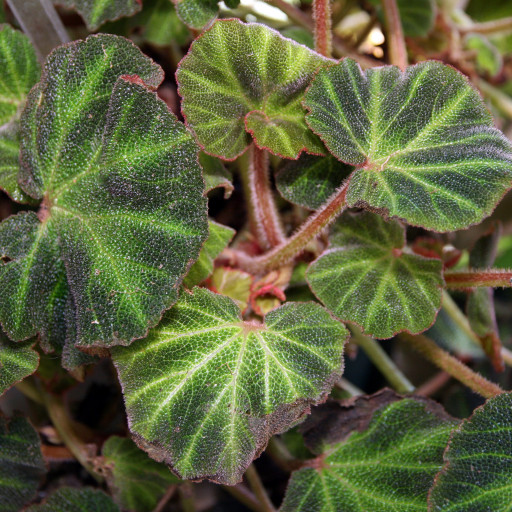
Meet the "Sun-changing Begonia," a Brazilian gem that literally transforms its appearance to suit its environment. Known scientifically as Begonia soli-mutata, this rhizomatous beauty earned its nickname from its incredible ability to darken or lighten its foliage depending on how much light it receives. It is widely beloved by collectors for its dramatic, "reptilian" texture and its glowing, neon-centered leaves.
🔍 How to Identify
- 🦎 Leaf Texture: The foliage is "bullate," meaning it has a bumpy, pebbled surface that feels almost like lizard skin or a topographical map.
- 🟢 The Glow: Each leaf features a striking, starburst-like center of lime or neon green that radiates outward against a dark, velvety backdrop.
- 🌗 Color Shifting: In lower light, the leaves turn a deep, brownish-black to absorb more energy; in brighter light, they shift toward a lighter, olive green to protect themselves.
🏡 In Your Garden
- ☁️ Humidity is Key: Coming from the humid rainforests of Brazil, this plant thrives in moisture. It is a perfect candidate for a terrarium or a bathroom shelf where steam can mimic its native tropical home.
- 💧 Thirsty but Sensitive: While it loves consistent moisture, its rhizomes (creeping stems) are prone to rot if the soil stays swampy. It prefers "pockets" of air in the soil, so use a mix heavy in perlite or orchid bark.
- ☀️ The Light Dance: To see the most dramatic color contrast, place it in bright, indirect light. Avoid direct midday sun, which will scorch the delicate, bumpy texture of the leaves.
⚠️ Safety & Toxicity
- 🐾 Status: Toxic to pets.
- 🚫 Details: Like most Begonias, this species contains calcium oxalate crystals. If ingested by cats or dogs, it can cause intense mouth irritation, drooling, and vomiting. Keep it on a high shelf away from curious nibblers.
✨ Fun Fact
The name soli-mutata literally translates from Latin to "sun-changed." This refers to its phototropic nature—a rare trait where the plant’s chloroplasts actually move within the leaf cells to change the plant's color and maximize photosynthesis efficiency!

Detailed Care Instructions
| Humidity | Normal |
| Lighting | Part Sun |
| Difficulty | Medium |
| Temperature | 18°C - 30°C |
| Hardiness Zones | 10 - 11 |
Begonia Soli-mutata, also known as the Begonia Silver Jewel, is a stunning houseplant known for its silver and green leaves. Here are some tips on how to grow and care for this plant:
- Light: Begonia Soli-mutata prefers bright, indirect sunlight. Avoid placing it in direct sunlight as it can scorch the leaves.
- Watering: Keep the soil consistently moist but not waterlogged. Water when the top inch of soil is dry. Decrease watering in the winter months when the plant is in its dormant phase.
- Humidity: Begonia Soli-mutata thrives in high humidity levels. Place a humidity tray filled with water near the plant or mist the leaves regularly to increase humidity.
- Temperature: Keep the temperature between 60-75°F (15-24°C). Avoid exposing the plant to temperatures below 55°F (13°C).
- Soil: Use a well-draining, peat-based potting mix for Begonia Soli-mutata. A mix that contains perlite or vermiculite can help improve drainage.
- Fertilizer: Feed the plant with a balanced liquid fertilizer every 2-4 weeks during the growing season (spring and summer). Do not fertilize in the winter months.
- Pruning: Regularly prune any leggy or dead growth to encourage bushier growth and maintain the plant's shape.
- Repotting: Repot the Begonia Soli-mutata every 1-2 years to refresh the soil and give the roots more space to grow.
By following these care tips, you can successfully grow and maintain a beautiful Begonia Soli-mutata plant in your indoor garden.

Place in a window with dappled sun or a spot in the middle of a room. Or directly in a window facing west or east.

To water this plant, you should wait until the soil has dried out slightly before watering it thoroughly. It's important not to overwater, as this can lead to root rot. You may want to consider using a watering can with a long spout to ensure that you're watering the soil directly without getting water on the leaves. It's best to water from the bottom of the pot, as this allows the plant to soak up water through the roots, which is better for the plant's overall health. Finally, make sure that the pot has drainage holes to allow excess water to escape.
To fertilize Begonia Soli-mutata, use a balanced water-soluble fertilizer diluted to half strength. Apply the fertilizer every 2-4 weeks during the growing season, which is typically spring and summer. Avoid over-fertilizing as this can harm the plant. Water the plant after fertilizing to help distribute the nutrients evenly.
It is recommended to use a well-draining soil with good organic matter content for [plant species]. The soil should have a pH of about [pH range] and should be kept moist but not waterlogged. It is important to avoid compacted soil and to ensure adequate aeration for the roots. Some gardeners prefer to mix in perlite or sand to improve drainage, but this is not always necessary. It is also important to fertilize [plant species] regularly with a balanced, water-soluble fertilizer. Overall, [plant species] requires well-draining soil that is rich in organic matter, nutrients, and moisture.
To propagate Begonia Soli-mutata plant, you can start by taking cuttings from a healthy mature plant. Use a sharp, sterilized knife or scissors to cut a healthy stem with several leaves attached. Make sure the cutting is at least 4-6 inches long.
Remove the lower leaves from the cutting and dip the cut end into a rooting hormone to promote root development. Plant the cutting in a well-draining potting mix, making sure to keep the soil consistently moist but not waterlogged.
Place the pot in a warm, brightly lit location, but out of direct sunlight. Ensure the humidity level is high around the cutting by covering it with a plastic bag or dome to create a mini greenhouse effect.
Check the cutting regularly for signs of new growth and root development. Once roots have formed, you can transplant the new plant into its own pot with well-draining soil.
Continue to care for the new plant by keeping it in a warm, humid environment with bright, indirect light. Water regularly but allow the soil to dry out slightly between waterings to avoid root rot.
With proper care and attention, your propagated Begonia Soli-mutata plant will grow into a healthy and vibrant specimen.
Common pests of the begonia soli-mutata include Mealybugs, spider mites, aphids, whiteflies. Make a habit of checking your begonia soli-mutata frequently for pests so that any infestations can be caught and managed early.







