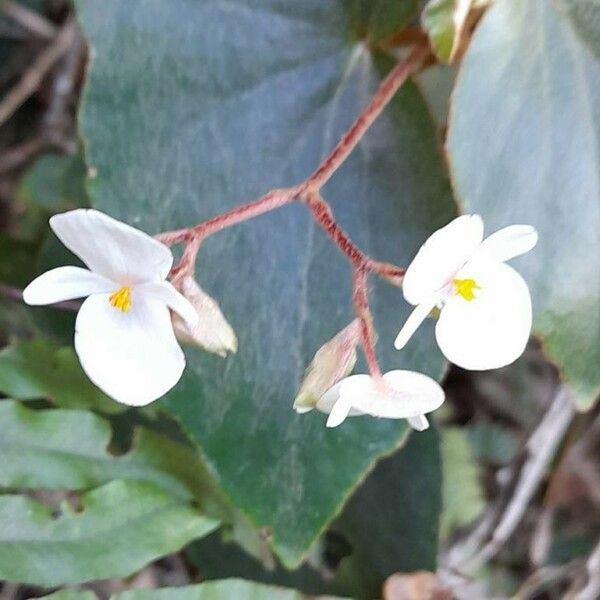
Plant Overview
Often called the "Velvet Begonia" or "Shaggy Begonia," this Brazilian beauty is a tactile delight for any indoor gardener. Its name perfectly describes its defining feature: a soft, downy coat of fine hairs that covers the leaves and stems, giving the plant a shimmering, frosted appearance. It is a classic "fibrous-rooted" begonia, prized for its bushy habit and delicate, cloud-like clusters of flowers.
🔍 How to Identify
- ☁️ Velvety Foliage: The heart-shaped leaves are covered in dense, tiny white hairs (trichomes) that feel like soft felt or velvet to the touch.
- 🌸 Dainty Blooms: It produces small, airy clusters of white to pale pink flowers that appear to float just above the fuzzy green canopy.
- 🌿 Succulent Stems: The stems are thick and fleshy, often showing a reddish tint through their coat of shaggy white fuzz.
🏡 In Your Garden
- 💧 The "Dry Leaf" Rule: Because of its hairy texture, this plant is prone to powdery mildew if the leaves stay wet. Always water at the base of the plant or use a bottom-watering method to keep the "shag" dry and healthy.
- ☀️ Light Nuance: It thrives in bright, indirect light which helps maintain its compact shape. In low light, the stems will stretch and become "leggy," losing that dense, bushy appearance that makes it so attractive in a decorative pot.
⚠️ Safety & Toxicity
- 🚫 Status: Toxic to pets and humans.
- 🐱 Details: Like most members of the Begonia family, Subvillosa contains calcium oxalate crystals. Ingesting any part of the plant can cause intense mouth irritation, drooling, and vomiting in cats, dogs, and curious toddlers.
✨ Fun Fact
The specific epithet subvillosa comes from the Latin words for "somewhat shaggy." In the wild, those tiny hairs aren't just for looks; they help the plant trap moisture from the air and protect the leaf surface from intense tropical sun!

Detailed Care Instructions
To grow Begonia Subvillosa plants, you can follow the steps below:
- Choose a suitable location: Begonia Subvillosa plants thrive in partial shade or filtered sunlight. Select a spot in your garden or indoor area that provides indirect or filtered light throughout the day.
- Prepare the soil: Begonia Subvillosa plants prefer well-draining soil that is rich in organic matter. Amend the soil with compost or well-rotted manure to improve its fertility and drainage ability.
- Planting method: Start by digging a hole slightly larger than the plant's root ball. Gently remove the Begonia Subvillosa plant from its container and place it in the hole at the same depth it was previously growing. Backfill the hole with soil and pat it down gently to remove any air pockets.
- Watering: Begonia Subvillosa plants require regular watering to keep the soil consistently moist but not waterlogged. Water the plant deeply whenever the top inch of soil feels dry. Avoid overwatering, as it can lead to root rot.
- Fertilizing: Use a balanced water-soluble fertilizer diluted to half strength once a month during the growing season (spring and summer) to provide essential nutrients to the Begonia Subvillosa plant. Reduce fertilization during the dormant season (fall and winter).
- Pruning: Regularly remove any yellowing or dead leaves to enhance the plant's appearance and prevent diseases. Pruning can also help maintain a compact and bushy shape for your Begonia Subvillosa plant.
- Temperature and humidity: Begonia Subvillosa plants prefer temperatures between 60-75°F (15-24°C) and moderate to high humidity. Mist the leaves occasionally or place a tray of water nearby to maintain humidity levels.
- Pests and diseases: Keep an eye out for common pests such as mealybugs, aphids, and spider mites. If you notice any issues, address them promptly using appropriate insecticidal soaps or horticultural oils.
- Propagation: Begonia Subvillosa plants can be propagated through stem cuttings or by dividing mature plants. Both methods typically have a high success rate.
By following these guidelines, your Begonia Subvillosa plant should grow and flourish. Remember to adjust care based on the specific needs of your plant, as environmental conditions and individual plants can vary.

Place in a dark room with little light, like a dark bedroom or a spot far away from a window or directly in a north-facing window.

To water Begonia Subvillosa plant, one would need to assess the soil moisture level by inserting a finger around 1-2 inches into the soil. If the soil feels dry, then it is time to water the plant. It is important not to overwater the plant, as it can lead to root rot. Instead, a moderate amount of water should be supplied, enough to thoroughly moisten the soil. A good watering frequency would be once a week or when the soil has dried out. Water should be applied gently to avoid damaging the plant. It is recommended to use room temperature water to avoid shocking the roots. The plant should also be watered from the bottom, letting the soil soak up the water and avoiding getting water on the leaves, as this can cause damage. After watering, excess water should be drained from the pot to prevent standing water.
To fertilize your plant, use a balanced all-purpose fertilizer. Mix the fertilizer with water as directed on the packaging, then apply to the soil around the base of the plant. Be careful not to get any fertilizer on the leaves or stems. Fertilize every two weeks during the growing season, from spring to early fall. In the winter, reduce fertilizing to once a month or stop altogether. Water the plant well before and after fertilizing.
The Begonia Subvillosa plant prefers well-draining soil that is rich in organic matter. The soil should be slightly acidic with a pH range of 5.5 to 6.5. It is best to use a mixture of peat moss, perlite, and vermiculite to provide a well-balanced environment for the plant's roots. This soil type will help to prevent root rot and allow the plant to absorb nutrients easily. Additionally, the soil should be kept moist but not waterlogged, as excess water can also lead to root rot and other fungal diseases. By providing the Begonia Subvillosoa with the appropriate soil, it can thrive and produce beautiful blooms.
To propagate this plant, you will need to take stem cuttings from a healthy and established plant. Use a sharp, sterilized knife to cut a stem that is about 3-4 inches long. Remove any leaves from the bottom half of the stem.
Dip the cut end of the stem into rooting hormone powder to promote root growth. Plant the stem cutting in a pot filled with moist soil or a soilless rooting medium such as perlite or vermiculite.
Place the pot in a warm and brightly lit spot, but away from direct sunlight. Keep the soil moist and mist the cutting regularly to maintain humidity around the cutting.
After a few weeks, the cutting should have rooted and will start to produce new leaves. Once the new plant has developed a few sets of leaves, you can transplant it into a larger pot or directly into the garden if the weather is warm enough.








