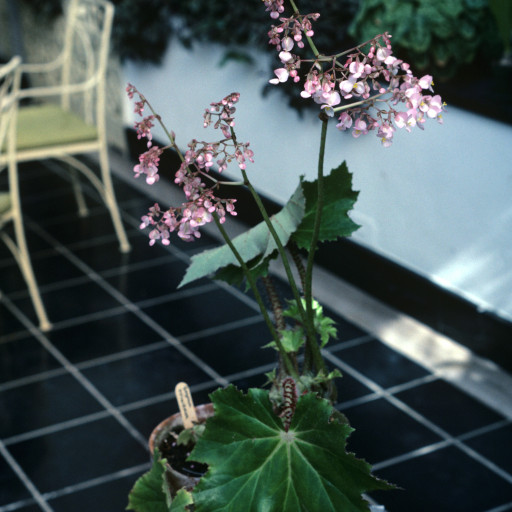
Plant Overview
Often called the Castor Bean Begonia, this stunning hybrid is one of the oldest and most grand members of the Begonia family, dating back to the mid-19th century. With its massive, hand-shaped leaves that look like they belong in a prehistoric jungle, it’s a "statement plant" that brings drama and a touch of Victorian elegance to any indoor space. Its name comes from the resemblance of its foliage to the Ricinus (Castor Bean) plant, though it is far more delicate in nature.
🔍 How to Identify
- 🍃 Giant Palmate Leaves: The foliage is the star—large, deeply lobed, and star-shaped. They are typically a rich, bronzy green with striking reddish veins.
- 🧶 Hairy Petioles: If you look closely at the stems (petioles), you’ll notice they are covered in soft, reddish hairs or "trichomes," giving the plant a fuzzy, textured appearance.
- 🌸 Tall Flower Spikes: In late winter or early spring, it sends up long, slender stalks that tower over the leaves, blooming with clusters of tiny, delicate shell-pink or white flowers.
🏡 In Your Garden
- 🌿 Rhizomatous Roots: Unlike many common houseplants, this Begonia grows from a thick, creeping surface stem called a rhizome. It hates "wet feet," so it needs a shallow pot with extremely well-draining soil to prevent the rhizome from rotting.
- 🌬️ Space to Breathe: Because the leaves can grow quite large (sometimes over a foot wide!), it requires good air circulation. Avoid crowding it against other plants, as this can lead to powdery mildew on its beautiful velvet-like leaves.
⚠️ Safety & Toxicity
- 🚫 Status: Toxic to pets and mildly irritating to humans.
- 🐾 Details: Like most Begonias, this plant contains calcium oxalate crystals. If ingested by cats or dogs, it can cause intense oral irritation, drooling, and swelling of the mouth. It is best kept on a high shelf away from curious nibblers.
✨ Fun Fact
The Begonia X Ricinifolia is considered a "heritage hybrid." It was first bred in 1847 by a gardener named Dietrich in England, making it a living piece of botanical history that has been passed down through generations of plant collectors for over 175 years!

Detailed Care Instructions
To successfully grow Begonia X Ricinifolia, also known as the Angel Wing Begonia, follow these steps:
- Lighting: Place the plant in a location with bright, indirect light. Avoid direct sunlight as it can scorch the leaves.
- Temperature: Begonia X Ricinifolia prefers temperatures between 65°F and 75°F (18°C and 24°C). Keep it away from drafts and extreme temperature fluctuations.
- Watering: Water the plant when the top inch of soil is dry. Begonias prefer slightly moist soil, so avoid overwatering or letting the soil dry out completely. Ensure the pot has drainage holes to prevent root rot.
- Humidity: Begonias enjoy higher humidity levels. Mist the leaves regularly or place a tray filled with water and pebbles near the plant to increase humidity.
- Fertilization: Feed the plant every two weeks during the growing season (spring and summer) using a balanced liquid fertilizer diluted to half the recommended strength. Avoid fertilizing during the dormant period (fall and winter).
- Pruning: Trim back leggy or unhealthy stems to promote bushier growth. Pinch off the growing tips to encourage compact lateral growth. Remove any yellow or dead leaves.
- Propagation: Begonia X Ricinifolia can be propagated through stem cuttings. Take 3-4 inch long cuttings with a node, remove the lower leaves, and place them in moist soil or water until roots develop.
- Potting and soil: Use a well-draining potting mix rich in organic matter. Repot the plant every one or two years to refresh the soil and provide more space for growth.
Remember that Begonia X Ricinifolia is a vigorous grower and may require larger pots as it matures. Provide regular care, and your plant should thrive and grow beautifully.

Place in a window with dappled sun or a spot in the middle of a room. Or directly in a window facing west or east.

To water this particular plant, it is important to ensure that the soil is moist, but not waterlogged. You can achieve this by watering the plant deeply once a week, allowing the water to soak in and penetrate the root system. It is best to avoid getting water on the leaves or flowers, as this can cause damage and increase the risk of disease. Test the moisture level of the soil by inserting your finger about an inch into the soil - if it feels dry, it is time to water. In hot or dry weather, you may need to water more frequently. Be sure to use room temperature water and avoid overwatering, as this can lead to root rot.
To properly fertilize Begonia X Ricinifolia, start by selecting a balanced, water-soluble fertilizer with nutrients such as nitrogen, phosphorus, and potassium. Follow these instructions for fertilizing:
- Dilute the fertilizer: Following the package instructions, dilute the fertilizer in water to its recommended strength. Ensure that it is well-mixed.
- Prepare the plant: Water the plant thoroughly a day before fertilizing. This helps prevent fertilizer burn.
- Apply the fertilizer: Pour the diluted fertilizer mixture around the base of the plant. Avoid pouring directly onto the leaves or stems.
- Monitor the amount: Check the size and age of your Begonia X Ricinifolia plant and adjust the amount of fertilizer accordingly. Young plants typically require less fertilizer than mature ones.
- Frequency of fertilizing: During the active growing season, fertilize once every two to four weeks. However, during the plant's dormant period, reduce fertilizing to once every six to eight weeks.
- Watering after fertilizing: After applying the fertilizer, water the plant gently to allow the nutrients to reach the root zone.
- Observe for signs of overfertilization: If you notice yellowing or wilting leaves, or if the soil seems to be retaining excessive moisture, you may be overfertilizing. In such cases, adjust the frequency or concentration of the fertilizer.
Remember to always refer to the specific fertilizing instructions provided by the manufacturer, as the recommended amounts and concentrations may vary between different fertilizers.
The ideal soil for the Begonia X Ricinifolia plant should be well-draining and rich in organic matter. It should have a slightly acidic pH level ranging from 5.5 to 6.5. The soil should also be airy and porous to allow proper airflow to the plant's roots. Adding perlite or vermiculite to the soil mixture can help improve drainage and aeration. It's important to avoid using heavy clay soil or dense, compacted soils, as these can lead to waterlogged roots and root rot. The soil should also retain some moisture while allowing excess water to drain away easily. Adding peat moss or organic compost to the soil can help improve water retention. Overall, the goal is to provide a well-balanced, nutrient-rich soil that will support healthy growth and development of the Begonia X Ricinifolia plant.
To propagate Begonia X Ricinifolia, follow these steps:
- Gather the necessary materials: You will need a healthy parent plant, a sharp and clean knife or pruning shears, a clean container or pot for planting, well-draining soil, and a clear plastic bag or a propagator.
- Prepare the parent plant: Choose a mature and healthy plant with strong stems and vibrant leaves. Ensure that the plant is free from pests and diseases. Water the plant a day before propagating to increase its turgidity.
- Select suitable stems: Look for stems that are young, green, firm, and approximately 4-6 inches long. These stems are more likely to root successfully. Avoid using old or woody stems.
- Cut the stem: Using a sharp knife or shears, make a clean and diagonal cut just below a leaf node. This area contains growth hormones that will aid in root formation. Remove any lower leaves, leaving only a couple of leaves at the top of the stem.
- Apply rooting hormone (optional): If desired, you can dip the cut end of the stem in a rooting hormone powder or gel. This can help promote root development and increase the chances of successful propagation. However, it is not necessary for Begonia X Ricinifolia.
- Plant the stem cutting: Fill a clean container or pot with well-draining soil. Make a small hole in the soil using a pencil or finger and carefully insert the cut end of the stem into the hole. Gently press the soil around the stem to ensure good contact.
- Create a humid environment: To prevent excessive moisture loss, cover the container with a clear plastic bag or use a propagator if available. This will help maintain high humidity around the cutting, promoting root growth. Ensure that there is enough space between the leaves and the plastic to prevent rotting.
- Provide proper care: Place the container in a warm, bright, and indirect light location. Avoid exposing the cutting to direct sunlight as it may cause leaf burn. Check the soil moisture regularly and water whenever the top inch of soil feels dry. Do not overwater to prevent rotting.
- Monitor and wait: After a few weeks, roots will start to develop from the cut end of the stem. You can gently tug the stem to check if it has rooted. Once a good root system has formed, you can gradually acclimate the new plant to normal growing conditions by gradually removing the plastic covering.
- Transplanting: When the rooted cutting has developed a sufficient number of roots, it can be carefully transplanted into a larger pot or directly into the garden if the weather and growing conditions are suitable.
Following these steps should help you successfully propagate Begonia X Ricinifolia.
Common pests of the bronze-leaf begonia include Mealybugs, spider mites, aphids, whiteflies. Make a habit of checking your bronze-leaf begonia frequently for pests so that any infestations can be caught and managed early.







