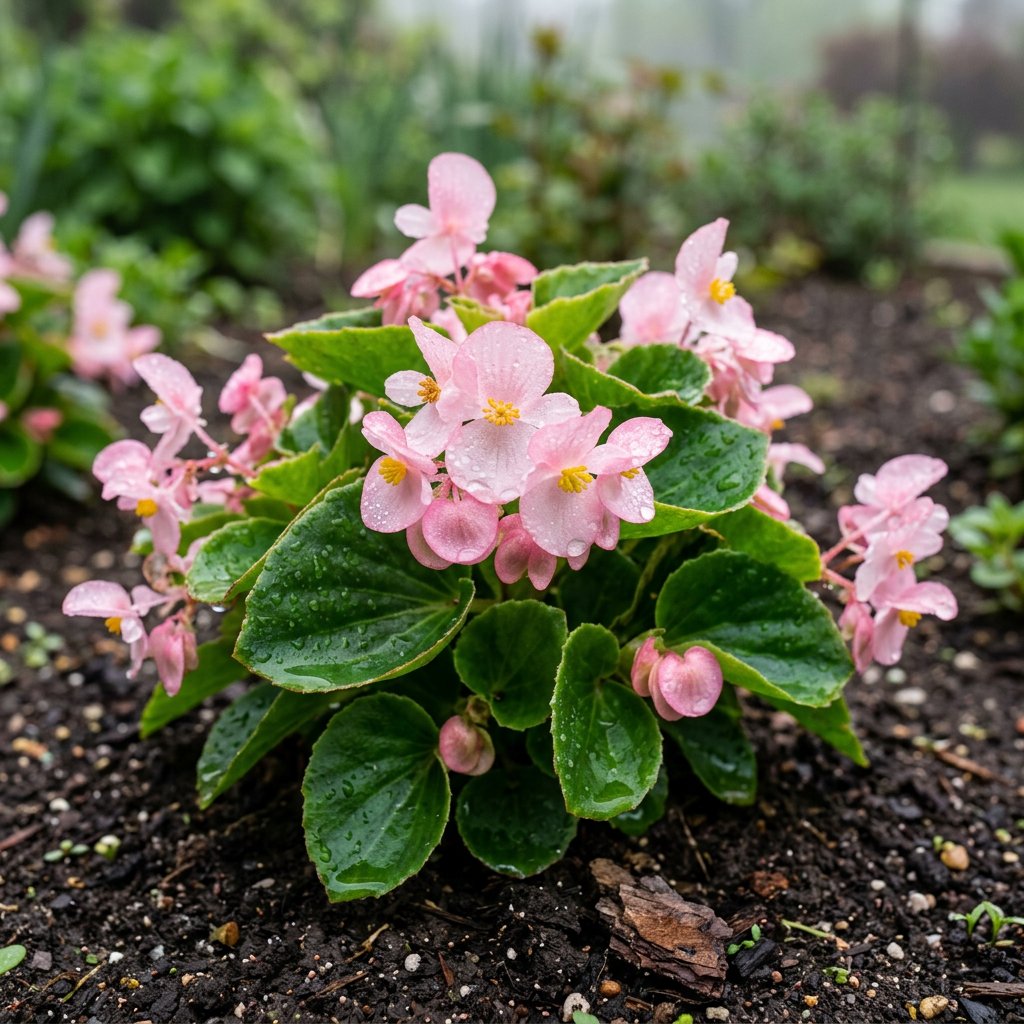
Plant Overview
The Wax Begonia is the ultimate reliable bloomer, earning its botanical name semperflorens ("ever-flowering") by producing a non-stop parade of color from spring until the first frost. Loved for their succulent, shiny foliage, these plants are often seen as the "jewelry" of garden borders and window boxes. Whether you choose the bright emerald green leaves or the deep, moody bronze varieties, they add a polished, manicured look to any landscape.
🔍 How to Identify
- 🍃 Waxy Foliage: The leaves are thick, succulent, and have a glossy, mirror-like sheen that gives the plant its "Wax" nickname. They can be heart-shaped or rounded.
- 🌸 Four-Petaled Blooms: Small, clustered flowers usually feature two large outer petals and two smaller inner ones, appearing in vibrant shades of red, pink, or snowy white.
- 🌱 Mounded Growth: These plants naturally form neat, compact "mounds" or domes. They rarely grow taller than 6 to 12 inches, making them perfect for neat edges and symmetrical patterns.
🏡 In Your Garden
- ☀️ The Sun-Leaf Connection: If you have a sunny spot, look for the bronze-leaved varieties; their dark pigments act like a natural sunscreen. The green-leaved types are more sensitive and prefer the cool relief of partial shade.
- 🚿 Thirst and Texture: Because their stems and leaves are succulent, they store water efficiently. They are far more likely to forgive a missed watering than a soggy "wet foot," which can quickly lead to stem rot.
- ✂️ Self-Cleaning Nature: Unlike many garden stars, Wax Begonias are "self-cleaning." This means they drop their old flowers naturally, so you don't have to spend your weekends pinching off dead blooms to keep the plant looking tidy.
⚠️ Safety & Toxicity
- 🐱 Pet Warning: These plants contain calcium oxalate crystals. While they aren't usually life-threatening, they can cause significant mouth irritation, drooling, and vomiting if chewed on by cats or dogs. The roots are the most toxic part.
- 👶 Child Safety: Generally safe to touch, but the sap may cause mild skin redness for those with very sensitive skin. It is best to keep them out of reach of curious toddlers who might be tempted by the "crunchy" texture of the leaves.
✨ Fun Fact
In some high-end culinary circles, the petals of the Wax Begonia are used as a gourmet garnish! They have a surprisingly crisp texture and a tart, citrus-like flavor—but never eat them unless you are 100% sure they haven't been treated with garden chemicals or pesticides.

Detailed Care Instructions
To grow Begonia X Semperflorens plants, also known as Wax Begonias, follow these steps:
- Choose the right location: Begonias prefer bright, indirect sunlight. Find a spot that receives morning or evening sun but is shaded during the hottest part of the day.
- Prepare the soil: Use well-draining soil that is rich in organic matter. If the soil in your garden is heavy, mix in some peat moss or compost to improve drainage.
- Watering: Begonias like moist soil, but they don't tolerate standing water. Water the plants regularly, keeping the soil evenly moist. Avoid overwatering, as it can lead to root rot. Water from the base rather than on the leaves to prevent mildew or fungal issues.
- Fertilizing: Feed your Begonia plants every two to three weeks during the growing season with a balanced water-soluble fertilizer. This will provide them with essential nutrients to encourage healthy growth and flowering.
- Pruning: Pinch off the tips of the stems regularly to promote bushier growth. This will also prevent the plants from getting leggy.
- Mulching: Apply a layer of organic mulch around the plants to help retain moisture in the soil, prevent weed growth, and moderate soil temperature.
- Pest and diseases: Keep an eye out for common pests like aphids, mealybugs, and spider mites. If you notice any infestations, treat them promptly with insecticidal soap or neem oil. Also, monitor for diseases such as powdery mildew, and ensure good air circulation around the plants to prevent the development of fungal issues.
- Propagation: Begonias can be easily propagated from stem cuttings. Take a 3-4 inch cutting from a healthy plant, remove the lower leaves, and place it in a moist potting mixture. Keep the soil consistently moist, and the cutting should develop roots within several weeks.
- Winter care: Begonia X Semperflorens is typically grown as an annual in areas with cold winters. If you want to save the plant for next year, you can dig up the tubers in the fall before the first frost, let them air dry for a few days, and store them in a cool, dry location until the next spring.
By following these guidelines, you should be able to grow healthy Begonia X Semperflorens plants and enjoy their beautiful flowers throughout the growing season.

Place in a window with dappled sun or a spot in the middle of a room. Or directly in a window facing west or east.

To water this plant, first ensure that the soil is completely dry before watering. Then, gently pour water onto the soil until it is thoroughly moistened. Avoid getting water on the leaves or flowers as this may cause damage or disease. Allow the soil to drain excess water for a few minutes before returning the plant to its usual location. Regular watering is important for the health and growth of this plant, but be sure not to over-water as this can also cause problems.
- Choose a water-soluble fertilizer specifically formulated for flowering plants.
- Mix the fertilizer with water according to the instructions on the package.
- Water the plant with the fertilizer solution every two weeks during the growing season (spring to fall).
- Make sure to water the soil evenly, but avoid getting the leaves wet to prevent fungal diseases.
- Reduce the frequency of fertilization during the winter months, as the plant's growth slows down.
- Always follow the manufacturer's recommendations and do not over-fertilize, as this can damage the plant.
This plant prefers a well-draining soil with adequate moisture retention. The ideal soil pH range is slightly acidic to neutral. A soil mixture that is high in organic matter is also recommended. Avoid using heavy clay soils or soils with poor drainage as they can lead to root rot and other moisture-related issues. It is also important to ensure the soil is nutrient-rich, as this plant requires adequate nutrition to thrive. Adding slow-release fertilizer to the soil prior to planting can be beneficial.
To propagate this plant, take a cutting from a healthy stem that is approximately six inches long. Use a sharp and sterile blade to make the cut and remove the lower leaves. Dip the cut end of the stem in rooting hormone powder and place it in a pot filled with a well-draining potting mix. Make sure to keep the soil moist but not waterlogged. Cover the pot with a clear plastic bag to increase humidity and place it in a warm and bright spot but not in direct sunlight. After a few weeks, the cutting should start to root and new growth will appear. Once the new plant has established itself, it can be potted up into its permanent container and cared for like a mature plant.
Common pests of the bedding begonia include Mealybugs, spider mites, aphids, whiteflies. Make a habit of checking your bedding begonia frequently for pests so that any infestations can be caught and managed early.








